Serving Oro Valley, AZ & nearby
(928) 403-7171
Oro Valley, AZ

What Actually Happens When We Come Out to Your Garage Door

A clear look at what happens when a tech comes to your Oro Valley home, why 1980s-2005 construction and severe heat change the job, and when it's not a DIY fix.

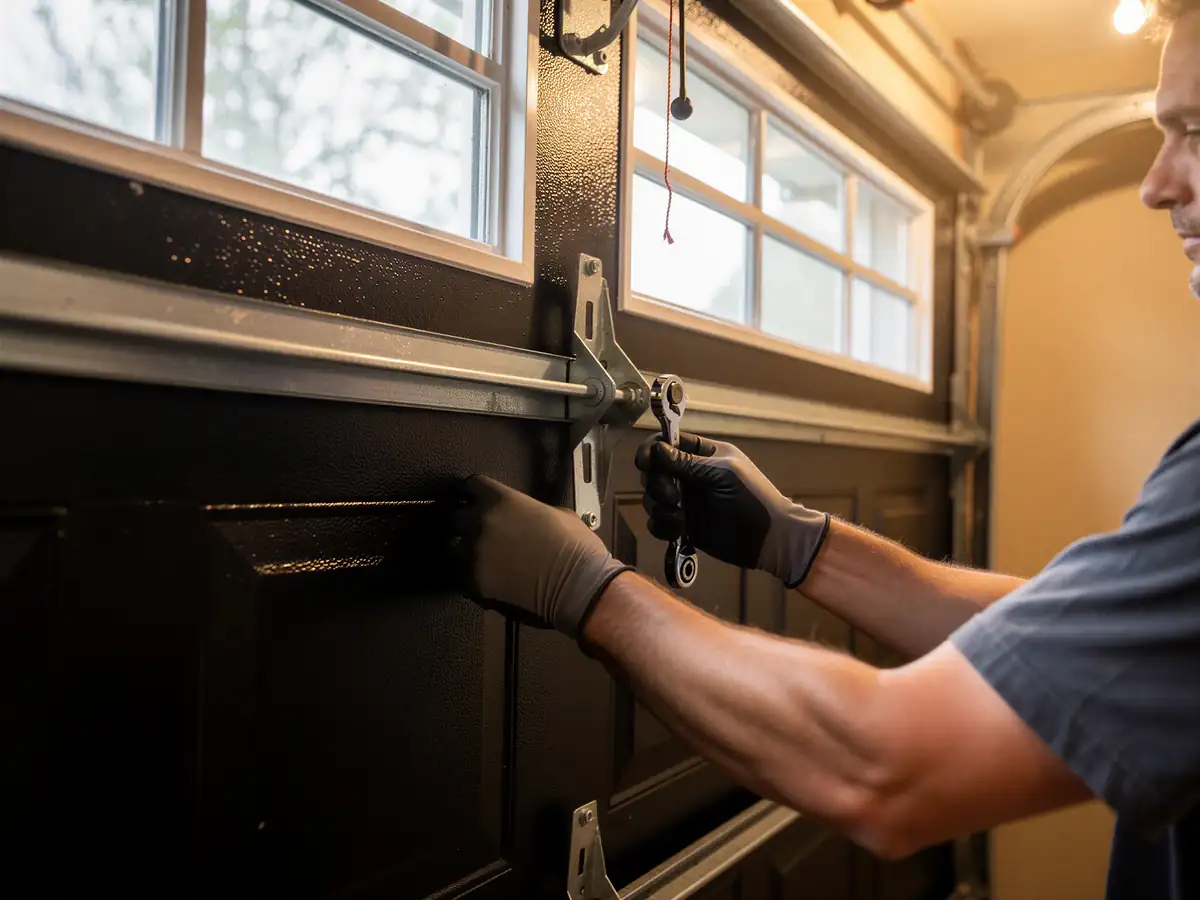
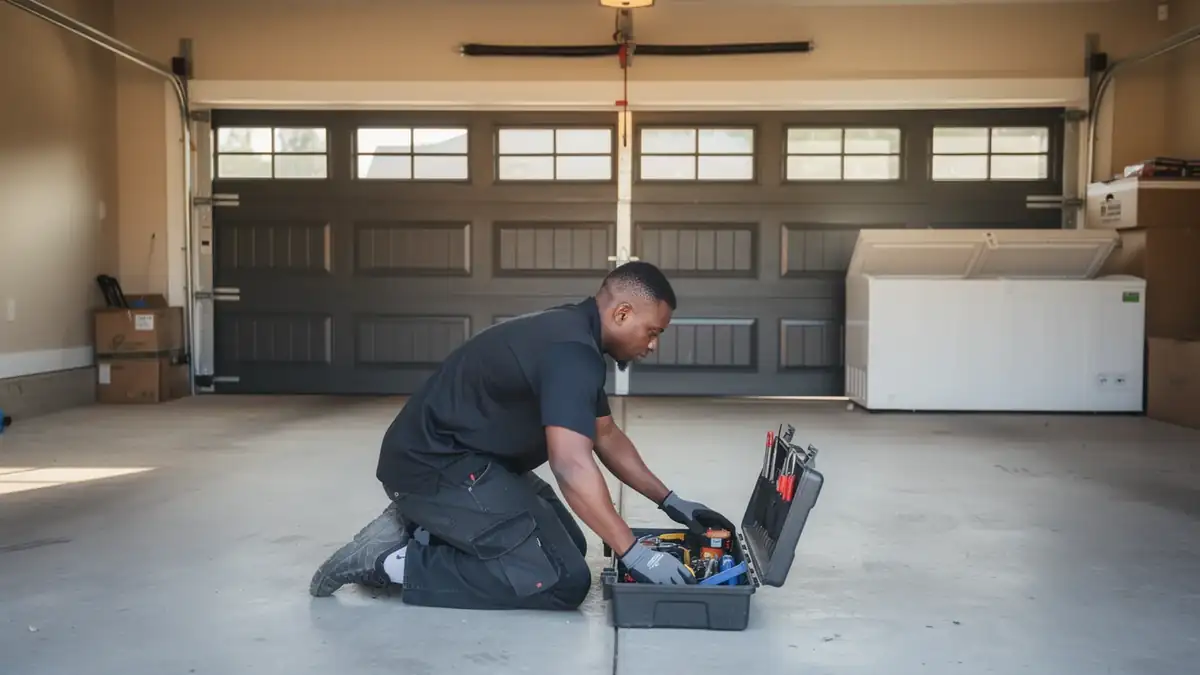
A technician kneels on the garage floor, reaching into an open toolbox.

The Common Mistake

The mistake we see most in Oro Valley is treating every noisy or sticking door the same way, regardless of how old the house is. Most of the housing stock here went up between 1980 and 2005, with the median build year sitting around 1989. That's a specific window - these are steel sectional doors on torsion springs sized to a building code written decades before anyone was running two cars and a workshop fridge off the same circuit through a scorching Arizona summer. Owners assume a sagging door just needs oil, or that a loud opener means a new opener. Sometimes that's true. More often, on a house from this era, the spring has simply done its last cycle and the opener is straining to compensate - which looks like an opener problem but isn't one. We check the spring, the cable, and the track alignment before we touch the opener, because fixing the symptom instead of the cause means you call us again in six months. The honest limitation here: if your opener logic board is the actual failure, we don't carry every board for every brand on the truck, and a part that's been discontinued can mean a short wait.

What the Weather Here Does to It

Oro Valley sits in a climate band rated severe for heat, and that matters more for a garage door than most owners expect. Steel panels expand and contract daily through peak summer, which works torsion spring coils harder than they'd work in a mild climate - the metal fatigues faster even with identical cycle counts. Lubricant inside the spring coils and on the rollers breaks down quicker under sustained high heat, so a service interval that's fine in a cooler market runs short here. Nylon rollers get brittle and crack along the edge before they wear round, which is a different failure pattern than the grinding noise you'd expect. Opener circuit boards mounted on the garage ceiling also sit in some of the hottest air in the house for a good chunk of the year, and that shortens their working life. None of this means the door is defective - it means a 1980s-2005 door built for a cooler-climate spec is doing more work here than it was designed for.

What Is Going On

On a service call, we're almost always looking at one of three things on a house from this build era: the torsion spring has reached the end of its cycle life, the rollers have gone brittle from heat exposure, or the track has walked out of alignment from years of panel expansion and contraction. We measure spring wind and wire gauge against the door weight, check roller condition by hand rather than by sound alone, and run the door through a full cycle watching the track for binding. Across the broader area - 27,068 owner-occupied houses out of roughly 43,223 households - this same pattern shows up often enough that it's not a coincidence tied to one neighborhood; it's tied to when the houses were built and what the summers do to them. With a median household income of $70,982 across that service area, most owners are making a real decision between a spring repair and a full door swap, not defaulting to replacement. We tell you straight which side of that line your door is on.

When It Stops Being a DIY Job

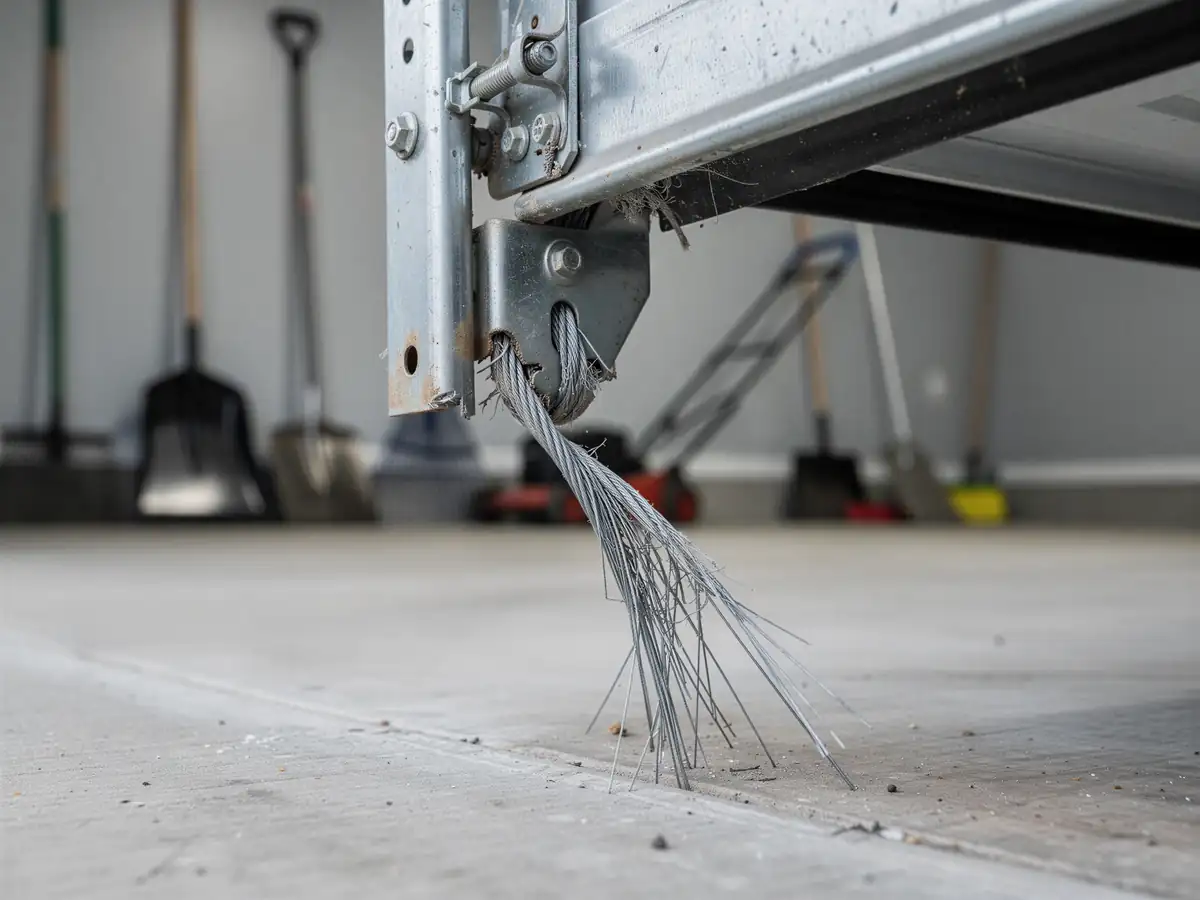
A torsion spring under tension is not a weekend project - the wind-up force on a standard residential door can break fingers or worse, and that's true whether the door is five years old or thirty. If the spring is broken, cracked, or you can see daylight through a gap in the coil, stop and call. Same goes for a cable that's frayed or a track that's visibly bent; forcing the opener through either one usually turns a $200 repair into a $600 one. We run service calls from Catalina six miles out to three miles northeast four miles northeast without trouble, and we see the same spring and roller failures on houses of the same era across that whole stretch. What we won't do is talk you into a full door replacement when a spring and roller set will get you another decade - but if the door itself has delaminated panels or rot at the bottom section, replacement is the honest answer, not a patch.
How it works

From “it’s stuck” to “it’s fixed”

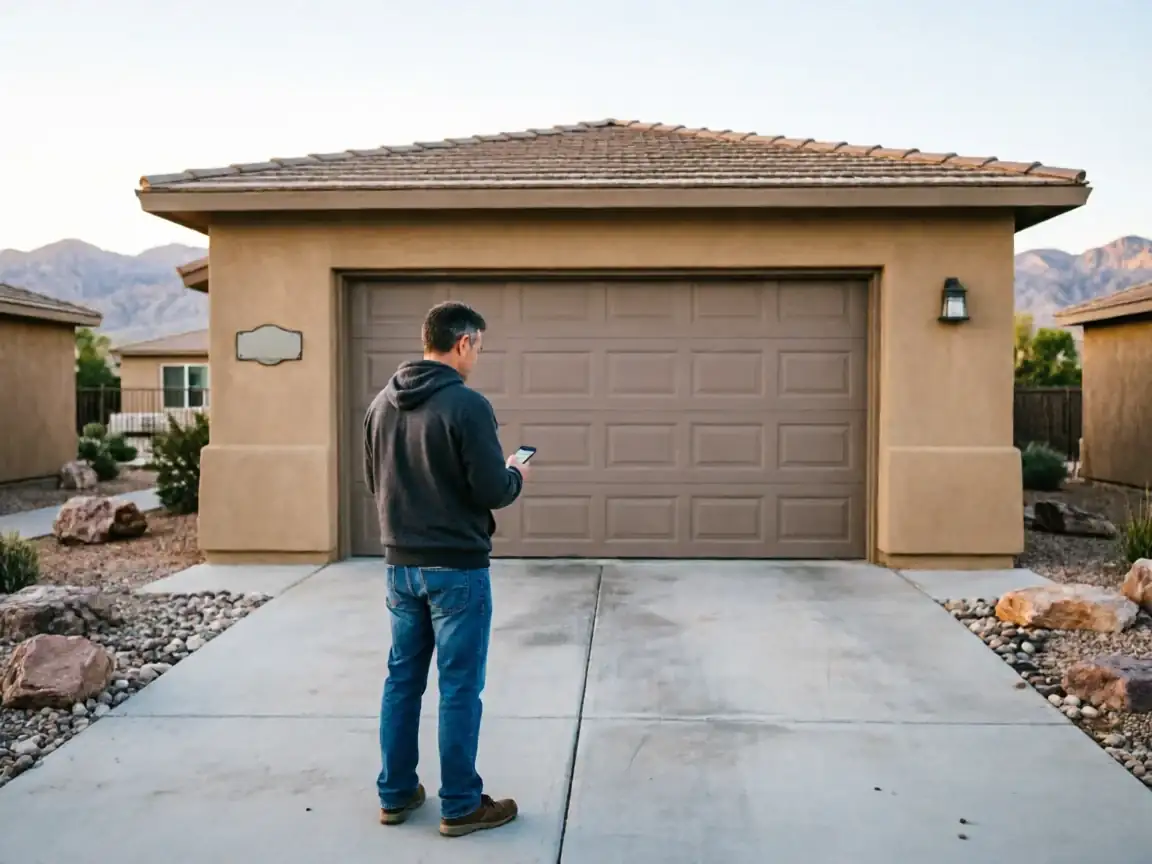
A man stands in a driveway looking at his phone in front of a closed garage door.

Tell us what’s wrong

Describe the symptom - won’t open, loud bang, opener runs but the door won’t move.

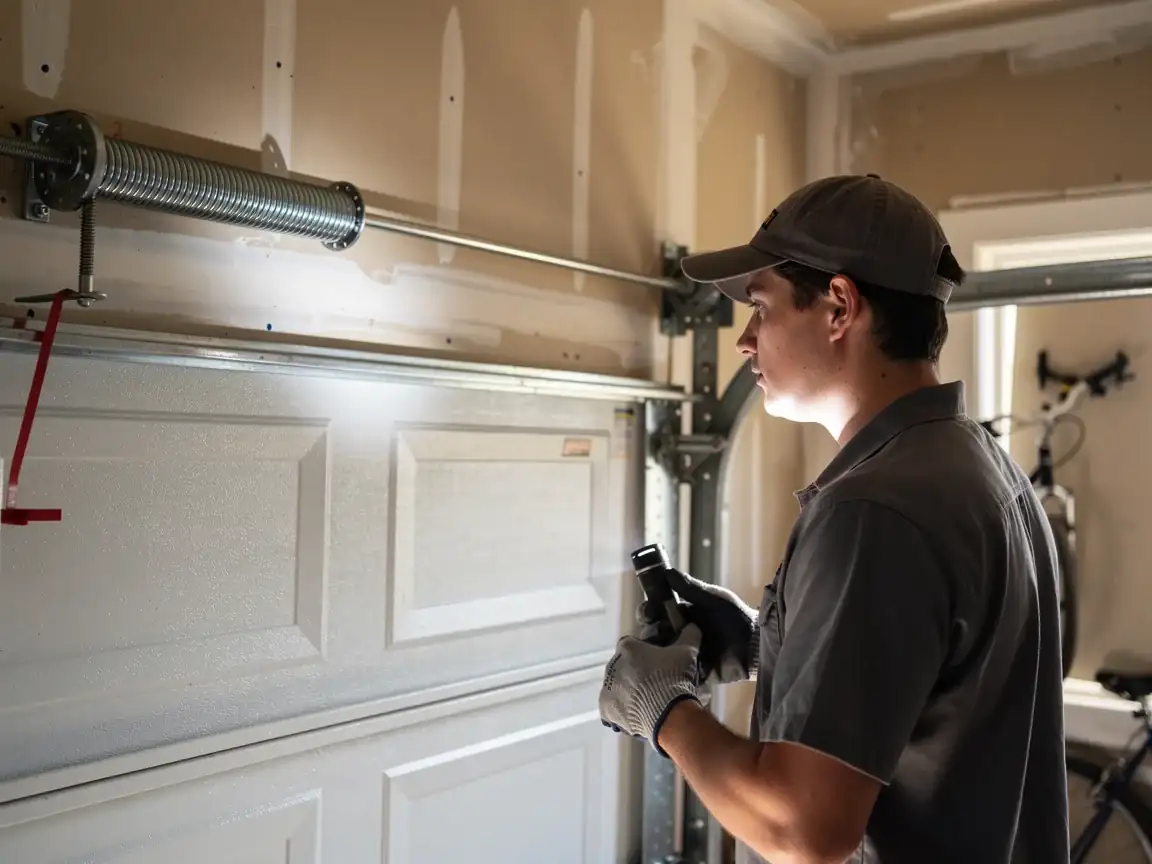
A technician in a gray shirt and cap inspects a white garage door with a flashlight.

On-site diagnosis

A technician tests the door under power and by hand and finds what actually failed.

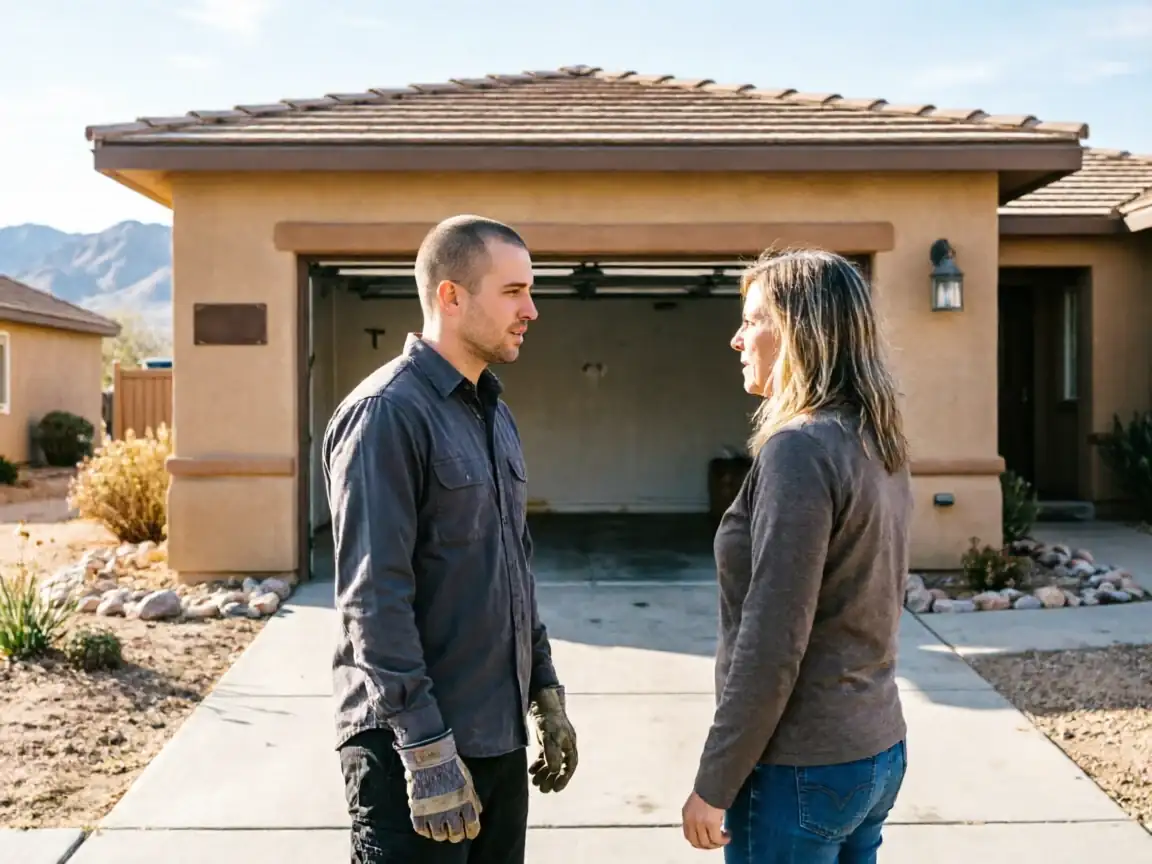
A technician and a woman stand in a driveway in front of a garage.

Clear, up-front plan

You get the fix that’s needed and what drives the cost - before any work starts.

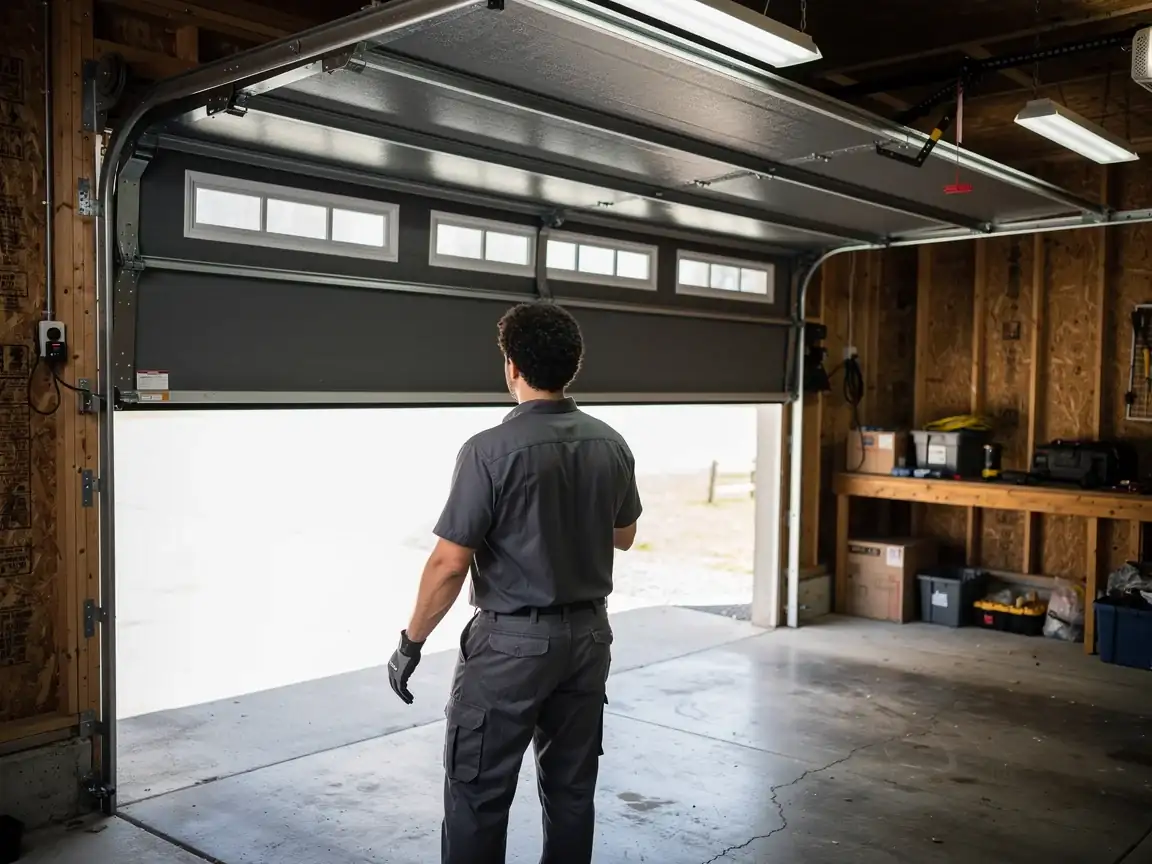
A technician stands in a garage looking at a partially open garage door.

Repaired & tested

The repair is done, the door is set true and tested, and the work area left clean.

Not sure which repair your door needs in Oro Valley, AZ? Describe what it’s doing - every job starts with a diagnosis.

How we work

What to expect

Diagnosis firstEvery visit starts by finding what actually failed - not a pre-written parts list.
The right part for the doorSprings and openers matched to the door’s weight and age, so the fix holds up.
Straight answersWhen a repair makes more sense than a replacement - or the reverse - you hear it plainly.
Clean, careful workTension released safely, hardware set true, the door tested under power before we leave.
What we do

Garage Door Services

Repair and installation work for Oro Valley homes and businesses.

Questions

Frequently asked

Straight answers about garage door repair in Oro Valley. Still unsure? Ask us directly.

How do I know if it's the spring or the opener?

If the door is heavy to lift by hand with the opener disconnected, or it slams down fast instead of lowering evenly, that's spring tension, not the opener. A opener motor that runs but the door barely moves usually points the same way. We check both on every call since one failure often masks the other.

Is my door's age a problem by itself?

Not by itself. A door built in the 1980s-90s window common to this area can run fine for years if the spring and rollers have been kept up. Age becomes a problem when it's paired with heat-fatigued hardware that hasn't been serviced, which is the combination we see most.

Can I replace a torsion spring myself?

We don't recommend it. A wound torsion spring holds enough force to cause serious injury, and the tools for safe winding aren't something most households have on hand. This is the one repair on a garage door where we'd always tell you to call rather than watch a video and try it.

Why does my door need service more often than my neighbor's in a cooler state?

Sustained severe heat works spring coils, rollers, and lubricant harder than mild climates do, even with the same number of open-close cycles per day. That's a function of the climate band this area sits in, not a sign your door or hardware is lower quality.

Ready to get your garage door sorted?

Tell us what it’s doing and where you are in Oro Valley - we’ll take it from there.

Request a QuoteCall