How It Shows Up
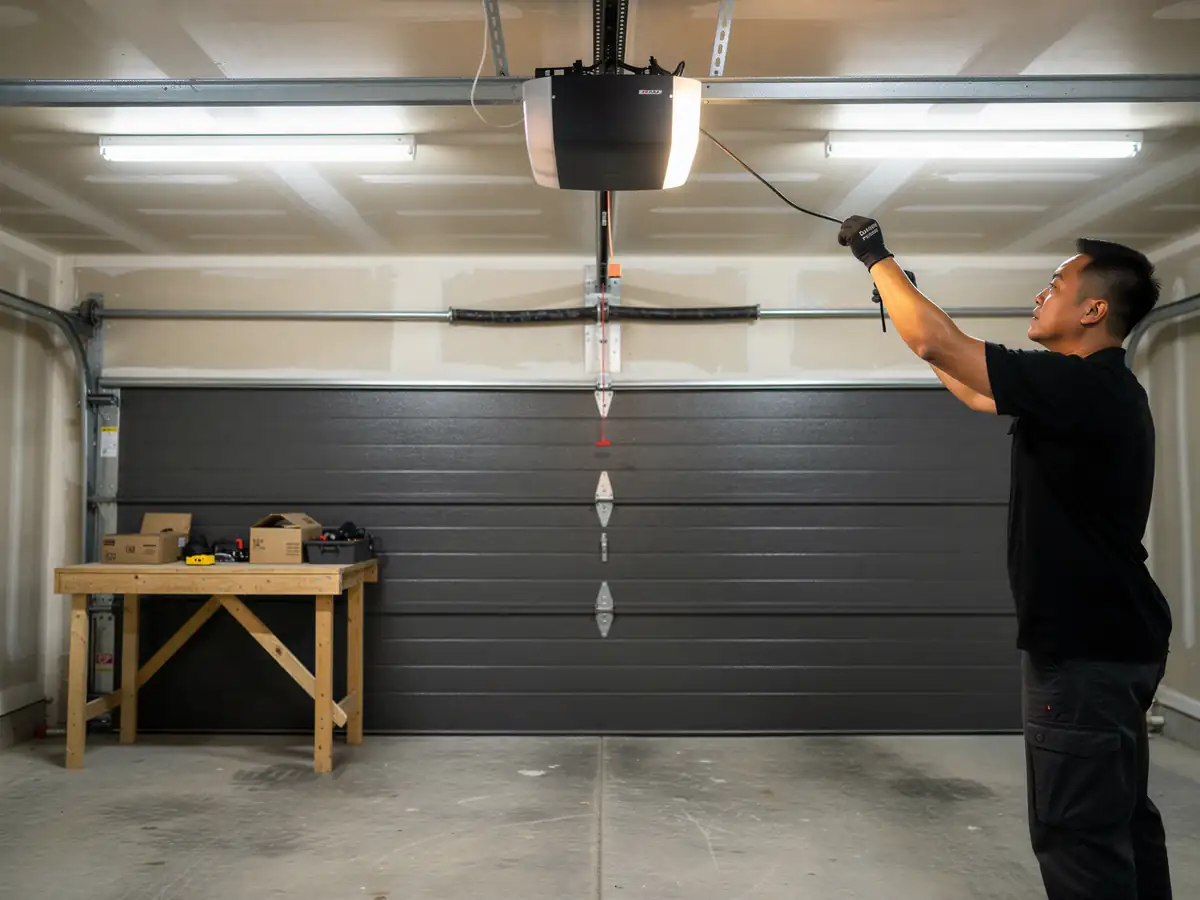
The opener usually tells you something is wrong before it quits outright. The light blinks and the motor hums but the door doesn't move. The remote works from the driveway but not from the car. The door reverses halfway up for no reason you can see. Sometimes it's just slow, grinding through the open cycle like it's working harder than it used to.
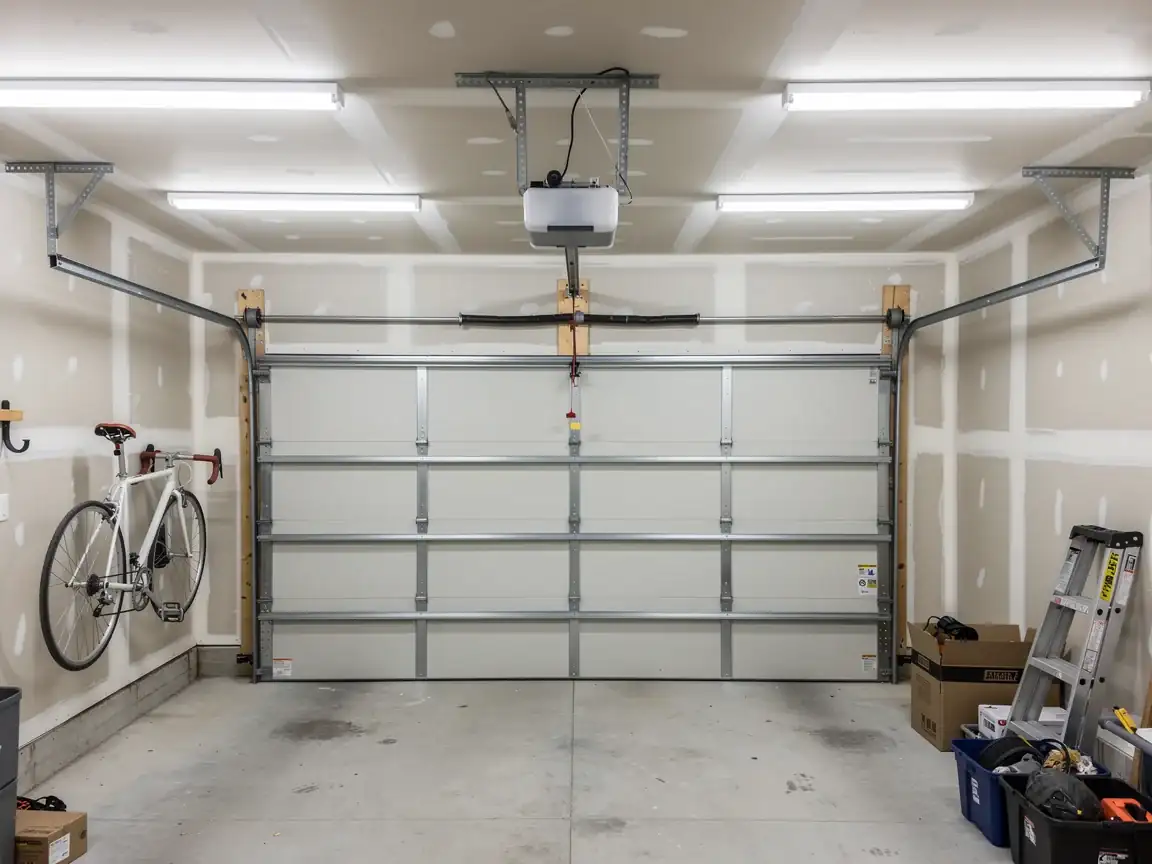
Most of what we find traces back to the drive mechanism or the logic board, not the door itself. Chain and belt units from the late 1980s and 1990s used travel-limit switches and capacitor-driven motors that were solid for their era but were never built to run 30-plus years. When the limit switch drifts, the door either stops short or slams the floor. When the capacitor weakens, the motor strains to start and eventually won't.
A failing wall control or a dead coil on the safety sensors can mimic an opener problem too - the door won't close, and it looks like the motor is at fault when the real issue is a $20 part at the base of the track. Sorting out which one you actually have is most of the job before any wrench comes out.
What You Pay
We don't have a posted price list to point you to here, and quoting a number without seeing the unit would be a guess, not a fact. What we can tell you is what drives the cost up or down: whether the fix is a sensor, a limit switch, or a full motor/logic board replacement; whether your opener is a common chain-drive unit or a less common belt-drive model that needs a specific part; and whether we have that part on the truck or have to order it.
Across the 43,223 households in this service area, a large share own rather than rent, and most of those owners are deciding between a repair and a full opener swap at some point. With a median household income around $70,982 in the area, that decision usually comes down to whether the motor itself has failed - at which point a new opener often costs about the same as a motor and board replacement, and comes with a fresh warranty the old unit doesn't have.
We'll tell you straight when a repair isn't worth it rather than patch something that's going to fail again in six months.
The Complications
The housing stock across this service area runs mostly 1980 to 2005
With a median build year around 1989, and that spread covers eight distinct pockets of construction, not one uniform subdivision. That means the openers out there aren't one model - you've got early-90s chain drives, mid-90s screw drives, and early-2000s belt units, each with its own limit-switch design, its own logic board layout, and its own discontinued remote frequency.
Parts for the oldest units are the real complication
A logic board from a 1989 build often isn't manufactured anymore, and the only fix is a full head replacement rather than a board swap, even when the motor itself is fine. We carry common parts on the truck, but a board for a 20-plus-year-old model sometimes means a short wait on an order rather than a same-visit fix - that's the one limitation worth saying up front.
Homeowners also tend to assume a universal remote will fix a dead opener
It won't if the receiver board itself has failed, which is common in units from this era.
Why This Fails Locally
Summer heat here runs in the severe band for this part of Arizona, and that matters more for openers than most homeowners expect. A garage with a south- or west-facing door bakes all afternoon, and an opener motor mounted on the ceiling of that garage sits in air that's regularly hotter than the motor's rated operating range. Capacitors degrade faster in sustained heat, gear housings made of nylon or composite warp, and circuit boards that would last two decades in a mild climate start failing in twelve to fifteen years instead.
Because most of the houses in this service area were built between 1980 and 2005, a large share of the original openers installed at construction are now sitting right at or past that heat-shortened service window. It's not a coincidence that we see the same failure pattern - weak capacitor, warped travel-limit gear - across houses that otherwise have nothing in common except their age and the summers they've sat through. A door that would still be running fine in a cooler region is often the one failing here first.