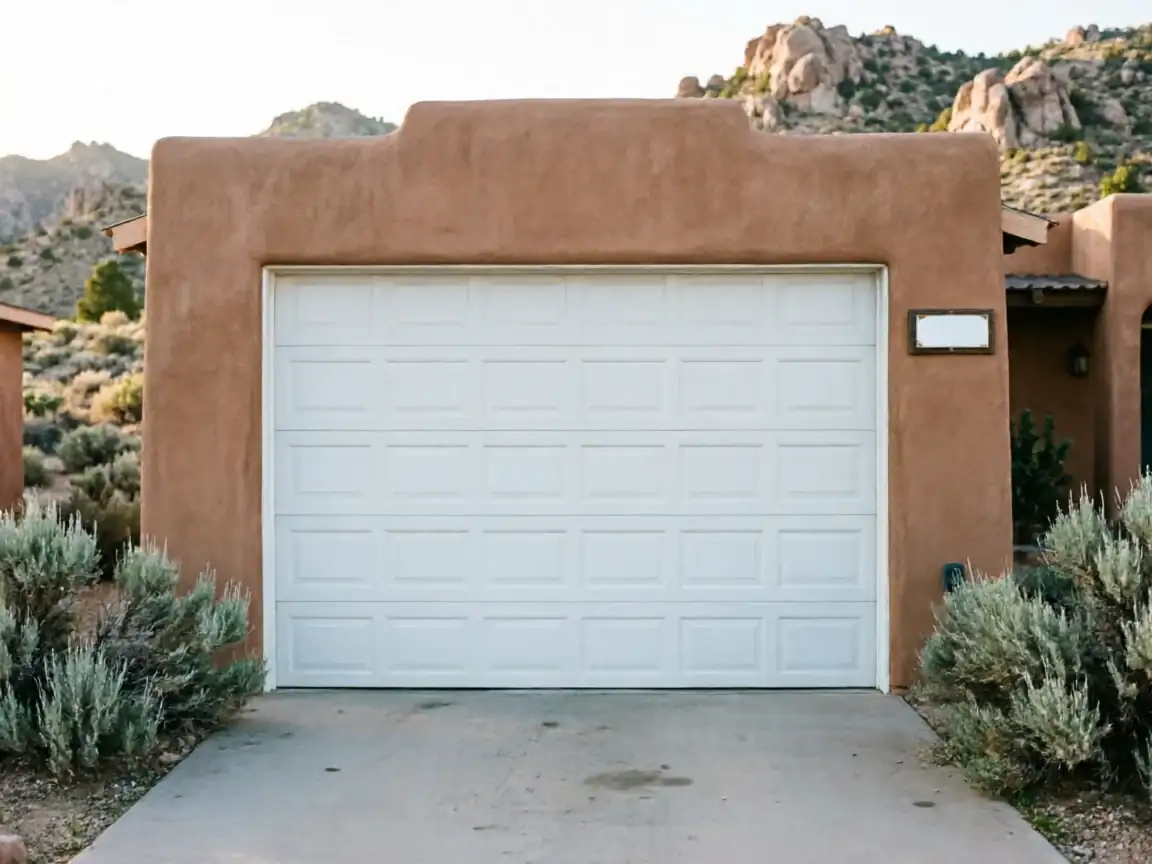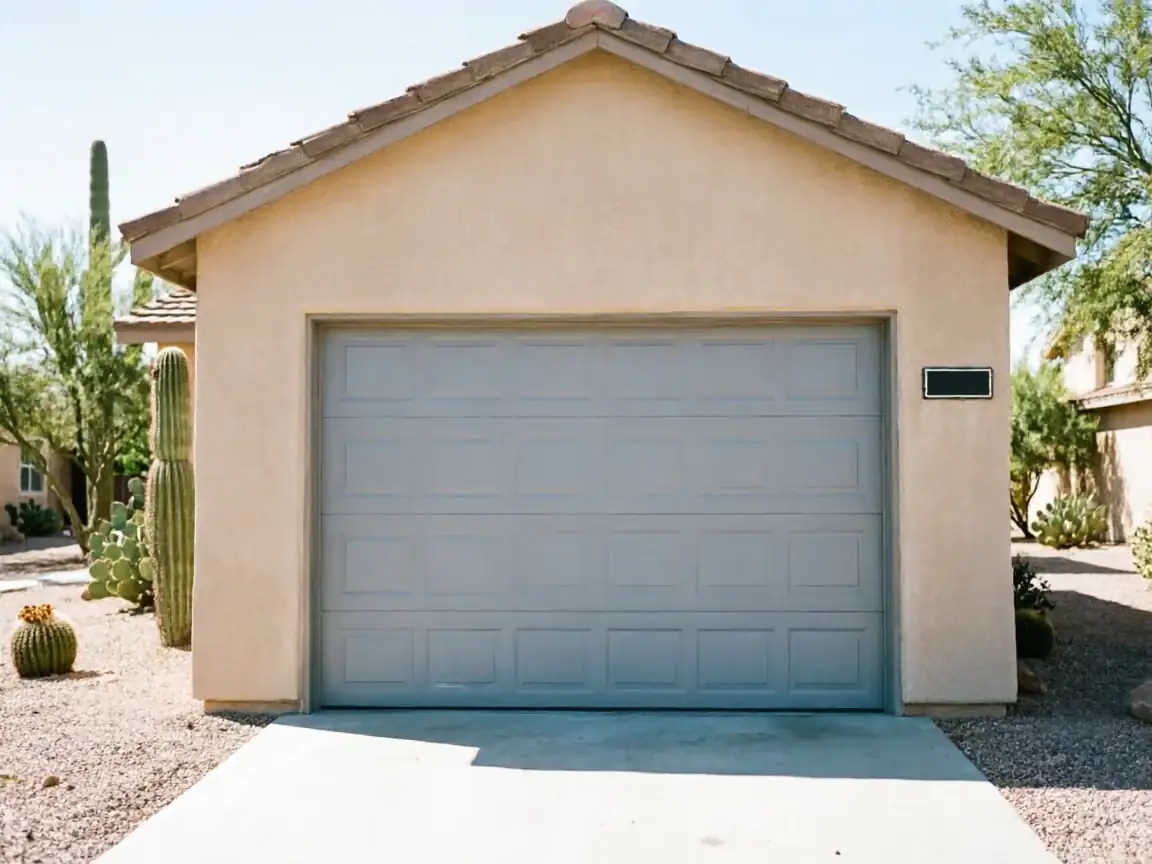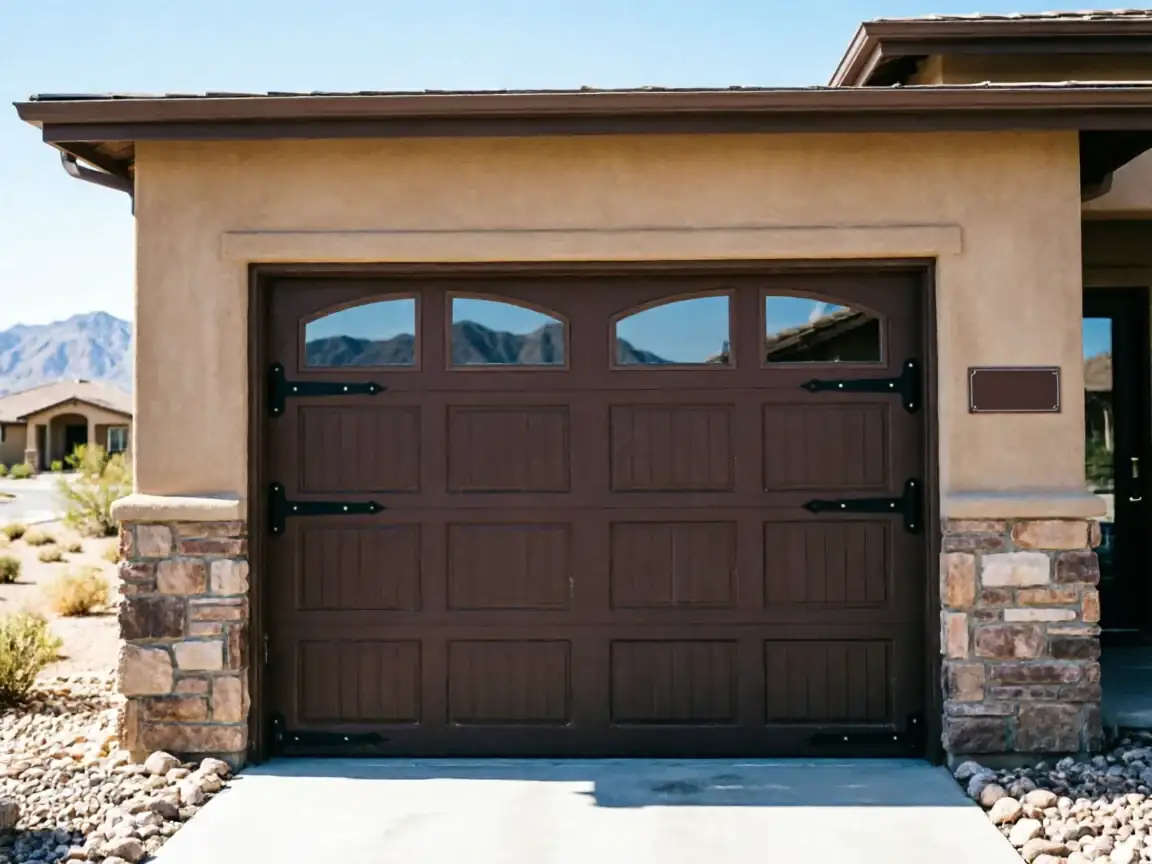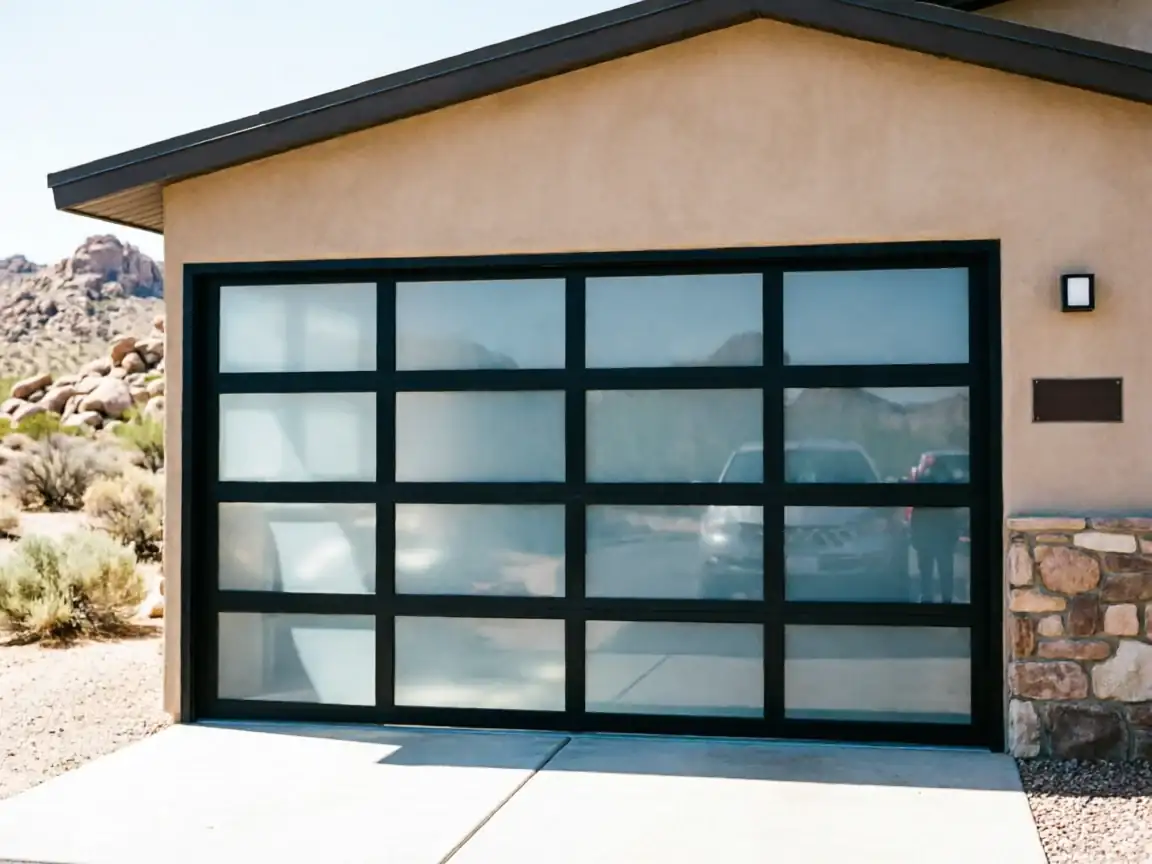
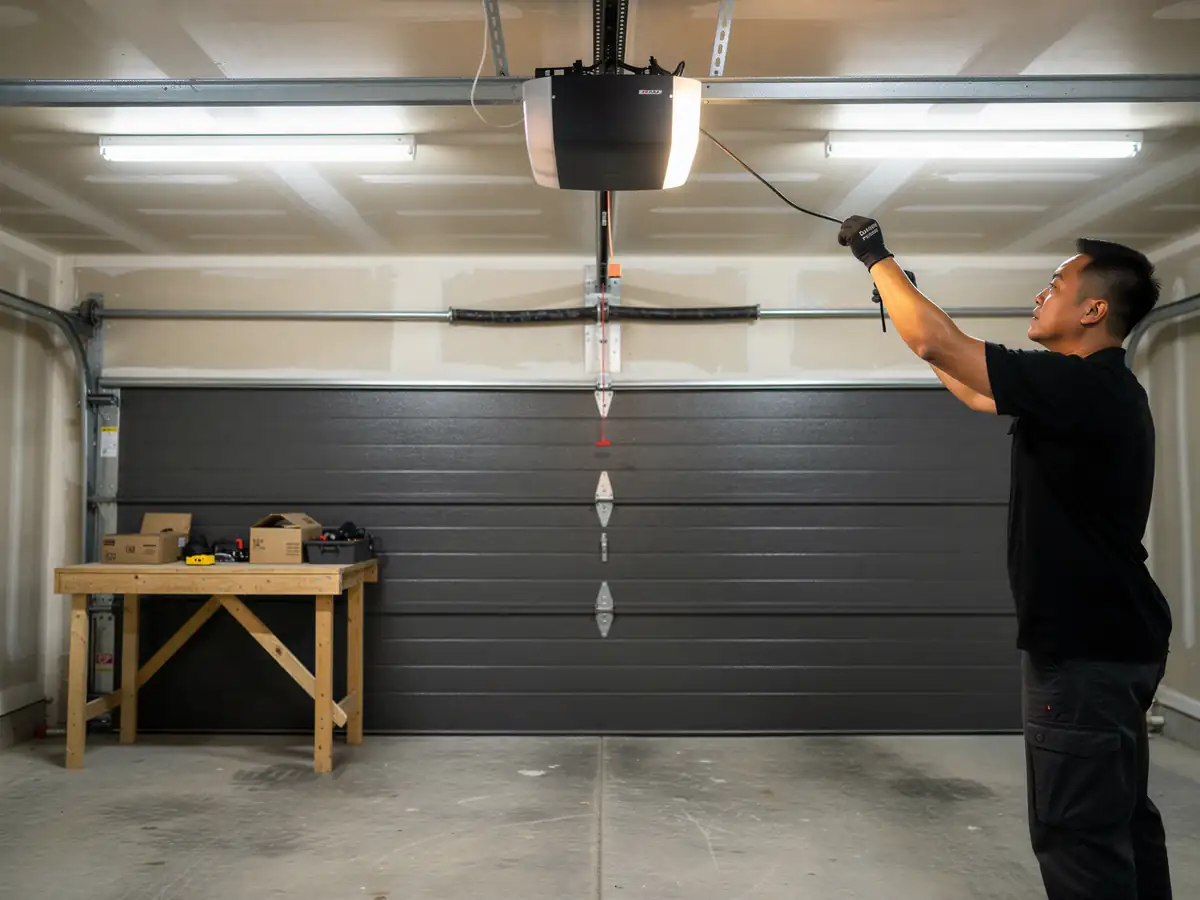
How It Shows Up
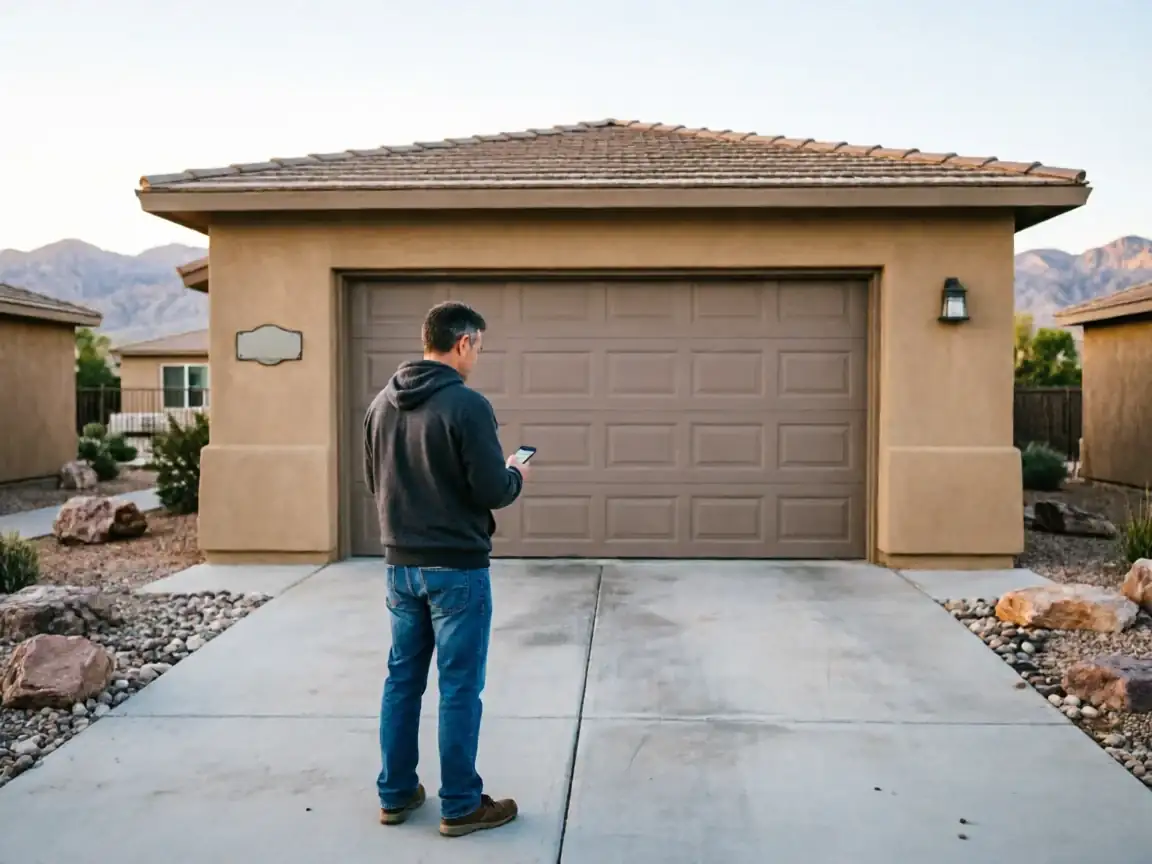
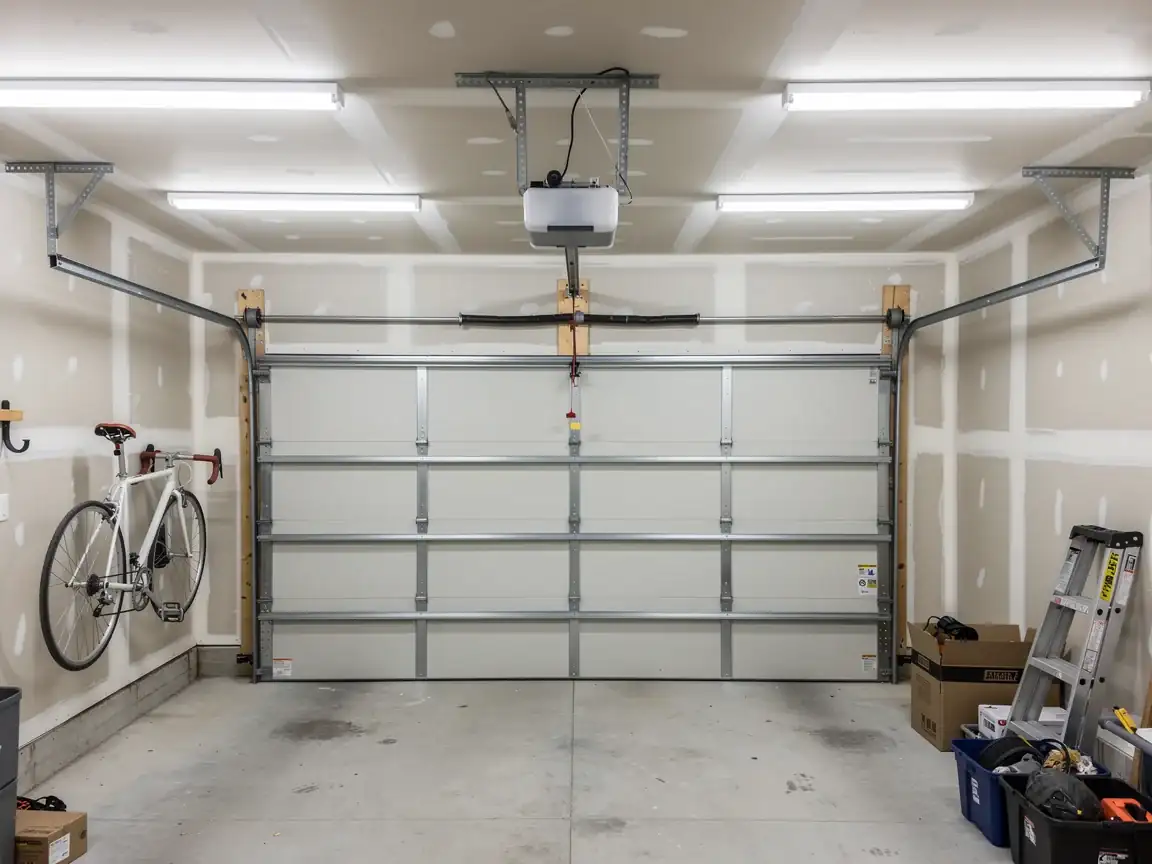
Most calls start the same way: the opener grinds, stutters halfway up, or just hums without moving the door. In a service area where housing mostly went up between 1980 and 2005 (median build year 1989), the original chain-drive units installed at construction are now well past their working life. A lot of these homes across the eight named pockets we cover still run the opener that came with the house, and that motor was never built to run daily in Arizona heat for three and a half decades.
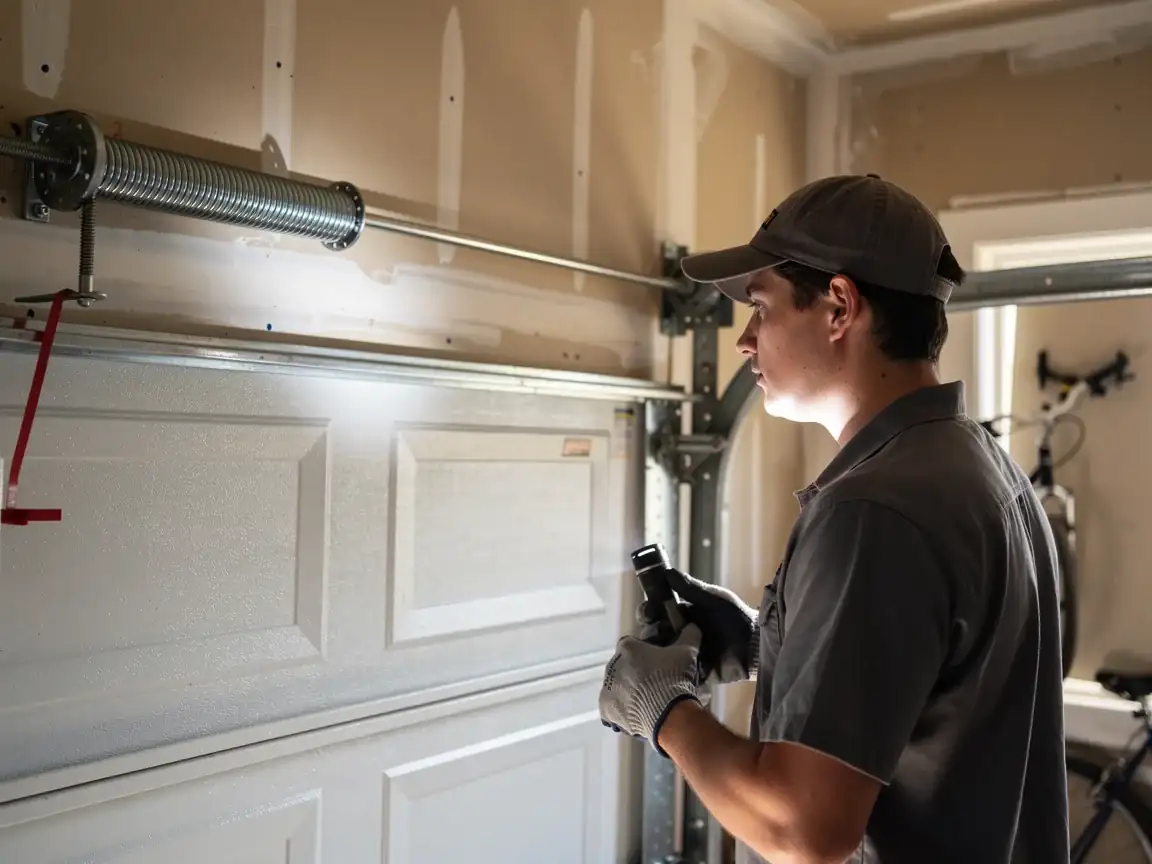
You'll also see the opener trip on itself - lights blinking, door reversing before it reaches the floor. That's often the logic board or the force sensors failing, not the door itself. On older units from the 1980s-90s stock that's common across this service area, there's no diagnostic display at all, so the only sign is behavior: a door that used to close in six seconds now takes ten, or stops short and reverses.
Sometimes it's simpler - the remote still works but the wall button doesn't, or the opener runs but the door barely lifts. Either way, by the time you're calling, the opener has usually been telling you for a few weeks already.
What You Pay
We don't have a posted price here to quote you, and we're not going to guess at one - opener installation cost depends on the unit (belt vs. chain drive), whether your existing rail and bracket are reusable, and whether the door itself needs any adjustment to run smoothly with a new motor. What we can tell you is that the median household income across this service area is $70,982, and most of the opener installs we're asked about are swaps for mid-range belt-drive units rather than the cheapest chain units or the top-tier smart openers.
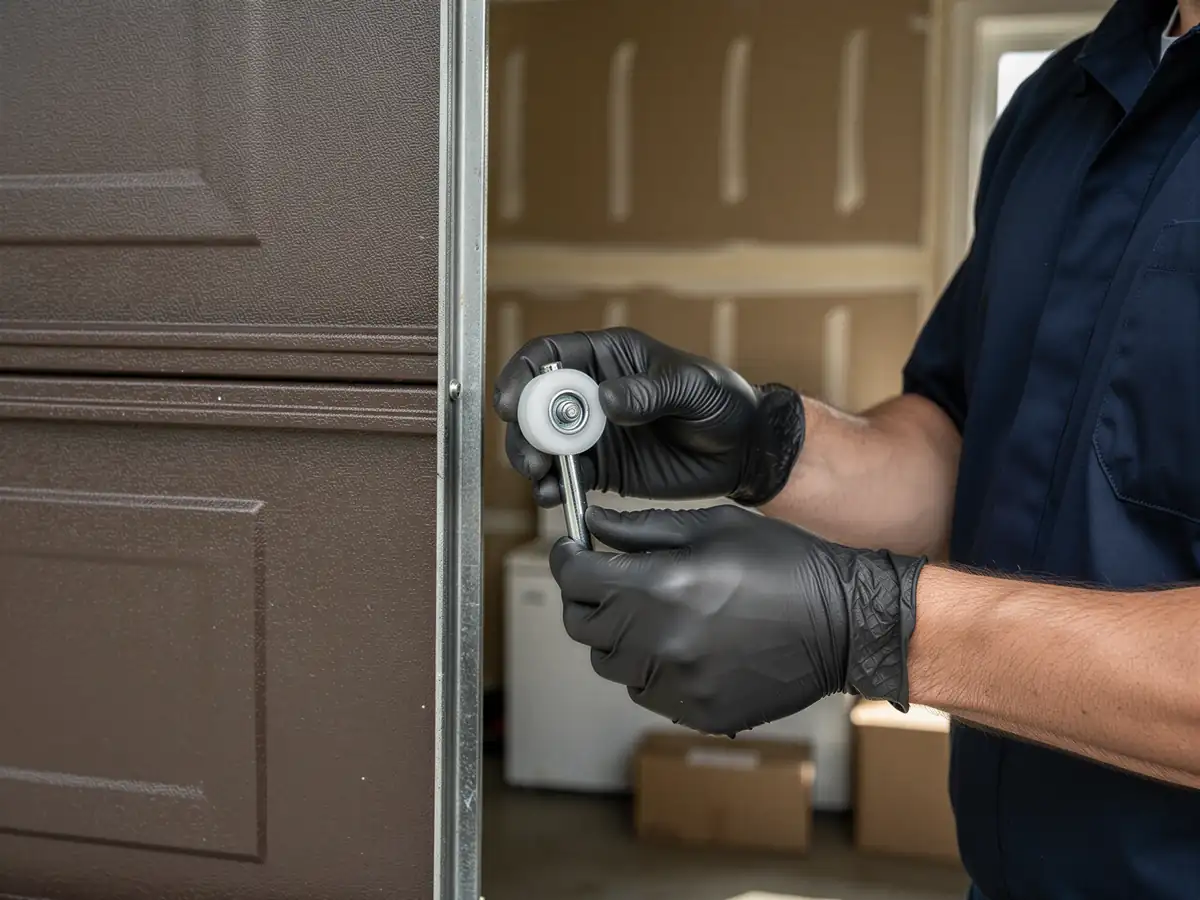
If your door is original to a house built in the late 1980s or early 1990s, factor in that the track, hinges, and rollers from that era may not be a clean match for a modern opener's travel settings without some adjustment. That's not an upsell - it's just what thirty-plus-year-old hardware needs to work with new electronics. Ask for a breakdown that separates the opener itself from any bracket, rail, or sensor work, so you know what you're actually paying for before the truck leaves.
The Complications
Heat is the real complication here
The climate band for this area is rated severe heat, and that matters for opener installs specifically: the motor housing, the drive belt or chain, and especially the logic board all sit inside a garage that routinely runs hotter than the outside air in summer. Openers rated for mild climates fail early here - capacitors and circuit boards degrade faster, lubricant in the drive breaks down, and belts stretch.
The second complication is the housing stock itself
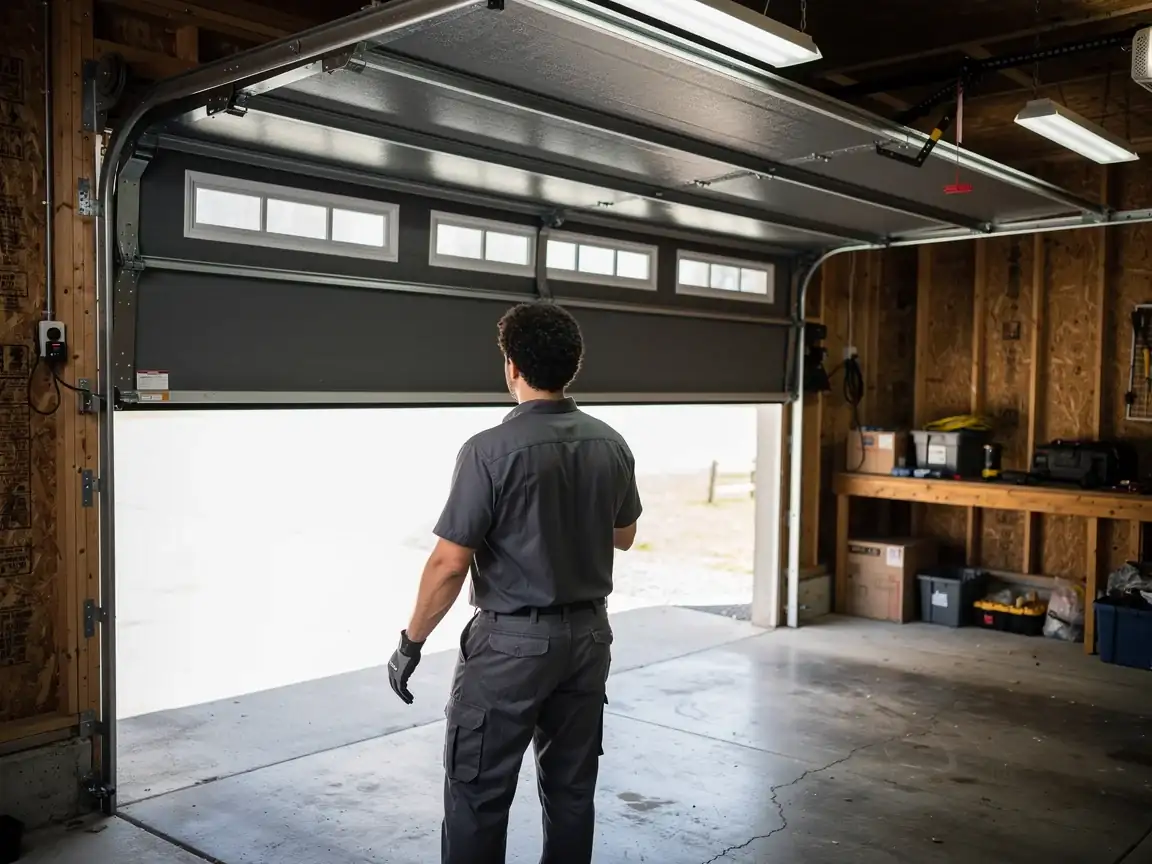
With most homes in this service area built between 1980 and 2005, you've got a mix of door and track configurations across the eight named areas we serve - some torsion, some extension spring, different headroom clearances depending on when the garage was framed. An opener that's a drop-in fit for a 2003 build might need a different mounting kit for a 1985 one.
We'll also be honest about a limit
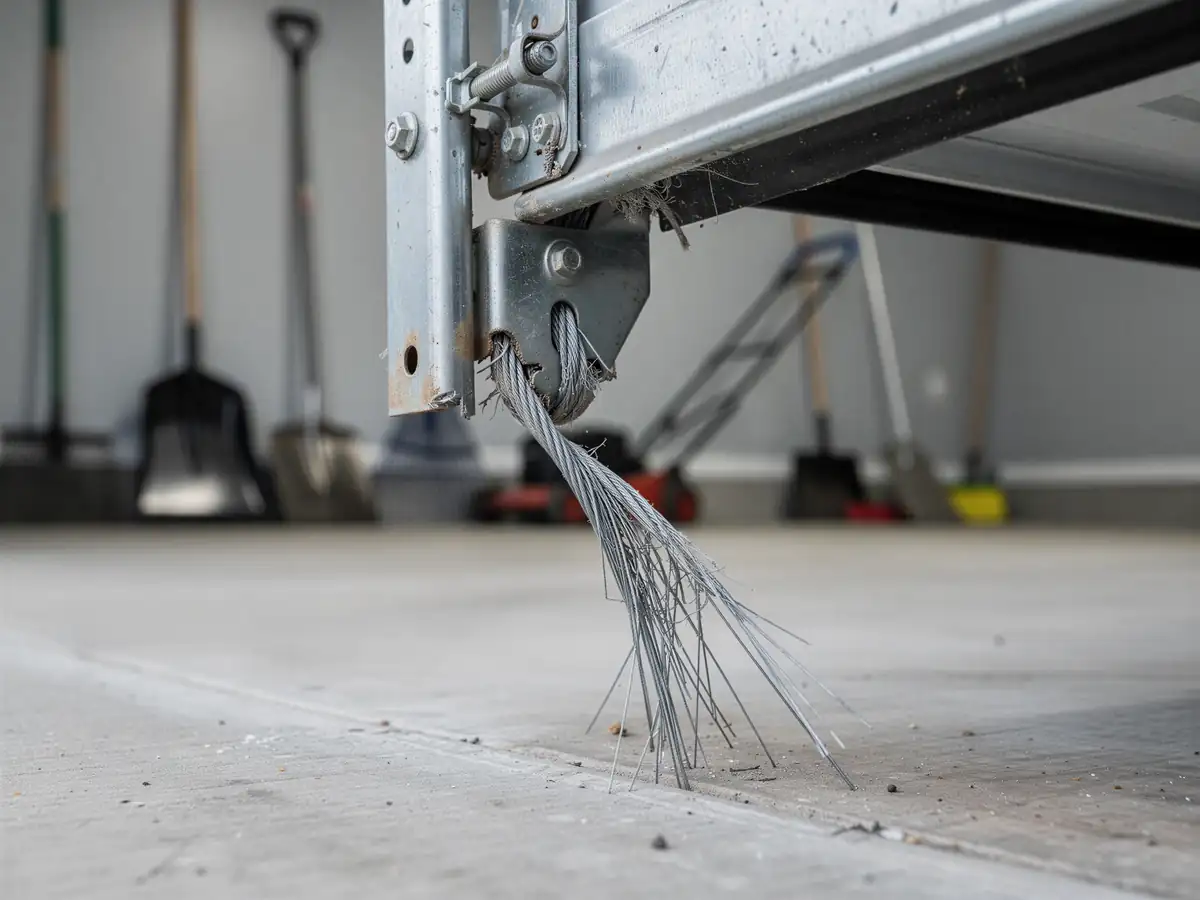
If your existing rail or header bracket is bent, rusted through, or undersized for a heavier door, we're not going to force a new opener onto bad hardware just to finish the job fast. That gets fixed first, or the opener fails again within a year.
Why This Fails Locally
Put the three facts together and the failure mode makes sense. Housing here is mostly 1980s-2005 stock, the climate band is severe heat, and the service area spans 43,223 households with 27,068 owner-occupied houses across places like Catalina, Saddlebrooke. That's a lot of original-era openers sitting in garages that see sustained high heat for months at a time, every year, for over two decades straight.
It's not one bad batch of motors - it's thermal cycling. A chain-drive opener built in 1989 wasn't engineered against today's summer peaks repeated daily for this long. The board solders fatigue, the lubricant in the drive mechanism cooks down, and the travel sensors drift out of calibration. That combination shows up as the stutter-and-reverse pattern we see constantly in this area, far more than in regions with milder, shorter summers.
The fix isn't more frequent oiling - it's swapping to a unit built for sustained heat exposure before the motor burns out mid-cycle, which usually happens with the door half open and a car underneath it.