How It Shows Up
Most of the houses we work on here went up somewhere between 1980 and 2005, with the median build year sitting around 1989. That generation of door came with steel rollers or early nylon rollers on stamped steel tracks, and thirty-plus years of Arizona sun has worked on every one of them whether the door gets used twice a day or twice a week.
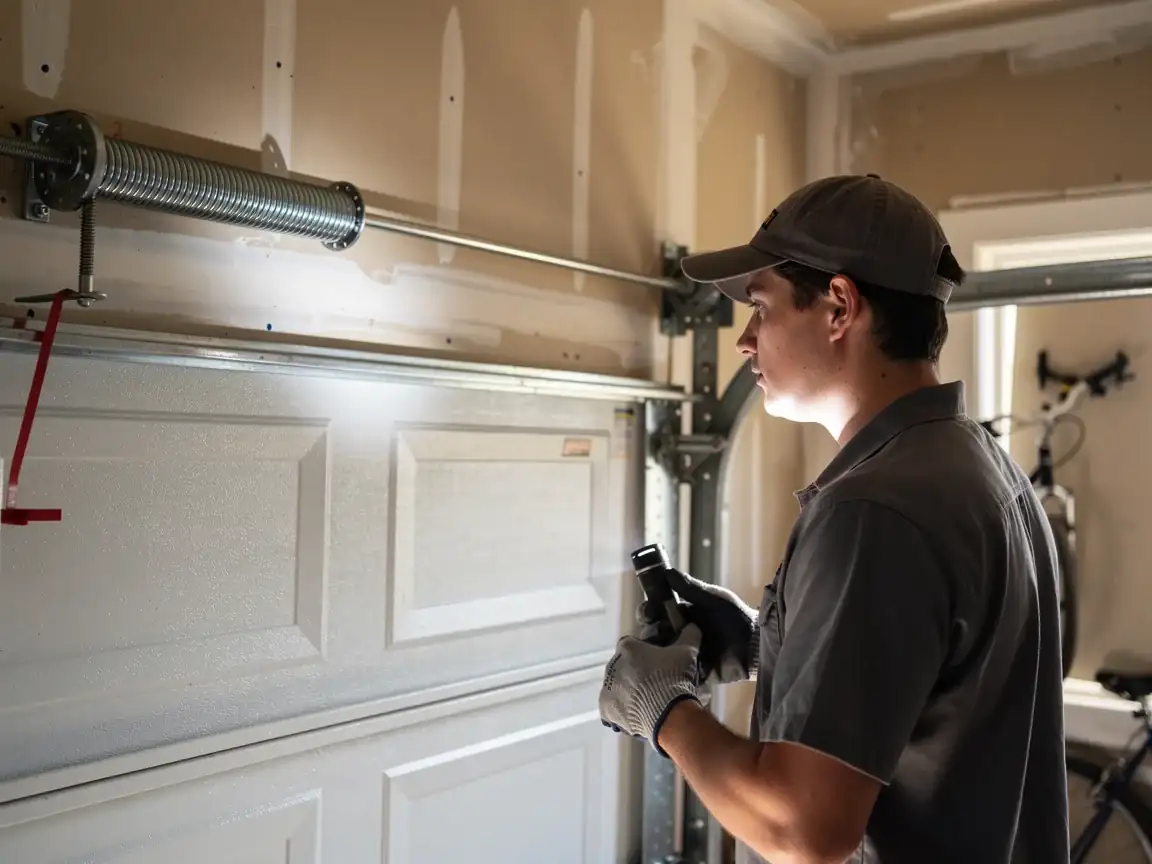
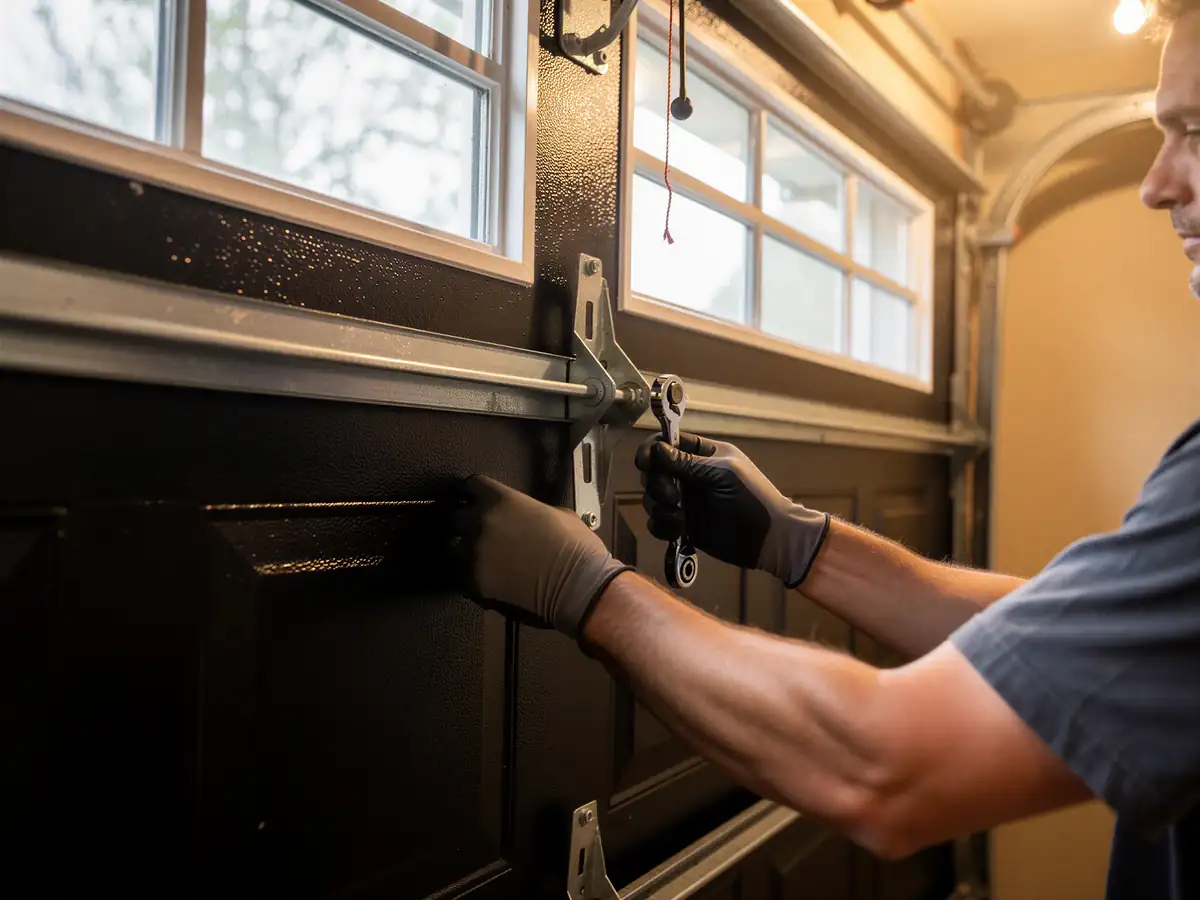
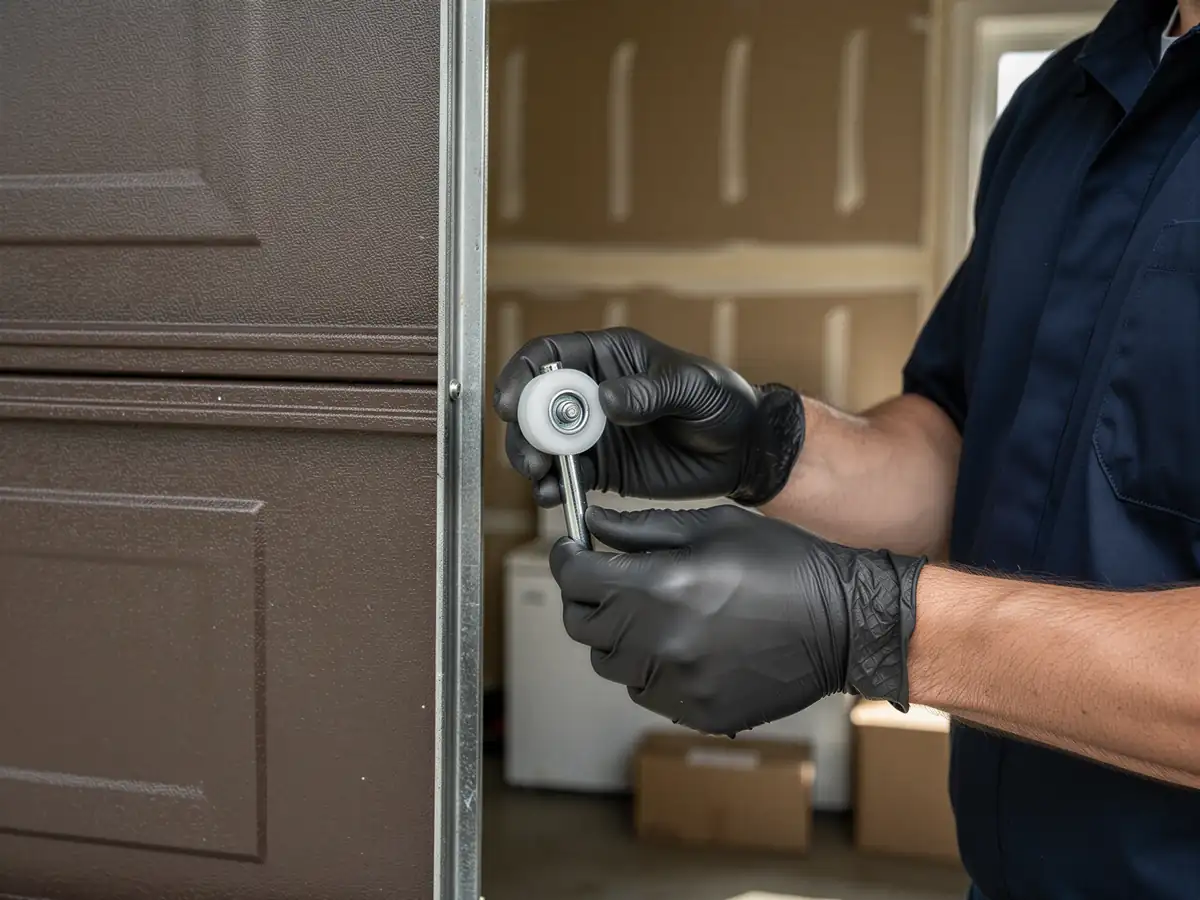
You'll hear it before you see it: a grinding or popping sound as the door travels, especially near the top of the track where the curve starts. Sometimes a roller has worn down enough that it's riding on the stem instead of the wheel, and the door shudders or jumps in the track. On older steel-roller doors, you might see rust flaking off where the roller meets the hinge.
If the door binds hard in one spot every single cycle, that's usually a track alignment problem riding alongside the worn roller, not a separate issue. We check both, because replacing rollers on a track that's bent an eighth of an inch just buys you a few more months before the same noise comes back.
What You Pay
We don't have a posted price list for this job because roller count, roller type (nylon vs. steel, sealed bearing vs. open), and whether the track needs adjustment or replacement all move the number. A full set swap on a double door costs more than a quick fix on two bad rollers on a single door, and we won't know which one you need until we're looking at the door.
What we can tell you: this is a parts-and-labor job, not a diagnostic mystery. Once we've seen the door we give you a number before any work starts, and it doesn't change mid-job unless you ask us to do something extra while we're there, like swap the hinges too.
The Complications
Rollers rarely fail alone
On the 1980s and 90s stock common across this area, the rollers, hinges, and track were all installed at the same time and they age together. Replace the rollers on a door with a track that's shifted even slightly and you're masking a bigger problem - the new rollers will wear unevenly against the misaligned rail and you'll be back to square one faster than you'd expect.
Spring tension matters too
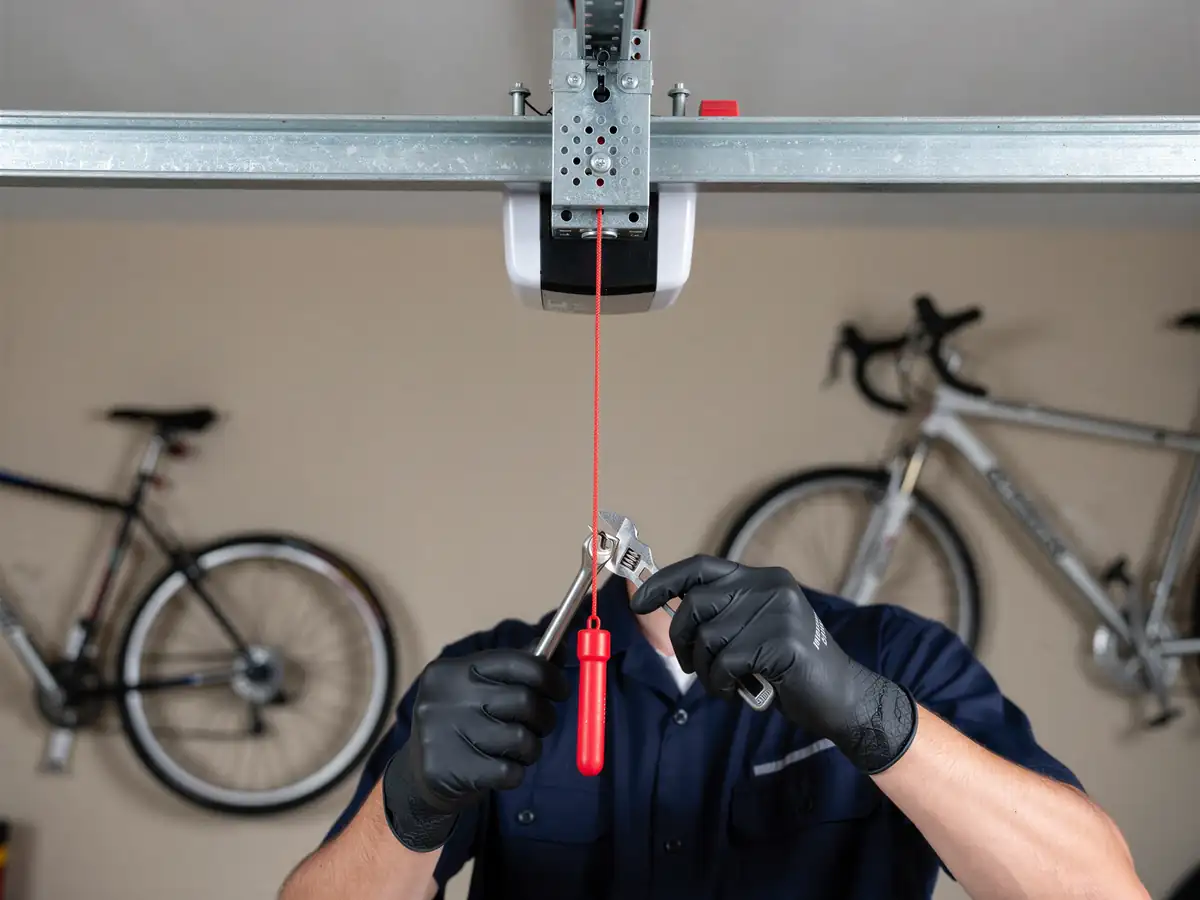
A door with a roller problem that's also riding heavy because the spring has lost tension will keep stressing the new rollers the same way it stressed the old ones. We won't swap rollers and ignore a spring that's clearly undersized for the door - that's a callback waiting to happen, and we'd rather tell you up front than take the easy job twice.
One limitation worth saying plainly
If the track itself is bent or the door is badly out of square, roller replacement alone won't fix the noise or the binding. At that point you're looking at track work in addition, and we'll say so before we start rather than after.
Why This Fails Locally
This is a heat problem more than an age problem. Oro Valley sits in a severe heat climate band, and summer garage temperatures here routinely run far hotter than the outside air - a sealed, unventilated box with a dark asphalt driveway radiating into it. Nylon rollers get brittle under that kind of sustained heat cycling; they harden, crack, and shed material faster than they would in a milder climate. Steel rollers on older doors fare worse in a different way - without regular lubrication, the dry heat accelerates wear on the stem and bearing.
Across the roughly 27,068 owner-occupied houses in this service area, a large share were built in that same 1980-2005 window, which means a lot of original hardware is aging out at close to the same time, in the same climate conditions. It's not that Oro Valley doors are worse-built. It's that the heat band and the housing age line up to wear out the same part, on the same schedule, across a lot of driveways at once.