What You Pay
There's no flat number for a cable job because what's on the door decides the cost, not a price sheet. Catalina's housing stock carries a median build year of 1995, which means most of the doors out here still have their original torsion hardware: standard-gauge 7x19 galvanized cable on steel drums, sized for the lighter doors that were going up in new subdivisions at the time. That cable is cheap and quick to replace on its own. The cost climbs when the drum it rides on has worn a groove, or when one broken cable has let the door drop unevenly and bent a track or hinge on the way down.
Catalina sits in a smaller pocket of the Oro Valley Garage Door Pros service area - about 2,971 households, against roughly 43,223 across the whole area we cover. That's not a pricing factor by itself, but it does mean we're not guessing at what's behind the wall. We know the era, and we bring the parts that fit it, not a one-size kit built for a different decade of door.
We don't publish a rate here because we haven't been asked to price this job sight-unseen, and doing that invites a lowball that doesn't survive the first look under the door.
Why This Fails Locally
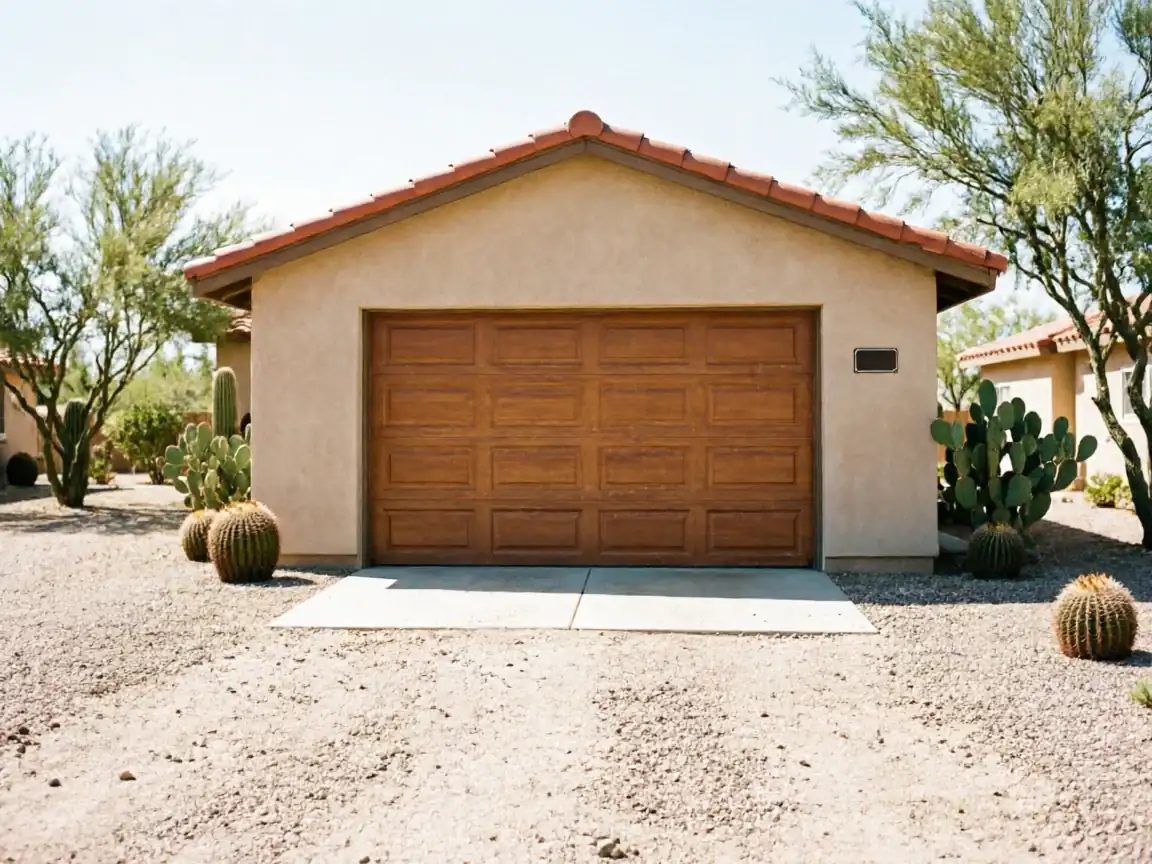
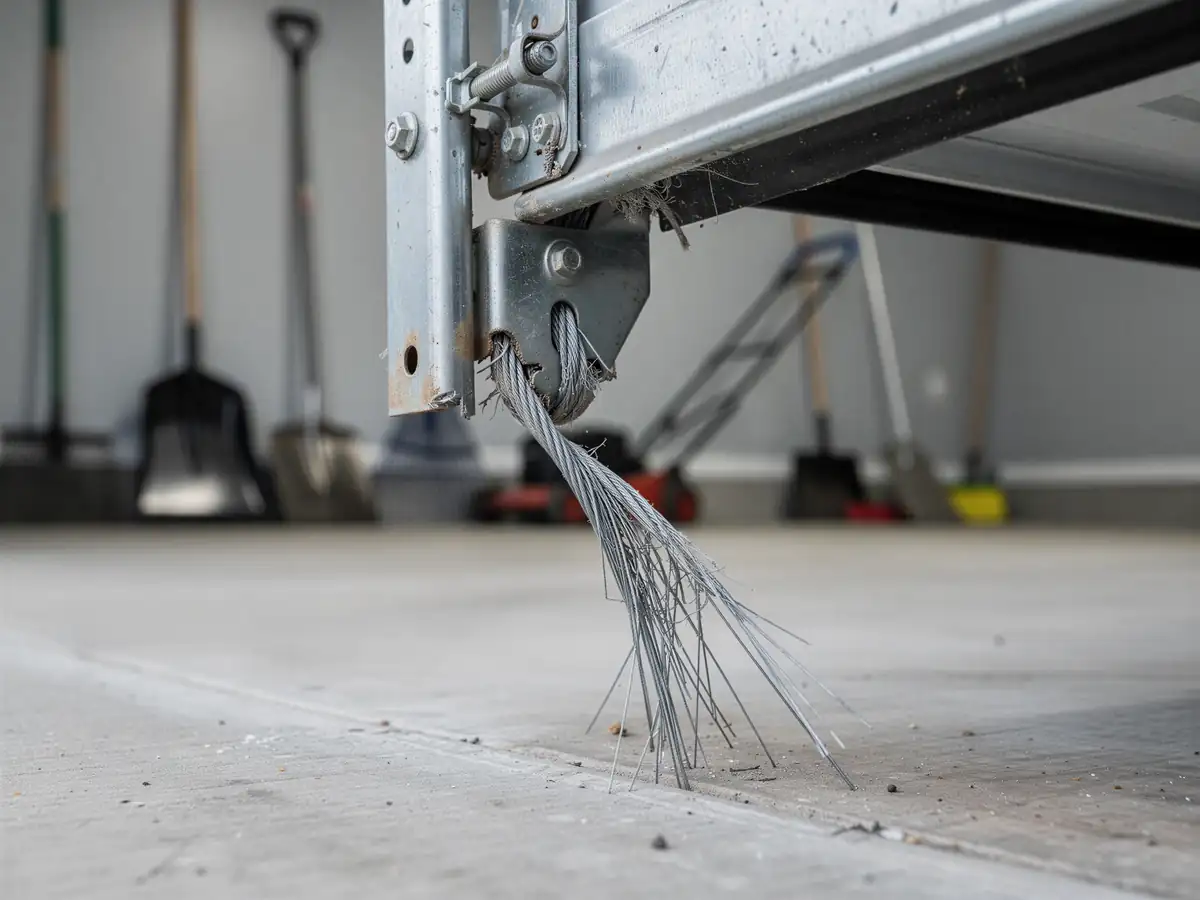
A cable breaks for a reason, and in Catalina the reason is usually heat, not age by itself. This stretch of the service area sits in a severe-heat climate band, and a garage that sees that kind of thermal swing day after day puts real stress on galvanized cable - the zinc coating micro-cracks over repeated expansion and contraction, moisture gets into the strand underneath, and the cable loses tensile strength from the inside out long before it looks frayed from the outside.
Because the median home here was built around 1995, that cable has had roughly three decades of those cycles on the original hardware in a lot of cases. Compare that to a home built in 2005 elsewhere in the service area, where the cable has had a third less heat exposure - same climate, different clock. That's the local math: build year plus heat exposure, not one or the other.
The failure point is almost always at the drum end or the bottom bracket, where the cable flexes the most on every open-close cycle. One frayed strand there, and the next heavy-door cycle finishes the job.
What the Repair Takes
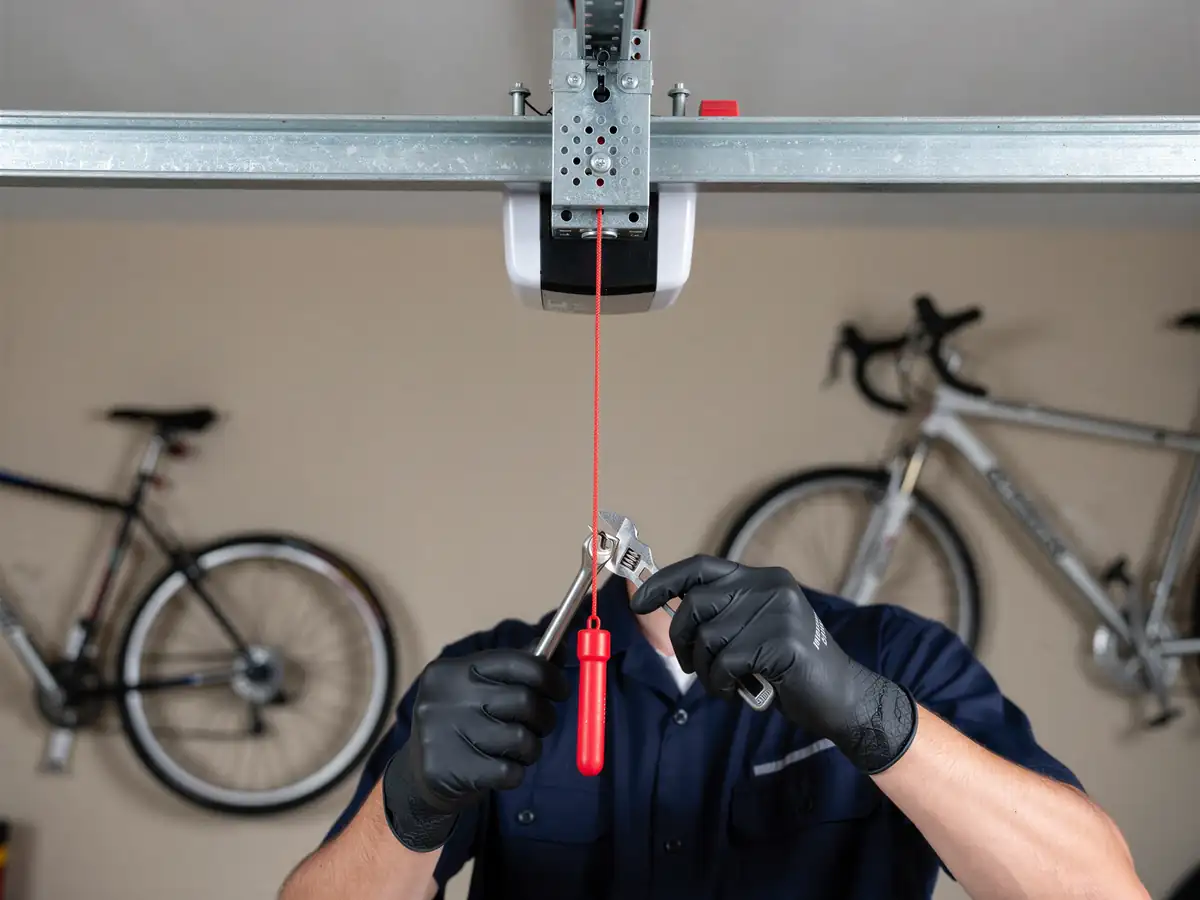
First step is relieving spring tension safely
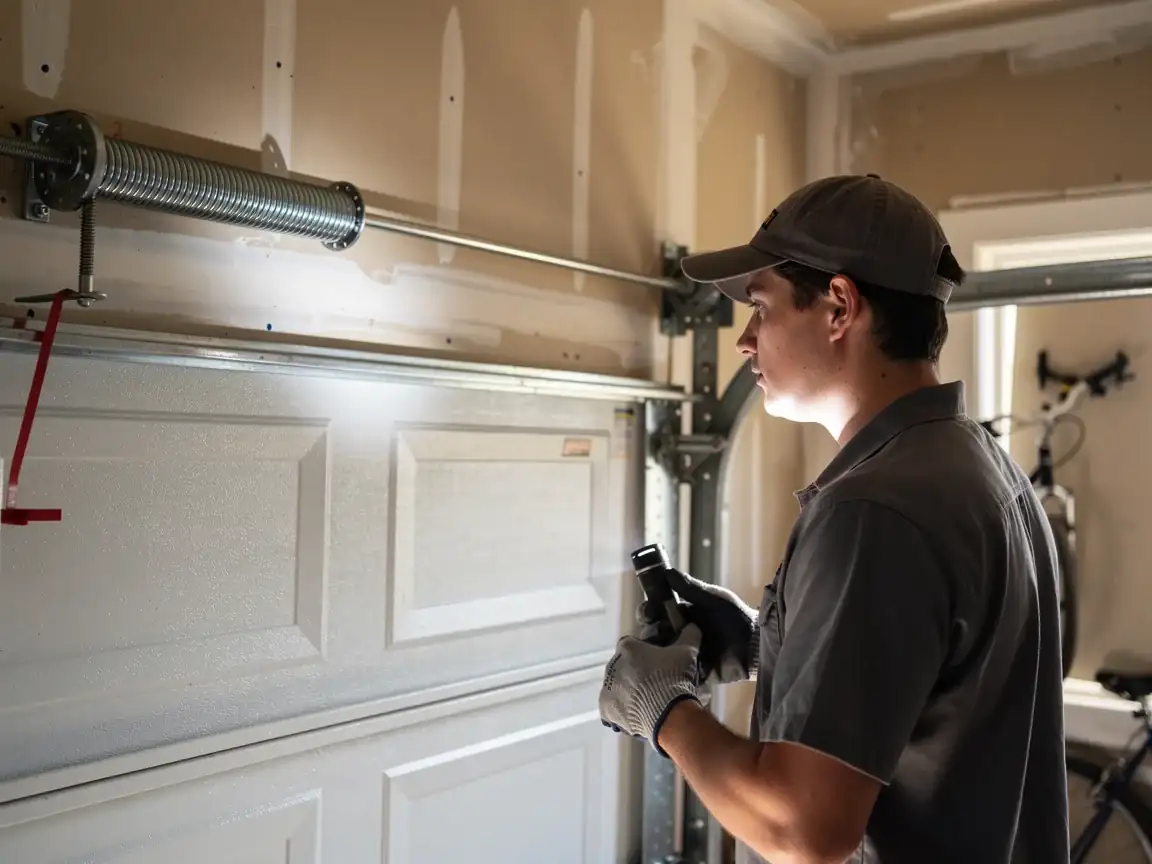
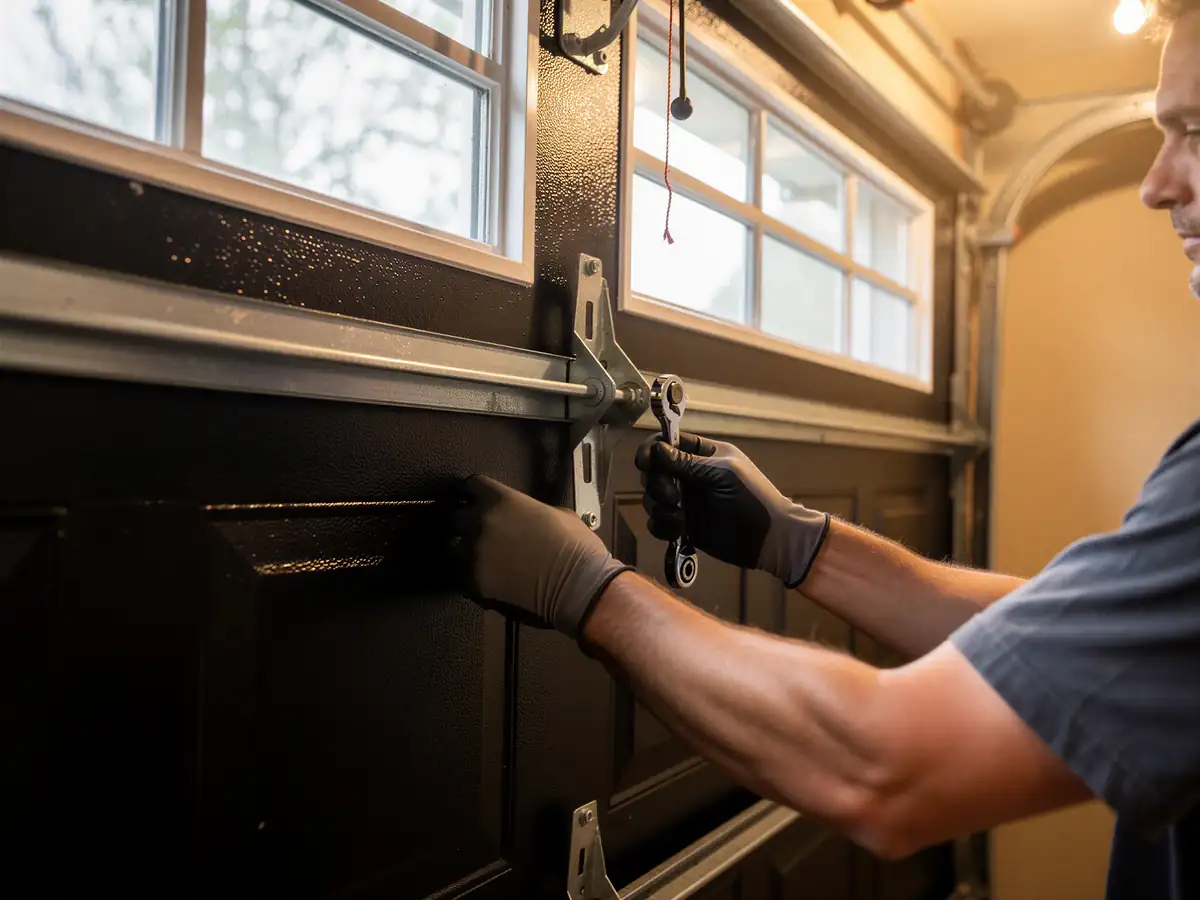
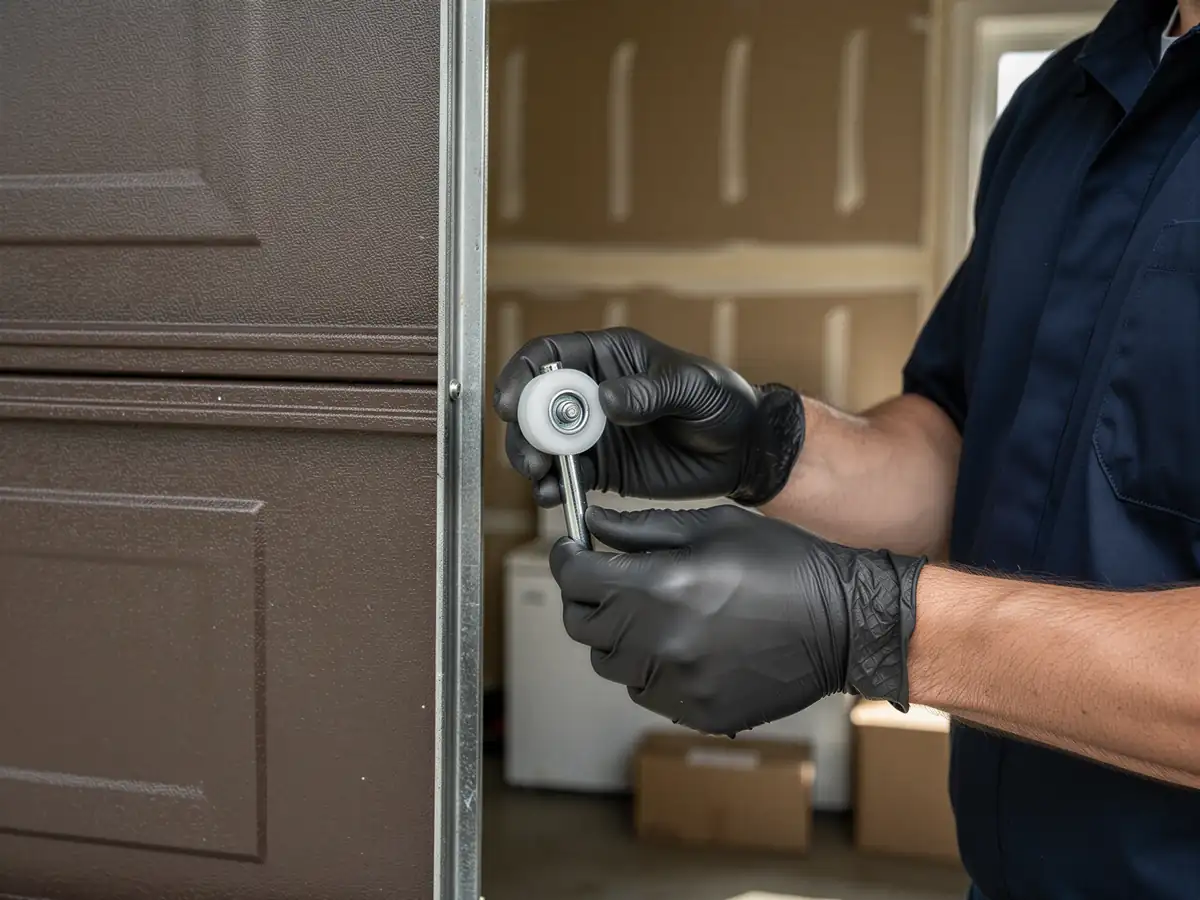
You do not touch a cable with the torsion spring still loaded, full stop. From there it's pulling the old cable off the drum, checking the drum groove for wear, and checking the bottom bracket and the other cable too, since if one side failed from heat fatigue the other side is usually not far behind.
On a 1995-era door we're matching cable length and gauge to door weight and drum size
Which is straightforward once we've got the door model or at least seen the drum in person. We reset spring tension, run the door through a full cycle by hand before using the opener, and check that both cables are seating evenly on the drum - an uneven wrap is what causes the door to tilt a few weeks after a rushed repair.
If the drum itself is grooved from the broken cable riding on it under load
That gets swapped too. Skipping that step is the single most common reason a cable repair doesn't last.
The Complications
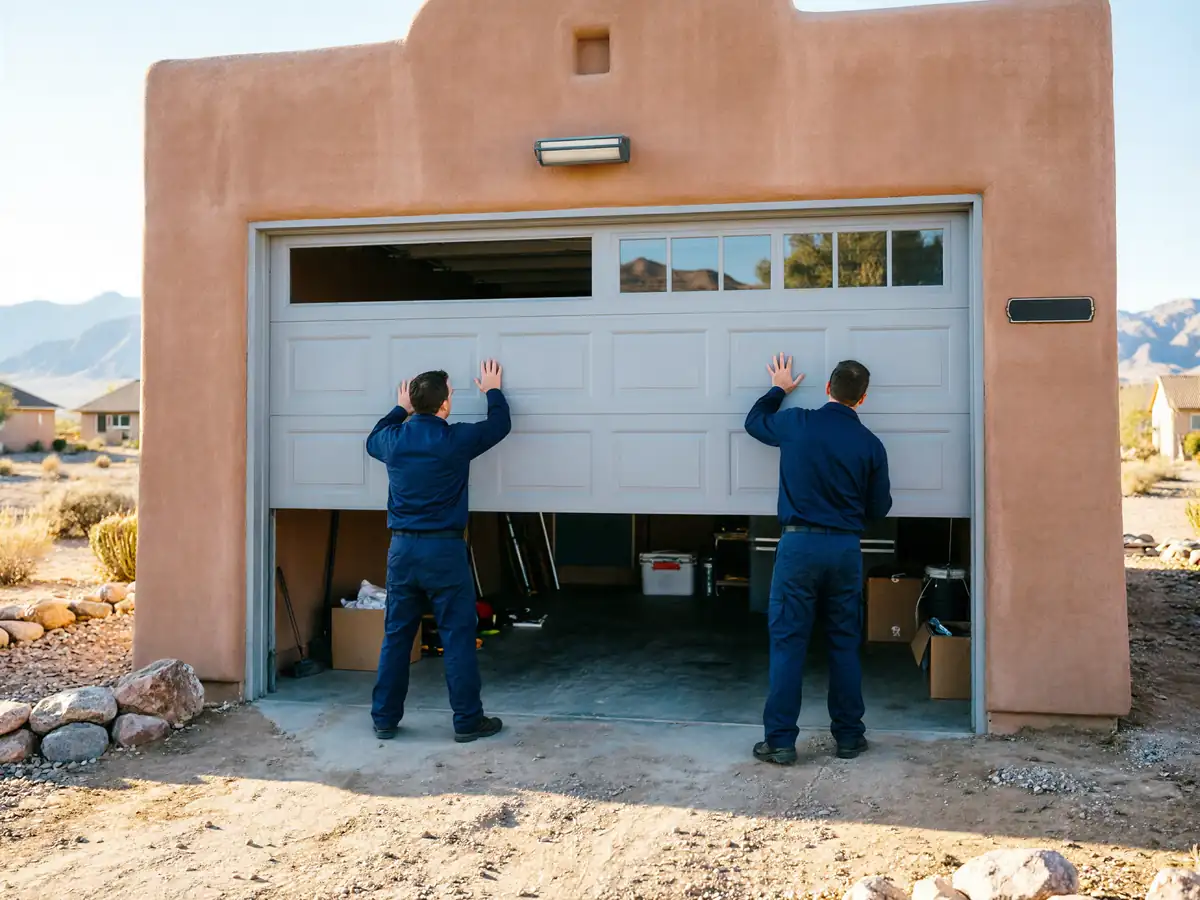
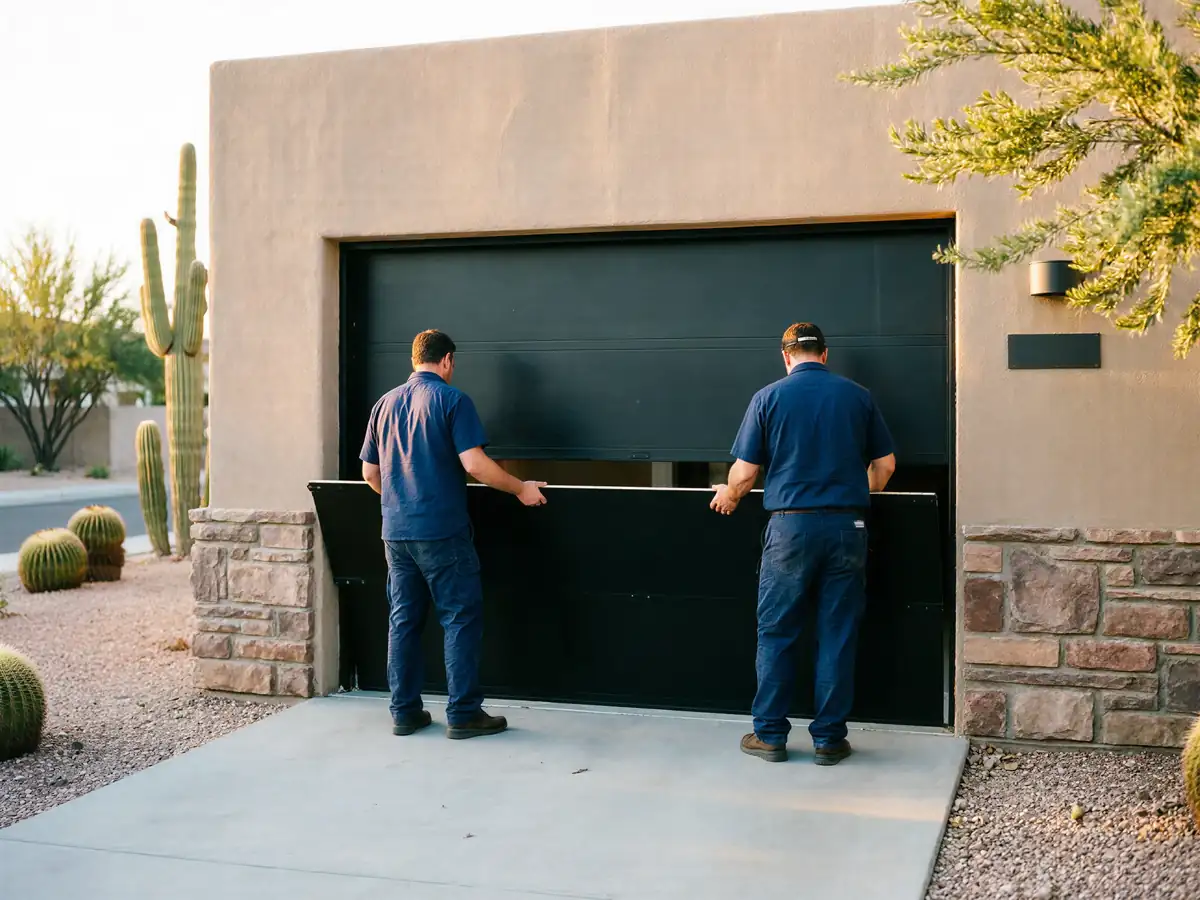
The complication we run into most in Catalina is a door that's been running on a frayed cable for a while before it finally lets go - the owner hears the noise, waits, and by the time it snaps, the sudden drop has knocked the roller out of the track or bent a hinge. That turns a cable job into a cable-plus-track job, and it's worth knowing before we get there.
One honest limit: if both cables are original and one just failed from fatigue, we'll tell you to replace both rather than patch one side, even though that costs more up front. A single new cable against one that's three decades into a severe-heat climate is a mismatch waiting to repeat the same call in a year or two, and we'd rather say that now than get a second service call for the same door.
We travel the roughly 6 miles out from Oro Valley to reach Catalina, so parts we don't carry on the truck mean a short return trip rather than a same-visit fix - worth factoring in if you're trying to get the door closed before dark.