What You Pay
Catalina's median household income sits around $79,092, noticeably higher than the roughly $70,982 median across the wider Oro Valley service area. That gap matters for a panel decision. At this income level, most owners we talk to would rather pay once for a matched replacement panel or a full new door than patch a dented section with a mismatched color or texture that'll bother them every time they pull in. A single replacement panel costs less than a full door, but if your door is old enough that the manufacturer no longer runs that profile, you're not buying a panel - you're buying a new door, because nothing on the shelf will match. We price the job after we see the door, not before, since the real cost driver is whether your panel line is still in production.
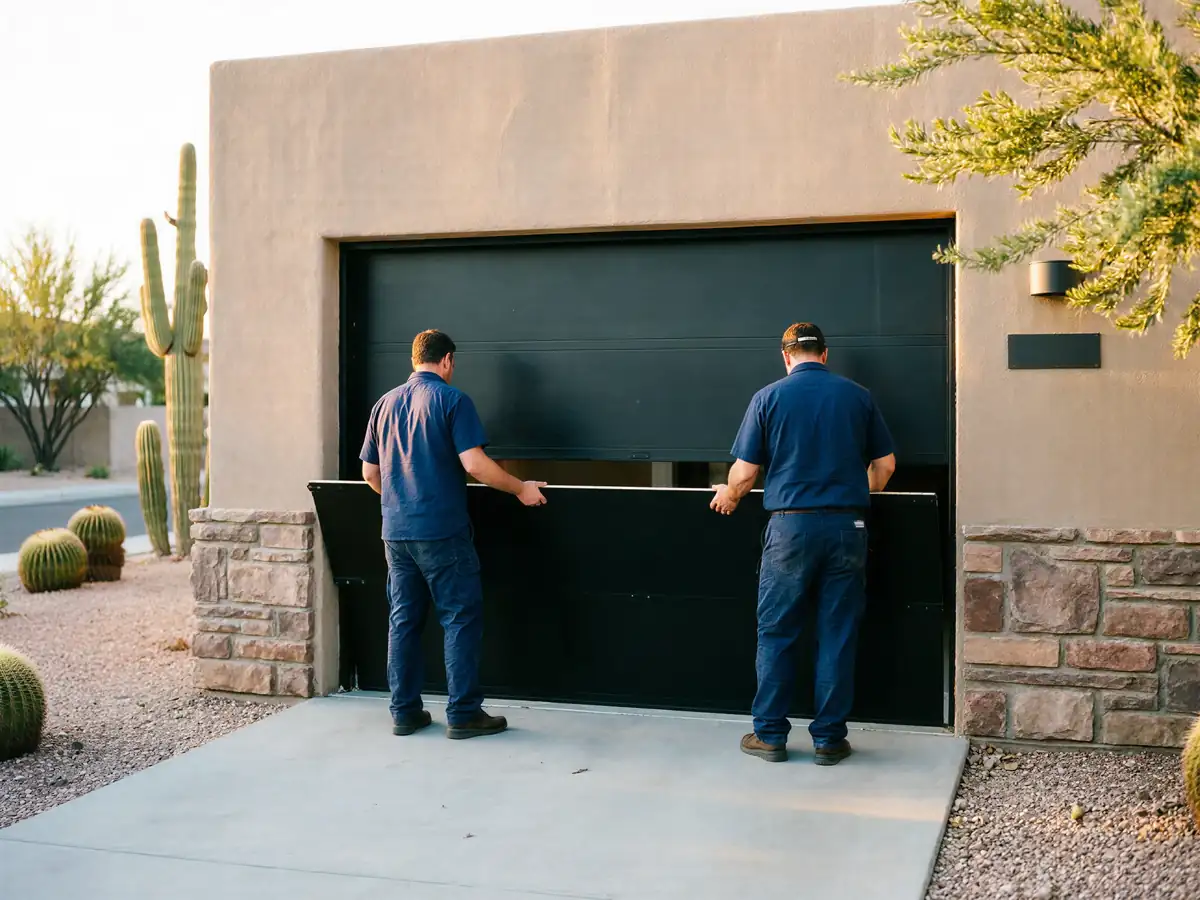
For a dent or a cracked section on a door from Catalina's more common build years, a single or double panel swap is usually the cheaper path and the one we recommend first. Full breakdowns of what a swap runs for this market live on our main panel replacement page for the service area, not here - this page is about what's different in Catalina specifically.
Why This Fails Locally
Catalina's housing stock centers on 1995, newer than the 1989 median across the broader service area covered by F1. That ten-year gap puts a lot of Catalina doors into the steel roll-formed panel generation with thin foam-core insulation - a step up from the older flat steel slabs common in the earliest part of the service area, but still a door that wasn't built for the heat load this region actually sees.
The climate here runs in the severe heat band, and foam-core panels from the mid-90s take that heat on the inner skin for years at a stretch. The foam separates from the steel skin slowly, and you see it as a bulge or a soft spot near the panel edge long before the door actually fails. On a 1995-era door, that's the panel to watch, not the hinges or the rollers. A door built even five years earlier or later than that median year often has a different panel gauge entirely, which is part of why a panel pulled off a neighbor's door two streets over doesn't always fit yours.
What the Repair Takes
We come out from Oro Valley, about 6 miles south, to look at the door before we quote anything
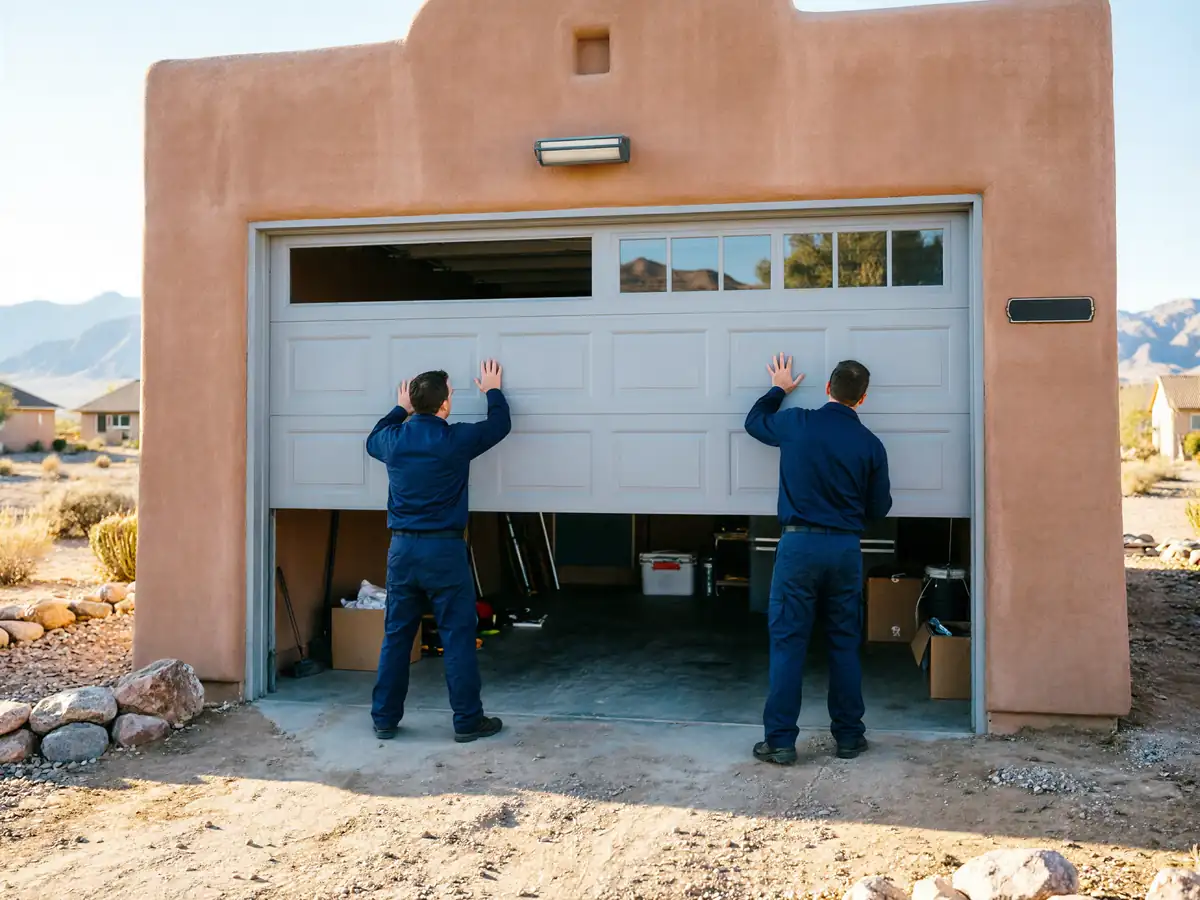
Panel replacement isn't a job you can price blind over the phone, since the fix depends entirely on whether your panel style is still available. If it is, a single-panel swap on a double-wide door is a same-visit job once the part's in hand. If the door predates or postdates the 1995 median by enough that the track height or panel height is nonstandard, we may need to order the panel, and that lead time isn't something we control.
- 6 miles
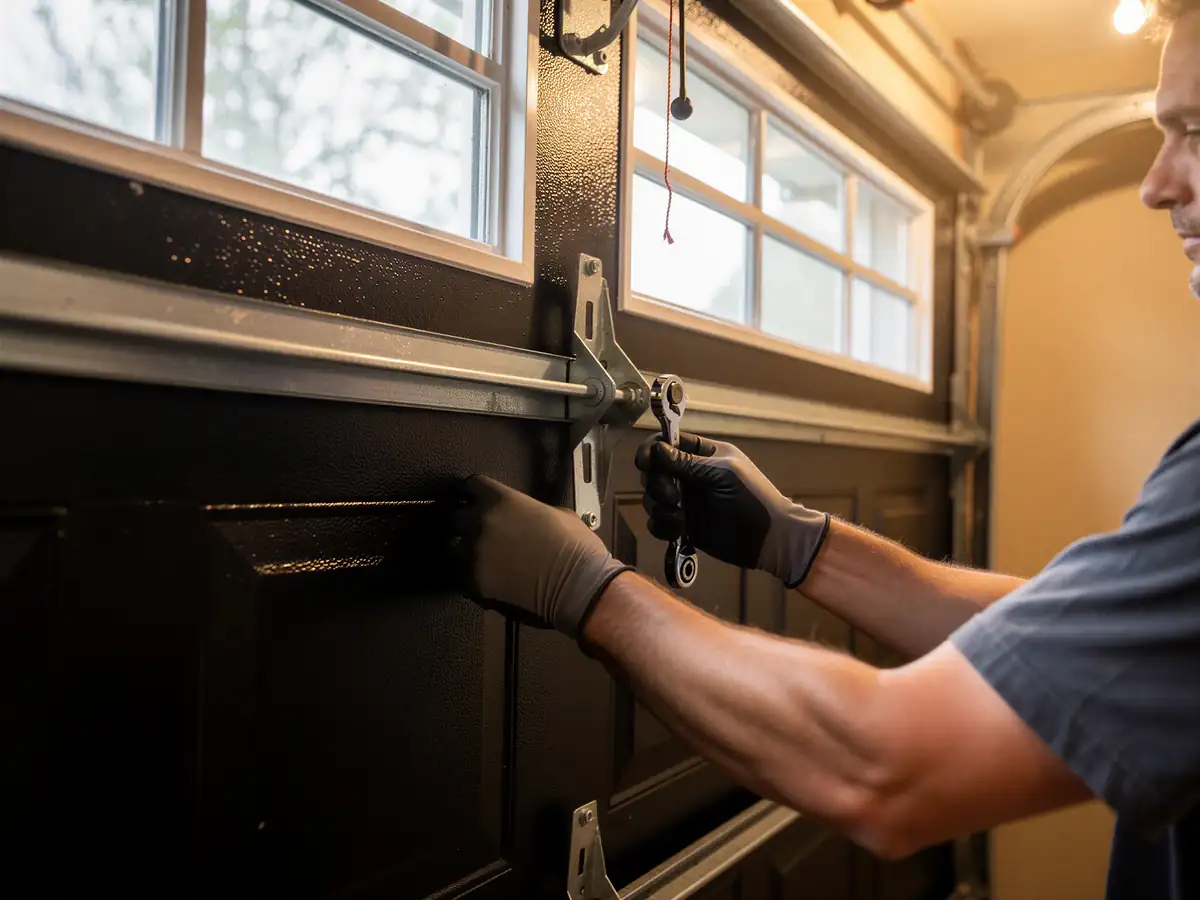
We'll also check the hardware around the swapped panel
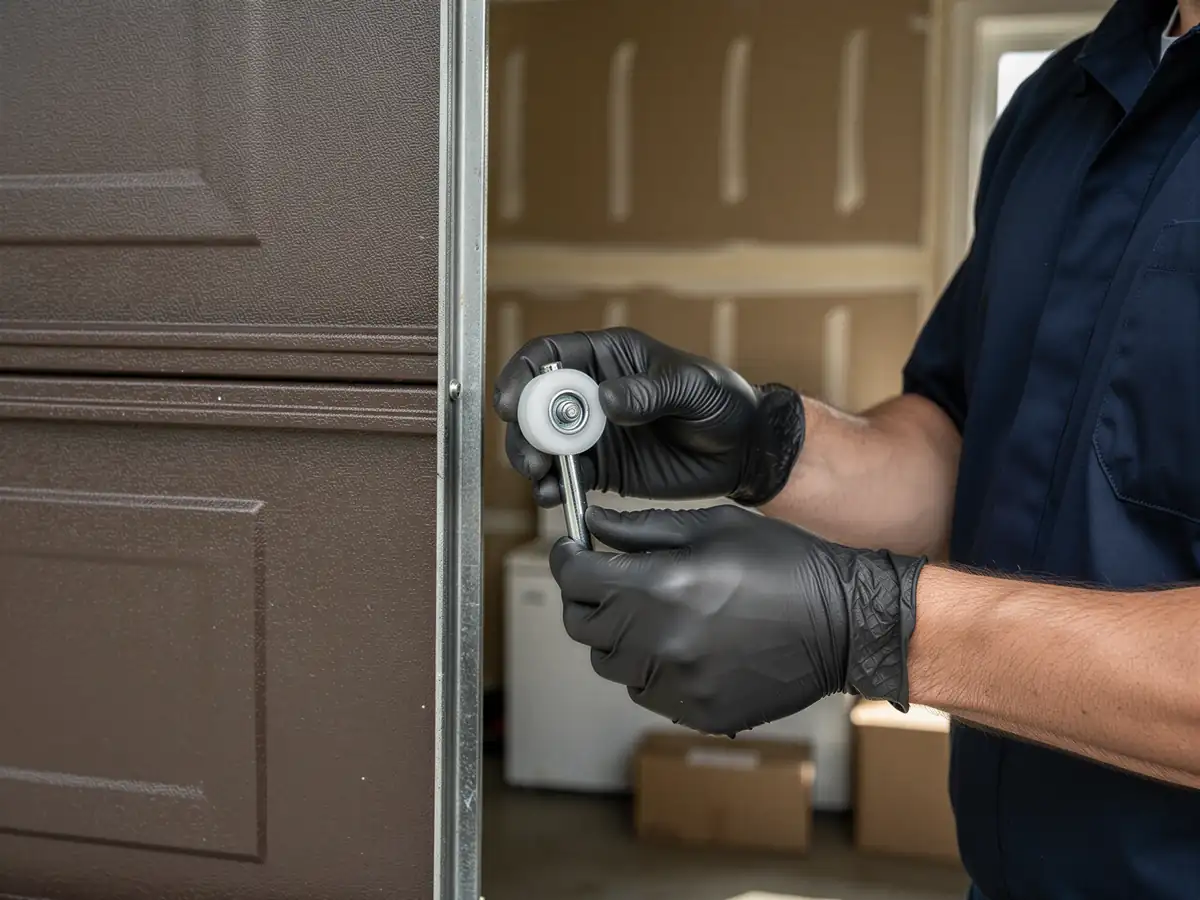
Hinges, rollers, the section joints - because a new panel bolted to worn hinges just transfers the strain to the next weakest point. On a 1995-built door that's original, that hardware has had close to three decades of Arizona heat cycling on it, and it's often due regardless of what brought us out.
The Complications
The honest limitation: if your door is old enough, or was a builder-grade model that's since been discontinued, we can't guarantee a color or texture match even when we can source a compatible panel. Steel ages and fades under sun exposure differently than a brand-new panel will, so a technically correct replacement can still look like a patch. We'll tell you that before we order anything, not after.
The other complication is sourcing. A panel for a door built right around Catalina's 1995 median is more likely to still be in production than one from the earliest end of the service area's 1980-2005 range, but it's not guaranteed - manufacturers change panel profiles without much notice. If we can't get a matching panel, replacing the full door is usually less disruptive than living with a visible seam, and we'll say so rather than force a mismatched fix just to avoid a bigger quote.