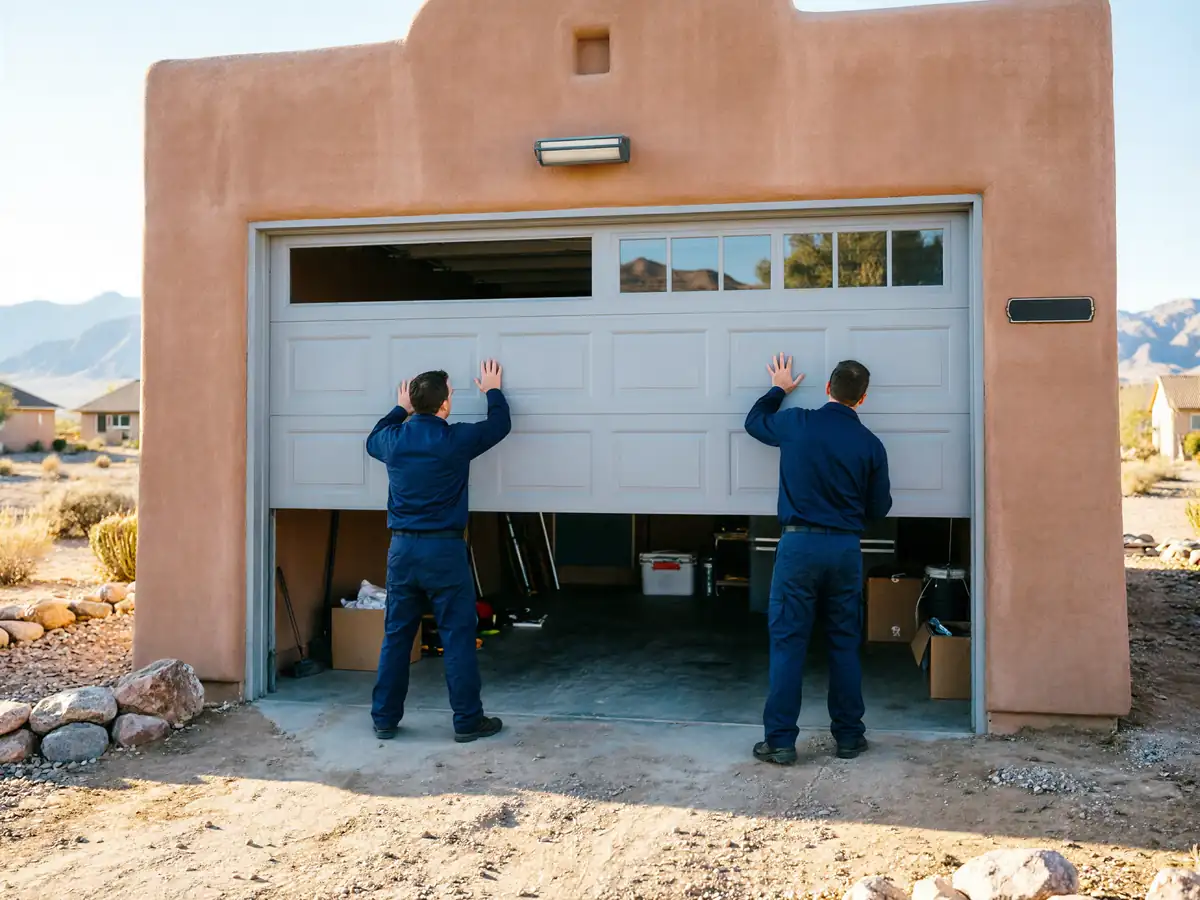
What the Repair Takes
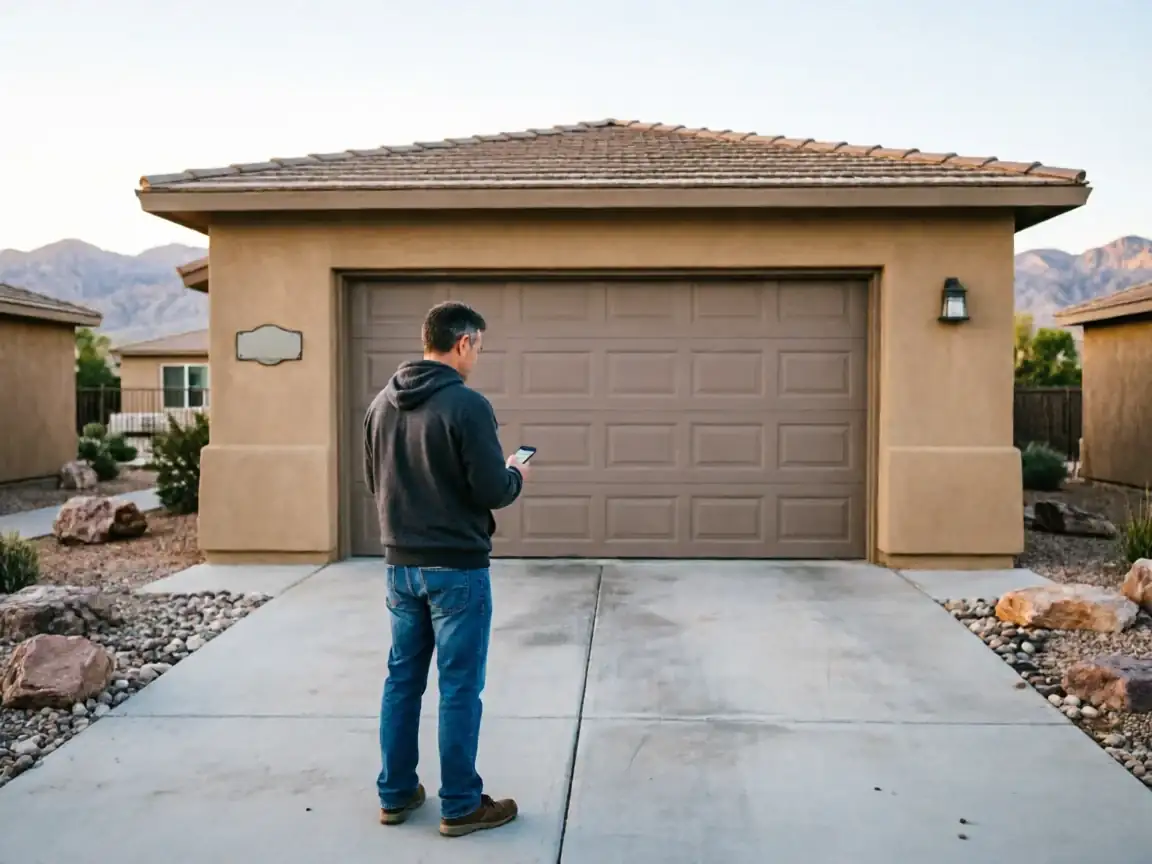
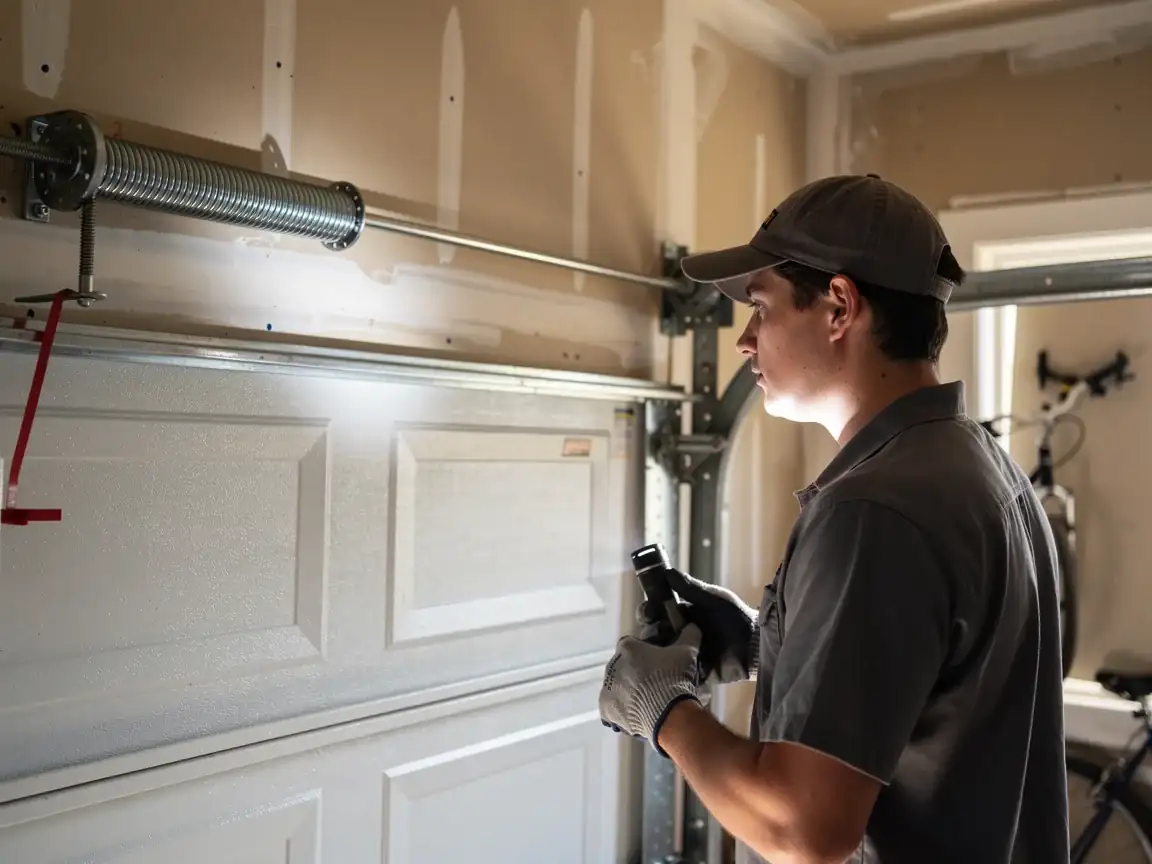
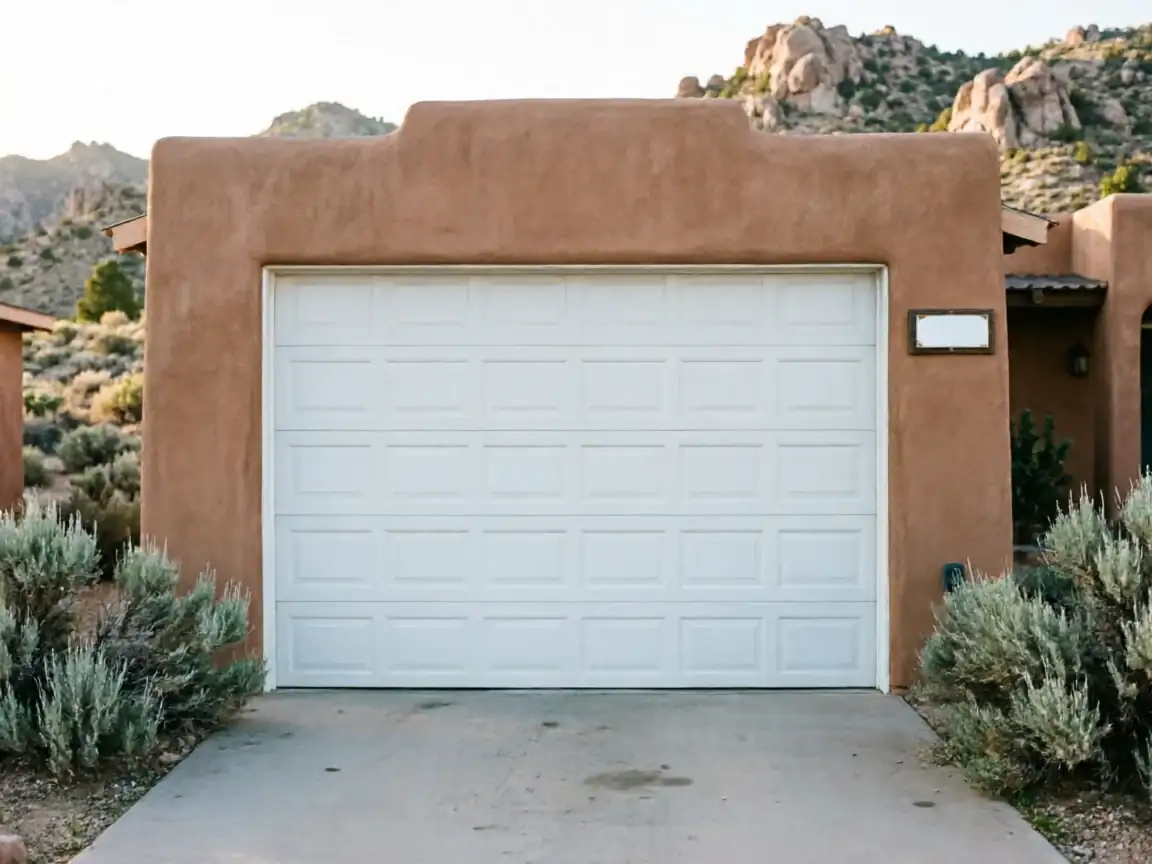
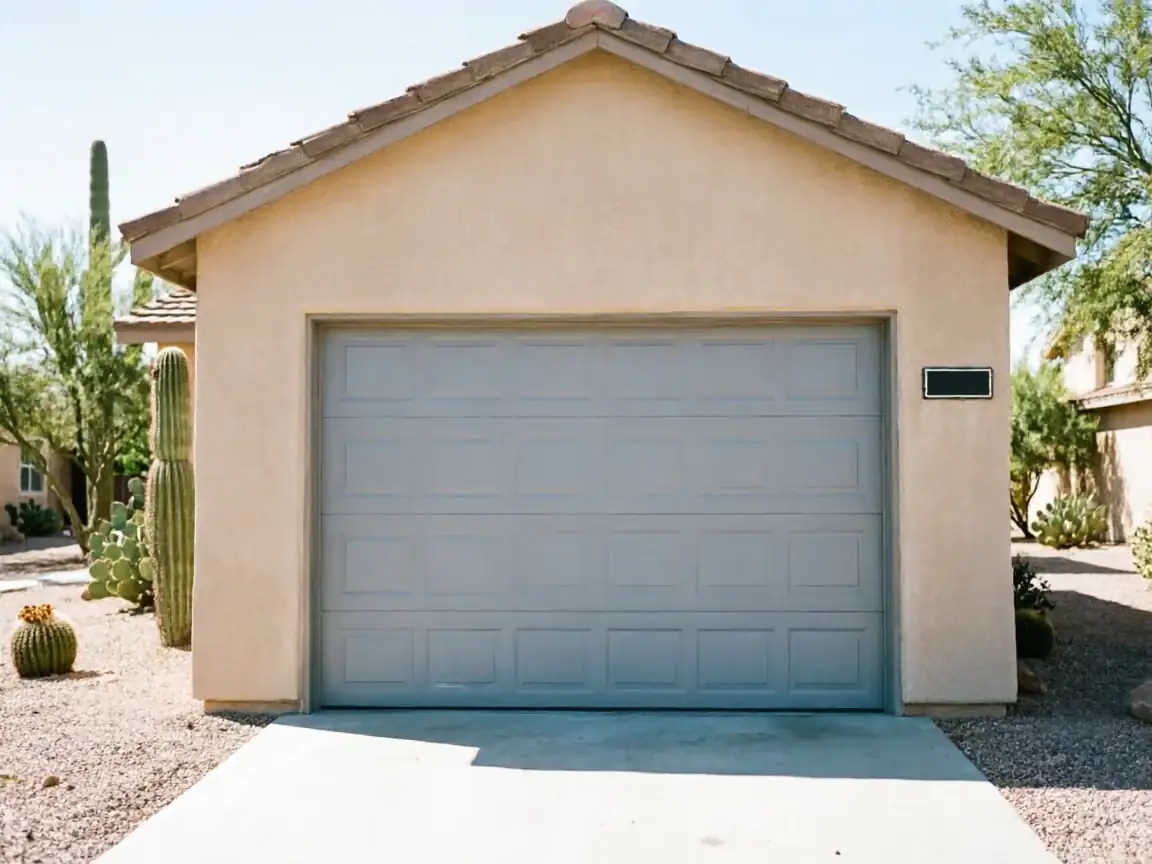
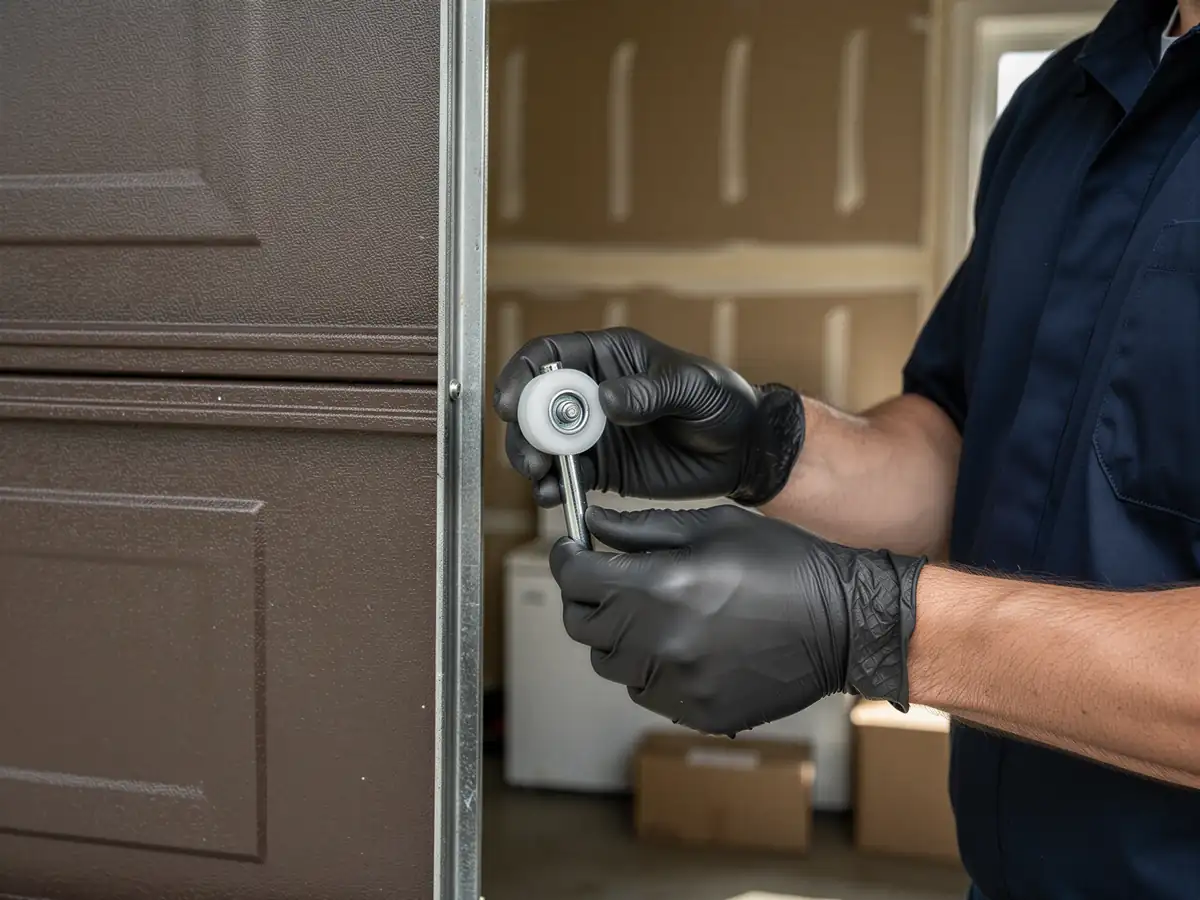
Saddlebrooke sits at the newer end of the housing stock we cover, with most of the area's building happening well after 1980 and median construction landing around 2005. That's a different job than the 1960s stock closer to the valley floor. If your door is original to the house, it's a builder-grade steel sectional on a standard torsion spring, installed to code at the time and never touched since. Nearly twenty years in, that spring is usually past its rated cycle life, the bottom brackets show rust at the weld seams, and the rollers are the plastic kind builders use to hit a price point, not the kind meant to last two decades.
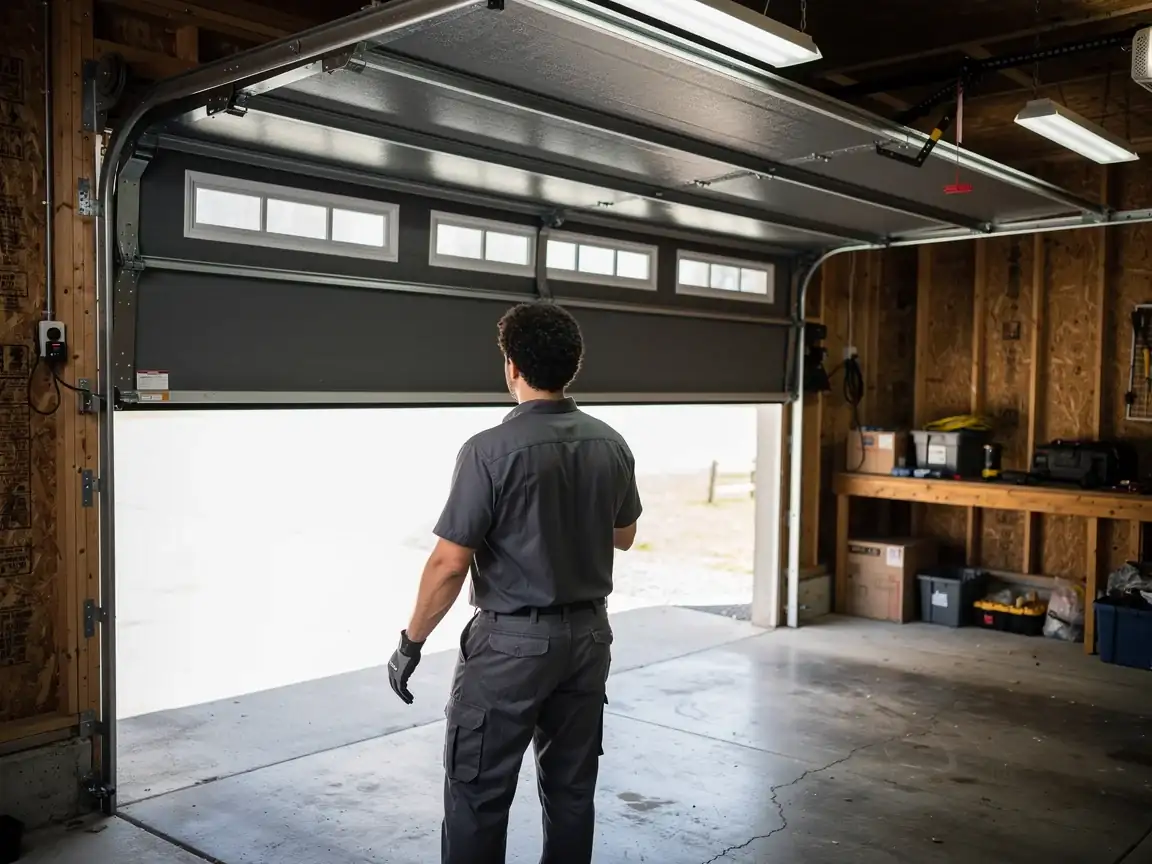
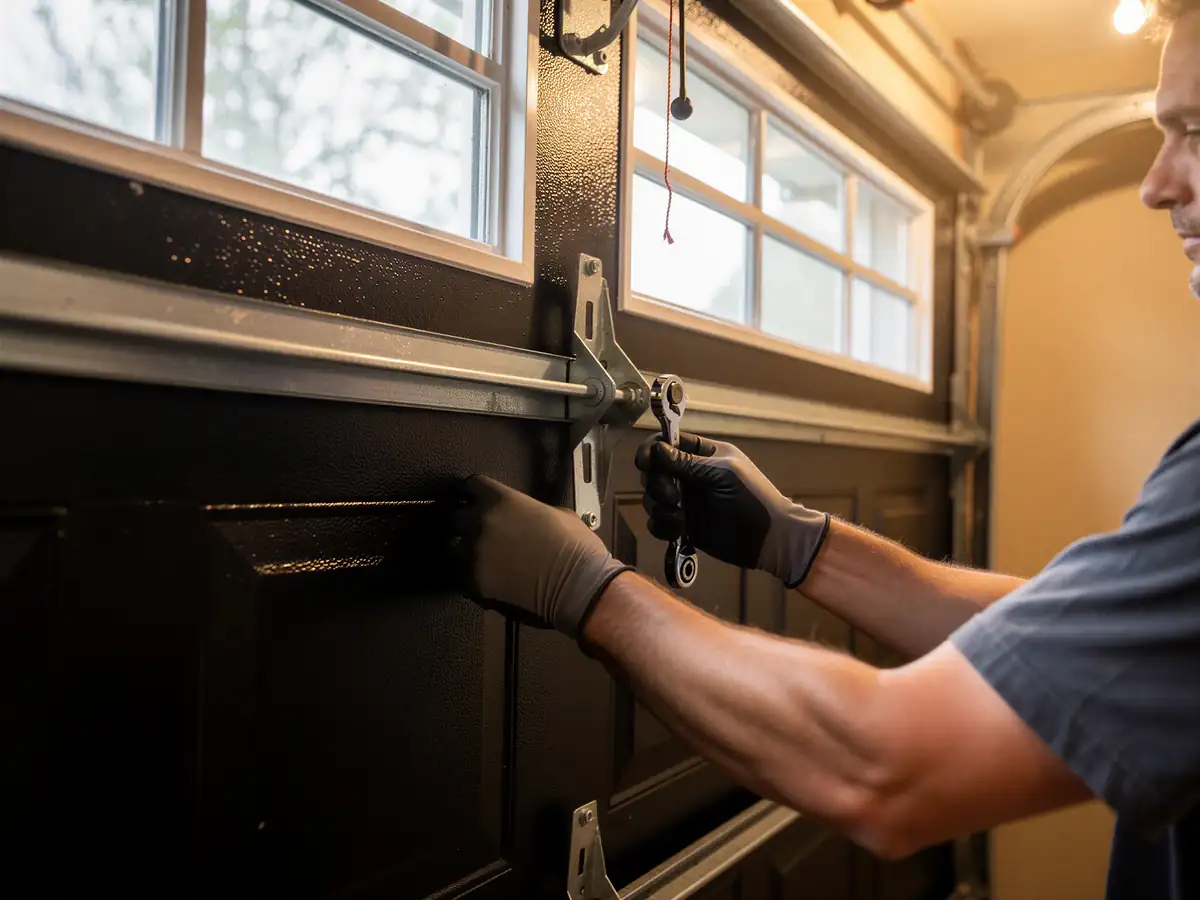
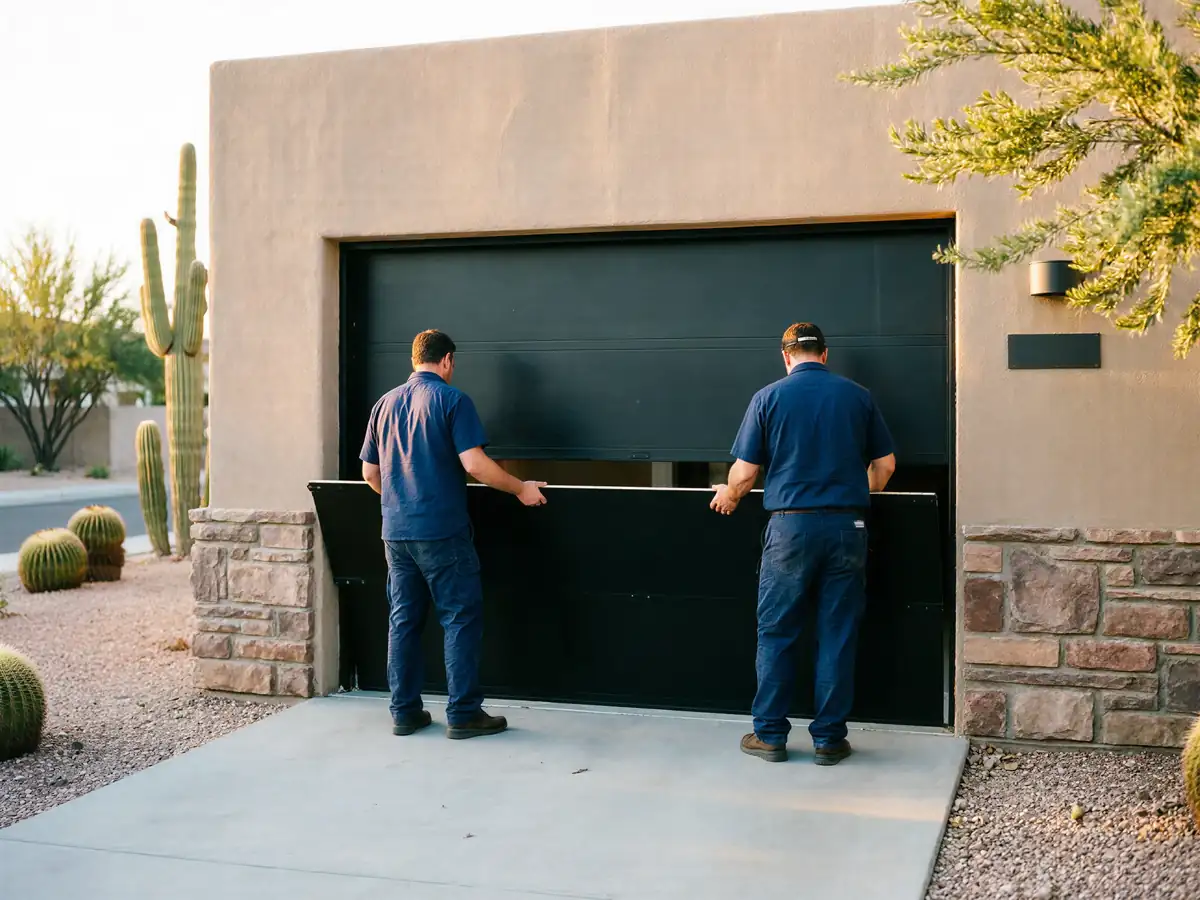
Swapping in a new door means pulling the old track and spring assembly entirely, not just bolting a new skin onto old hardware. We check the opening for square, since minor settling over twenty years is normal and can throw off a factory-width door by enough to matter. In this part of the service area we also look hard at the insulation rating on whatever you pick - the sun load here doesn't care how new your door is if the panel core is thin. We don't swap a door that still has real life left in it; if the spring is the only failure, replacing that alone is the honest call, and we'll say so before we quote a full install.
How Long It Takes
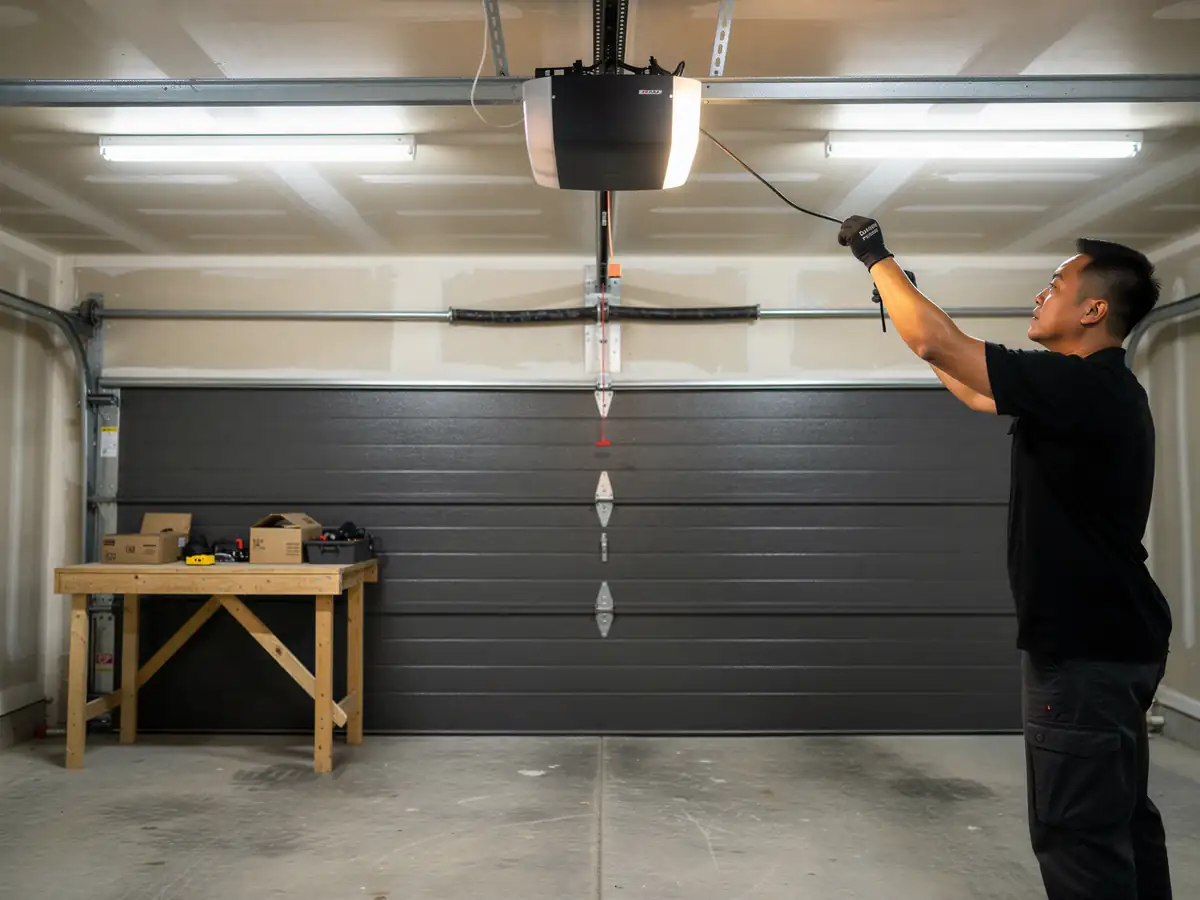
A straight swap - same size opening, new door on new track and spring - usually runs a single visit once the door and opener you've chosen are on the truck. Saddlebrooke is about 11 miles out from our Oro Valley base, so figure that drive time into scheduling rather than a same-day walk-in. We don't keep a branch or a local yard out here; everything comes from Oro Valley, which means the appointment window matters more than it would somewhere closer.
Where the job runs longer is when the opening itself needs correction - not common in 2000s-era construction, but not rare either, since a few builders in this stretch used nonstandard header heights. If that's the case we'll tell you on the first visit, not after the door's already ordered.
What You Pay
Saddlebrooke's median household income runs noticeably higher than much of the rest of the service area
Comfortably above $90,000 - and that shows up in what gets requested here: insulated steel doors, quieter belt-drive openers, and finish options rather than the bare minimum unit. We don't have a published price list to quote you here since the number depends on door size, insulation class, and opener choice, but we'll tell you plainly if a repair beats a full replacement before we write anything up.
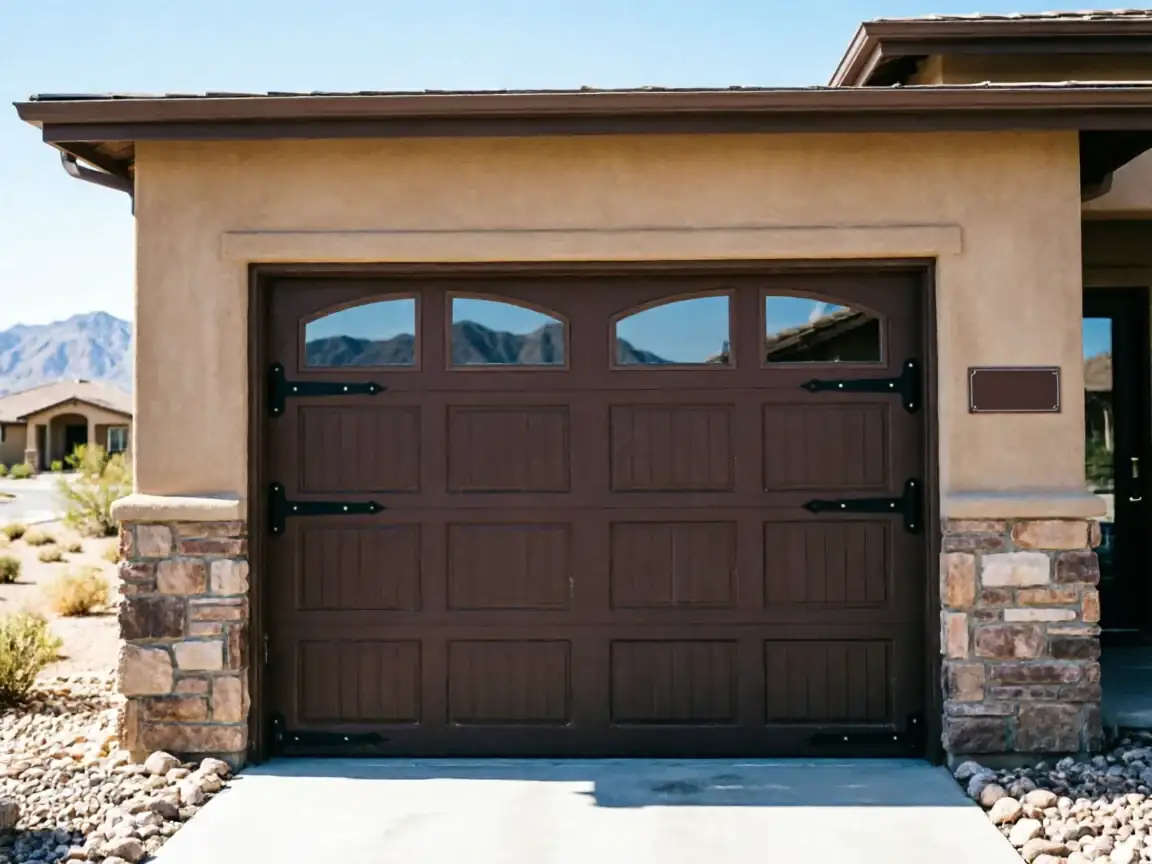
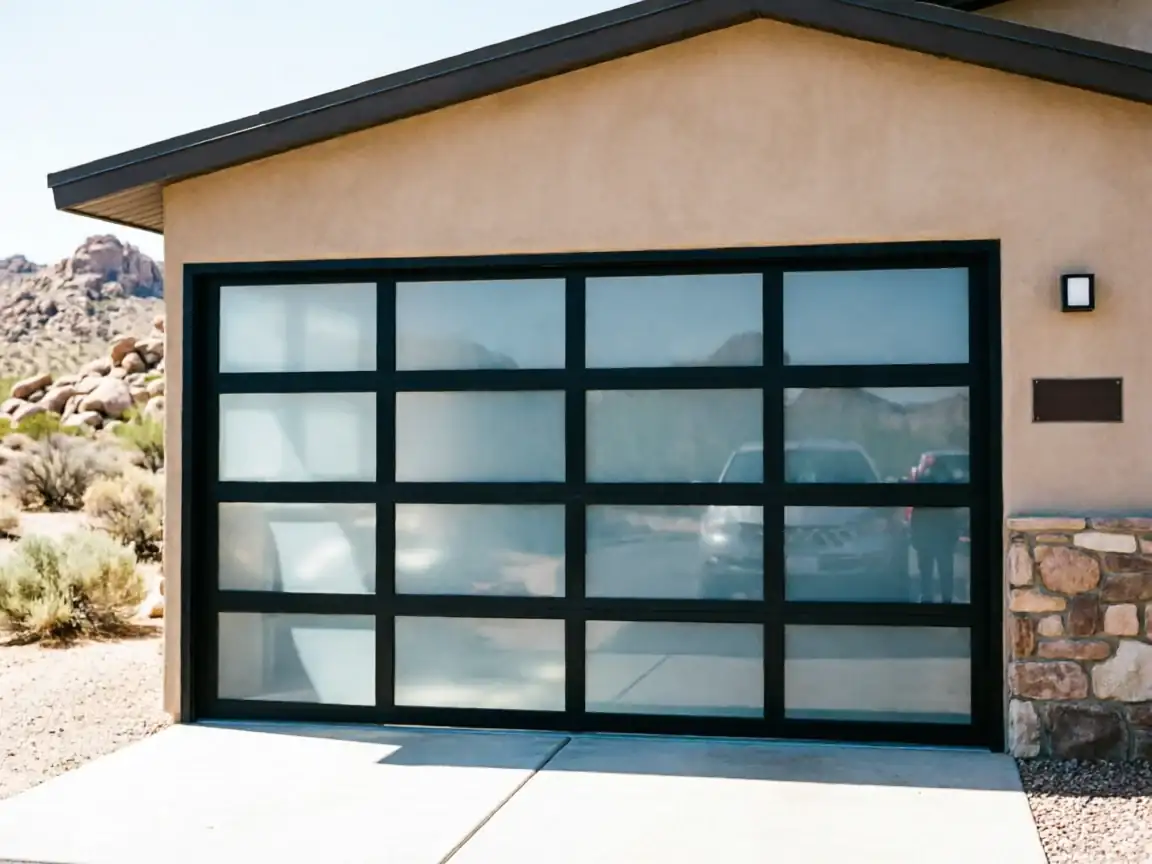
One limitation worth saying outright: we don't stock every panel style on the truck
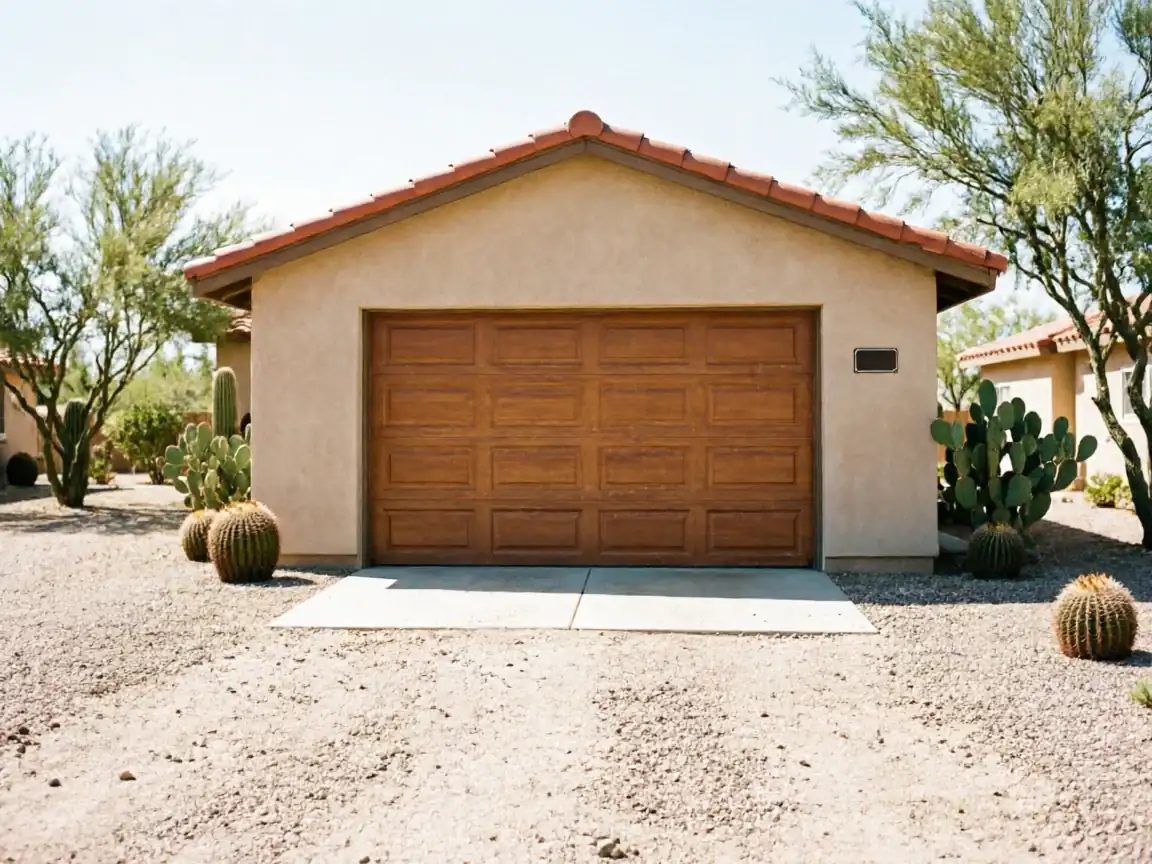
If you want a specific wood-look finish or a nonstandard window pattern, that's a special order, and it adds lead time beyond the install visit itself.
How It Shows Up
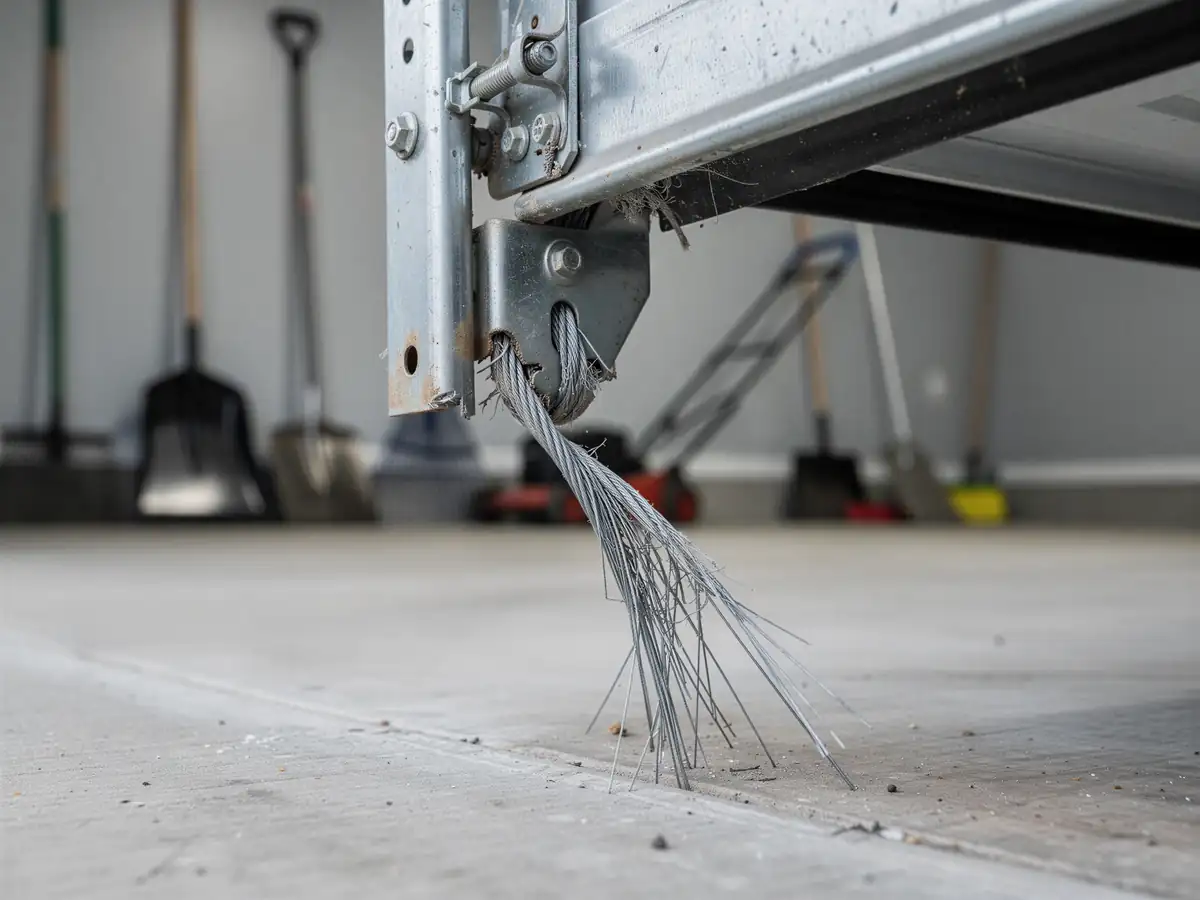
The failure pattern in this part of the service area is heat, not age alone. Summers here hit the severe end of the climate band for the whole region, and a garage that faces west bakes an opener's circuit board and a spring's temper year after year in a way a shaded north-facing garage never will. On an original 2005 door, that's two decades of expansion and contraction on the same torsion spring, and it tends to go without much warning - a loud bang, then a door that won't lift.
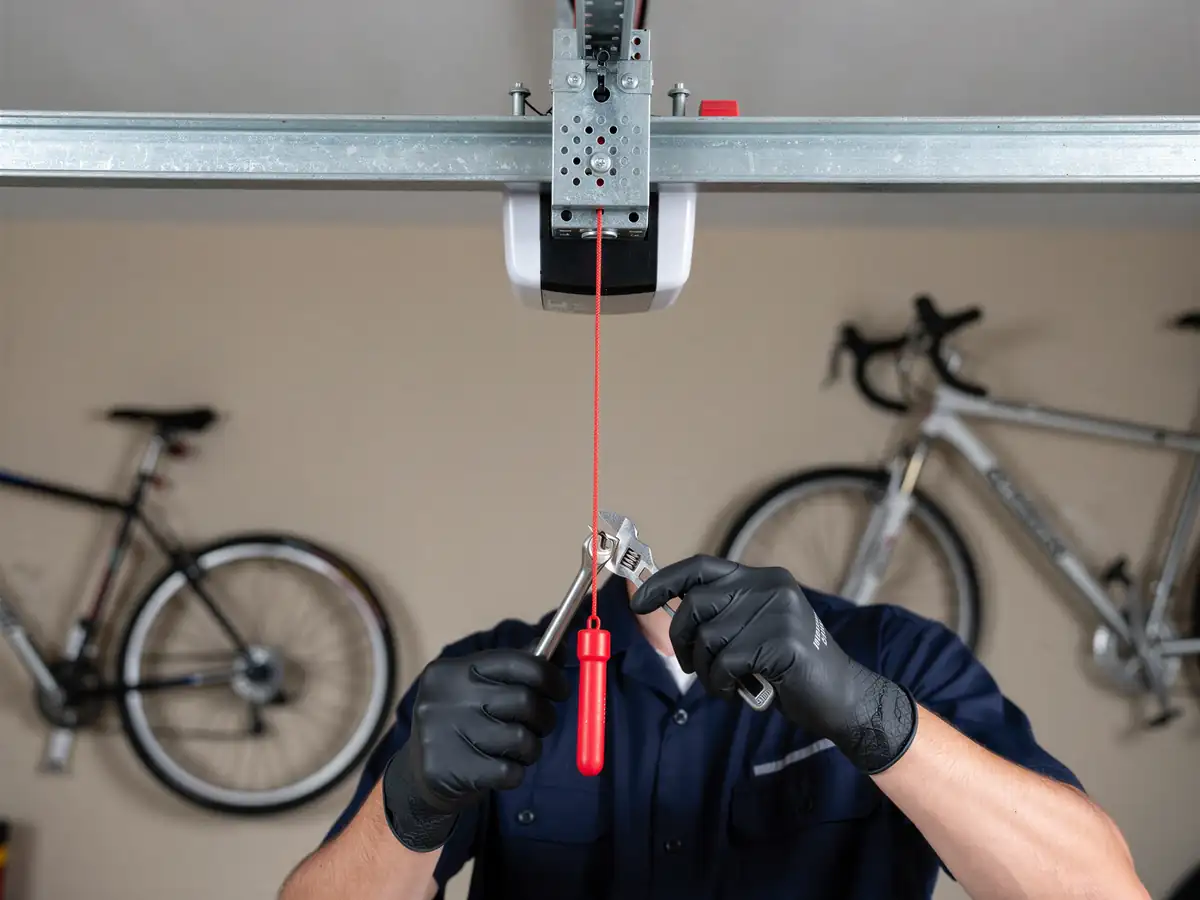
What we see less of here than in the older stock closer to Oro Valley proper is warped wood panels or rusted-through steel skins, simply because the houses aren't old enough for that yet. What we see more of is opener logic boards cooked by heat and springs at or past their rated cycle count. Both point to the same conclusion: if your door is original to the house, you're closer to the end of its working life than the calendar might suggest.