How It Shows Up
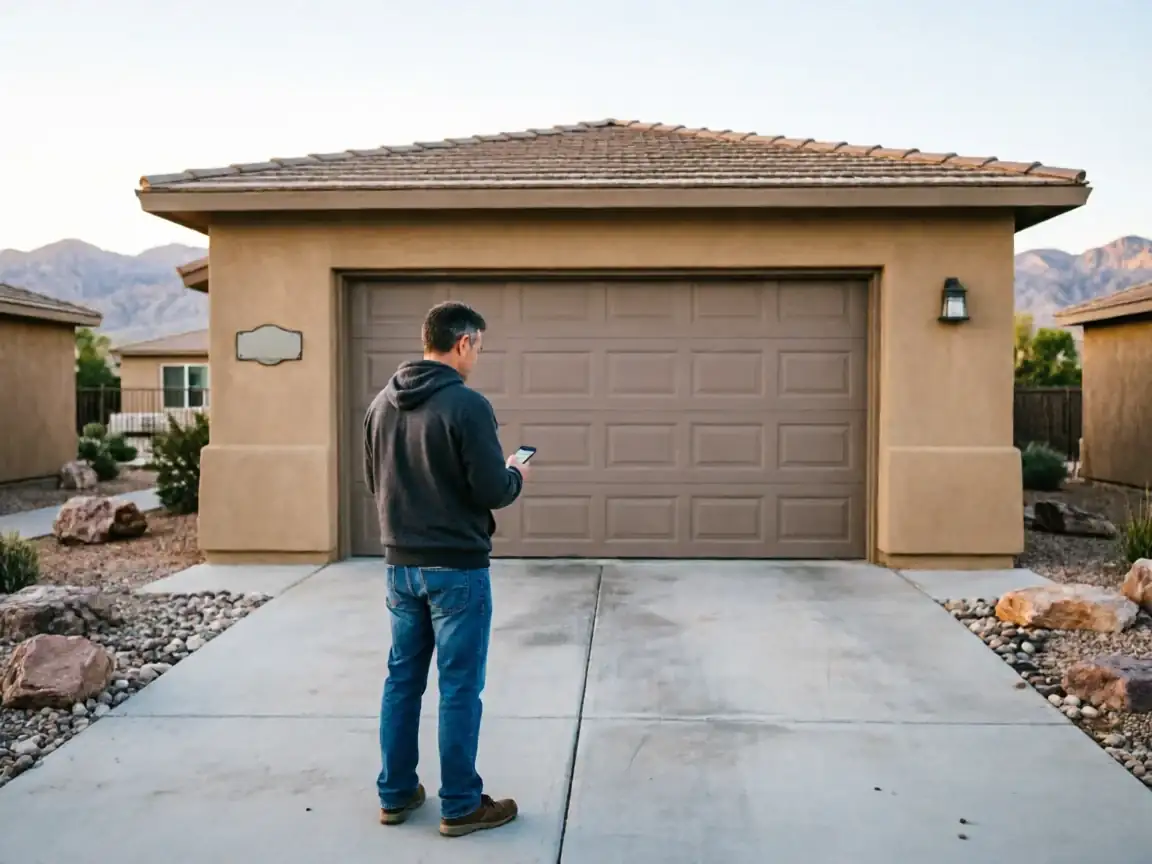
Tucson Estates sits about 19 miles from our shop in Oro Valley, farther out than most of the territory we cover, and that drive shapes how a call here actually gets handled. We don't stage a truck in the neighborhood, so when you call, we're routing a technician out, not around the corner.
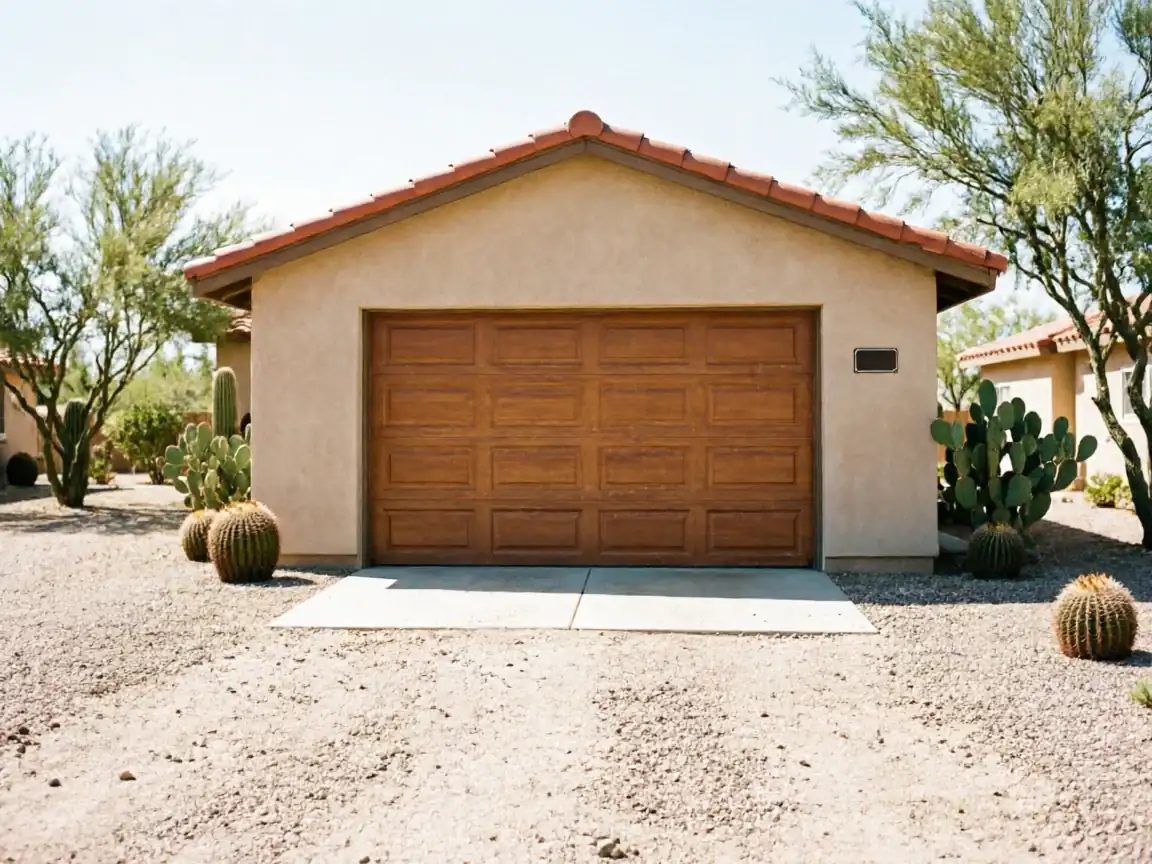
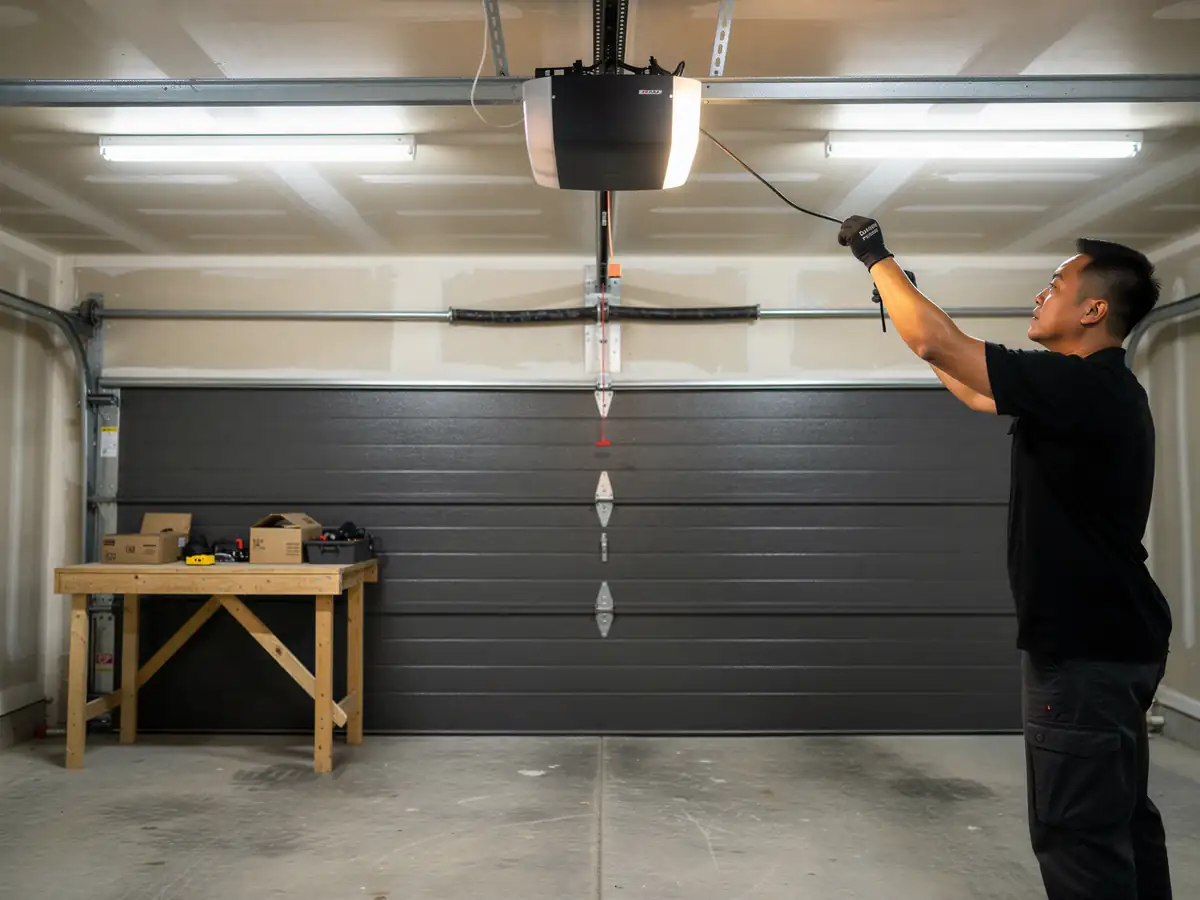
What we find once we're there tends to follow the age of the houses. Most homes in Tucson Estates went up around 1992, a few years past the 1989 median for the wider service area, which means a lot of original openers out here are chain-drive units from the early-to-mid 90s nearing or past their expected life. The failure pattern is predictable: worn drive gears that strip quietly over months, limit switches that drift out of adjustment, and logic boards that finally give out after two decades of Tucson summers cycling them through extreme heat.
That heat matters more than people think. Circuit boards mounted on a garage ceiling bake all day in an attached garage, and the repeated heat cycling is often what kills the board before anything mechanical fails. If your opener runs intermittently, especially worse in the afternoon, that's usually the board, not the motor.
Getting It Booked In
Because Tucson Estates is on the far side of our service area, we try to batch calls out that way rather than sending a truck back and forth for single jobs. When you call, tell us what the opener is doing - won't close, reverses, dead remote, grinding noise - so we can bring the right parts on the first trip instead of a return visit.
We're not going to promise a same-day window for this stretch the way we might closer to Oro Valley. The honest version is that the drive adds time to how we schedule the day, and we'd rather tell you that upfront than quote a time we can't hold. If the opener has fully failed and the door is stuck down, say so when you call - that changes the order of the day's route.
How Long It Takes
A straightforward opener repair
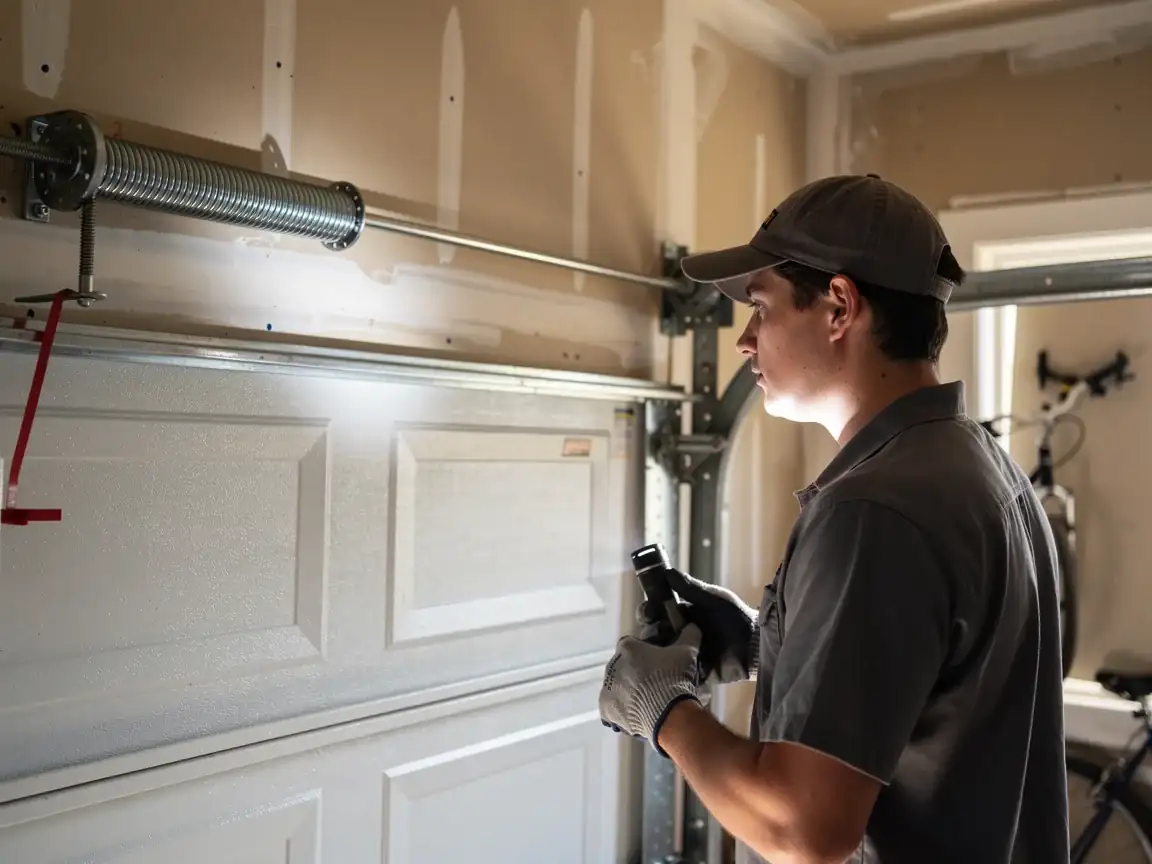
Logic board swap, sensor realignment, gear and sprocket kit - usually runs under an hour once the technician is on site, not counting the drive. Diagnosis adds time if the fault isn't obvious: intermittent faults in older 1990s-era units can take longer to chase down than a dead unit, since the board might test fine on the bench and only fail under heat load.
Here's the limitation worth saying plainly
If the opener is an older model and the board or circuit assembly needs a specific part we don't carry, that part isn't always something we can get same-day. For units from this housing era, replacement is often faster and cheaper than hunting down a discontinued board, and we'll tell you that straight rather than stringing out a repair that isn't worth it.
What Is on the Truck
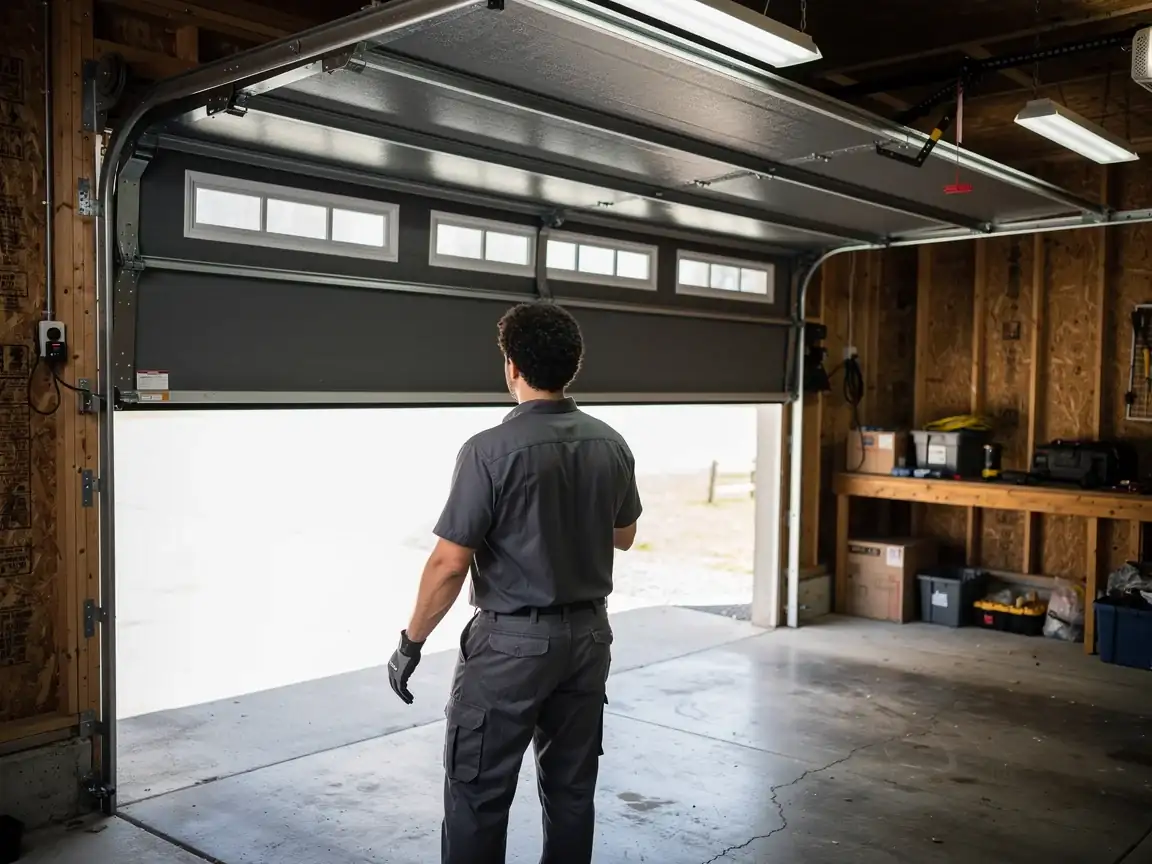
Given how many Tucson Estates openers date to the early 1990s, we carry parts sized for that generation: chain and screw-drive gear kits, standard logic boards that fit the common chain-drive units from that era, photo-eye sensor pairs, and wall console replacements. We also carry the newer belt-drive circuit boards and Wi-Fi modules, since plenty of homes here have replaced the original unit at some point over the last thirty years.
We stock what covers both ends of that range because a service call out this far only pays off if we're not making a second trip for a part we should have brought the first time. What we don't carry is every obsolete board ever made - some older openers use proprietary boards that are no longer manufactured, and in those cases we'll talk replacement rather than chase a part that doesn't exist anymore.
Doing It Yourself
Before you call, there are a few things worth checking yourself. Look at the two small sensors near the floor on each side of the track - if either light is out or blinking, a stray cobweb, dust, or a knock out of alignment is often the whole problem, and straightening them costs nothing. Check that the opener is actually getting power; a tripped breaker looks identical to a dead board from the door side.
If the door reverses before touching the floor, the close-limit setting has probably drifted, which is a five-minute adjustment on most openers and is in the manual that came with the unit. What you shouldn't do is open the motor housing or touch the circuit board yourself - at minimum you'll void whatever warranty is left, and a board already weakened by years of heat can be damaged further by handling it wrong. If the sensors check out and the breaker's fine and it still won't run, that's a call.