How It Shows Up
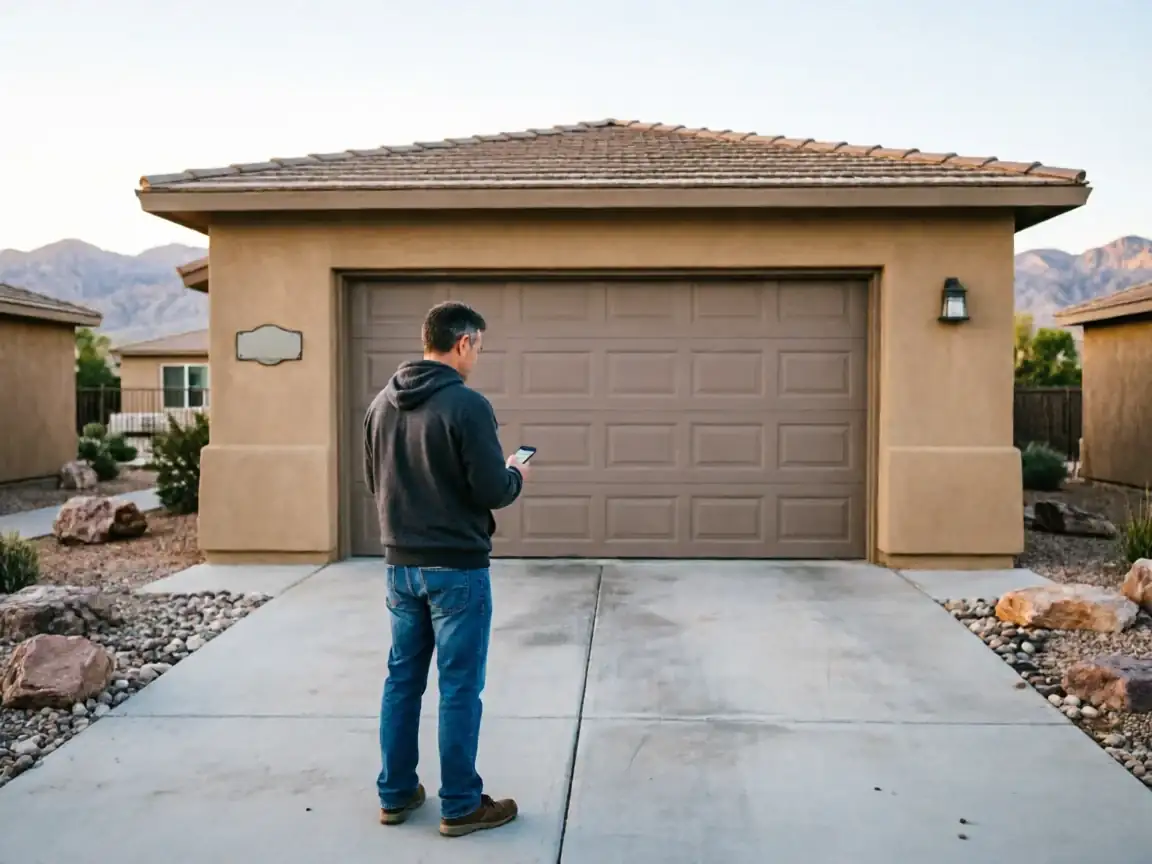
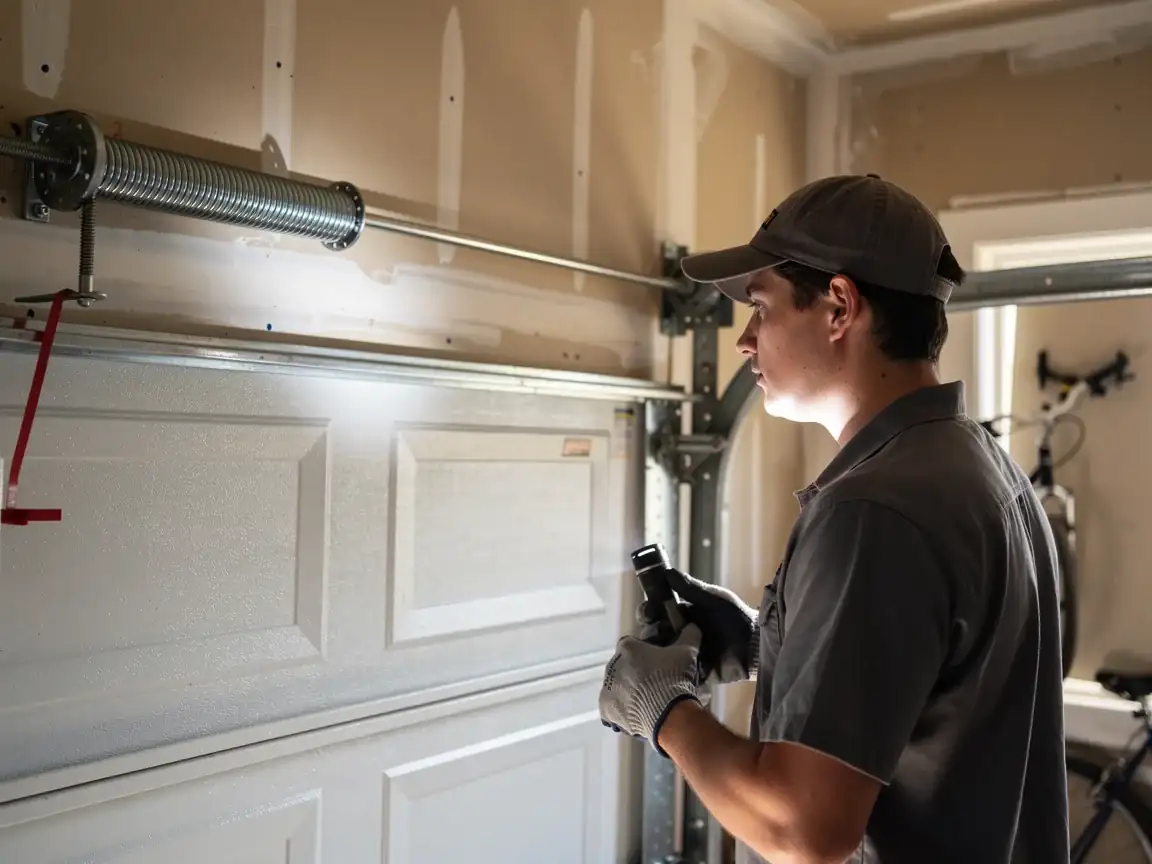
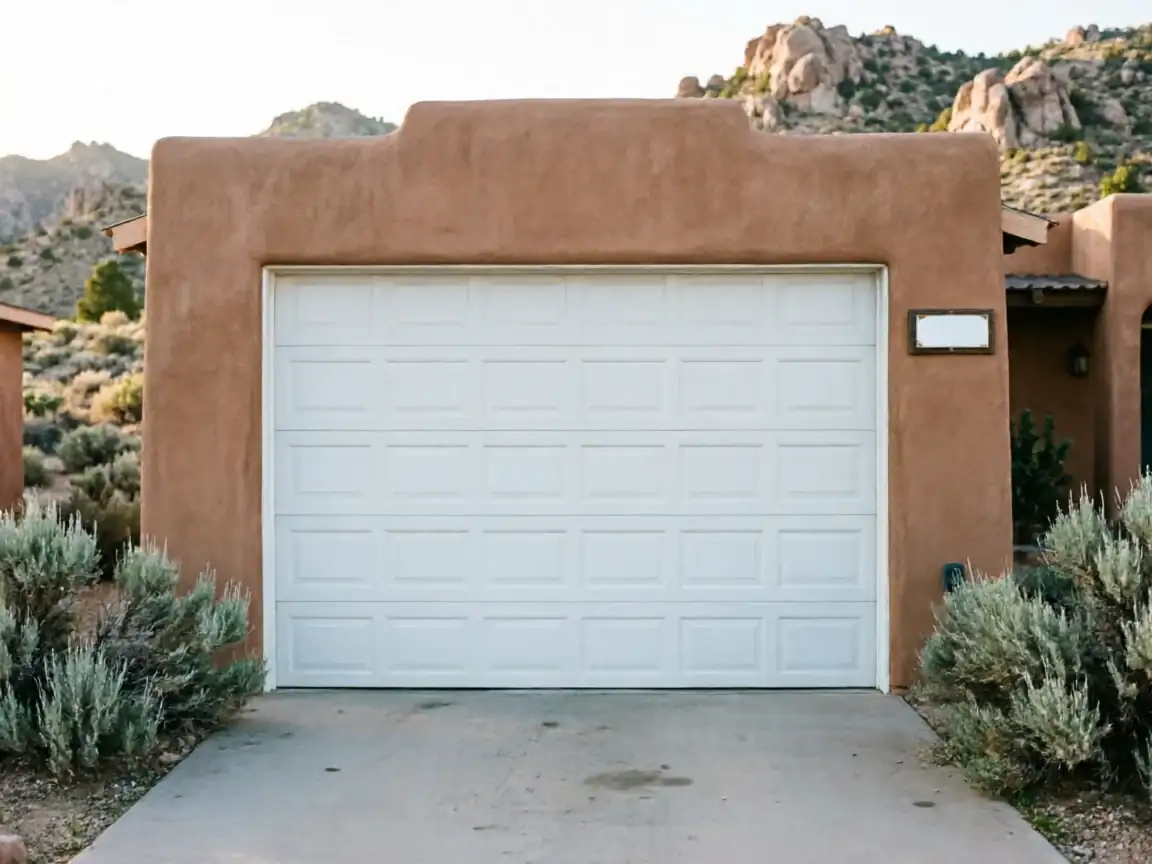
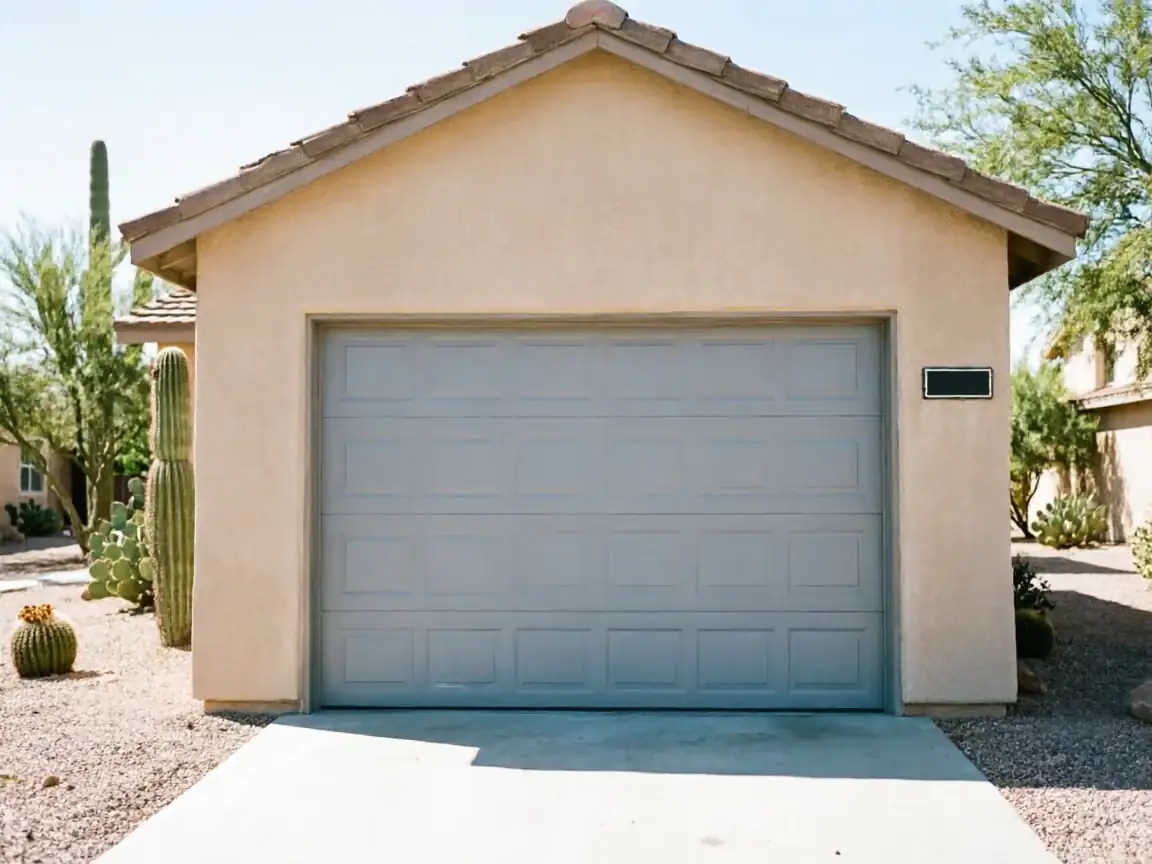
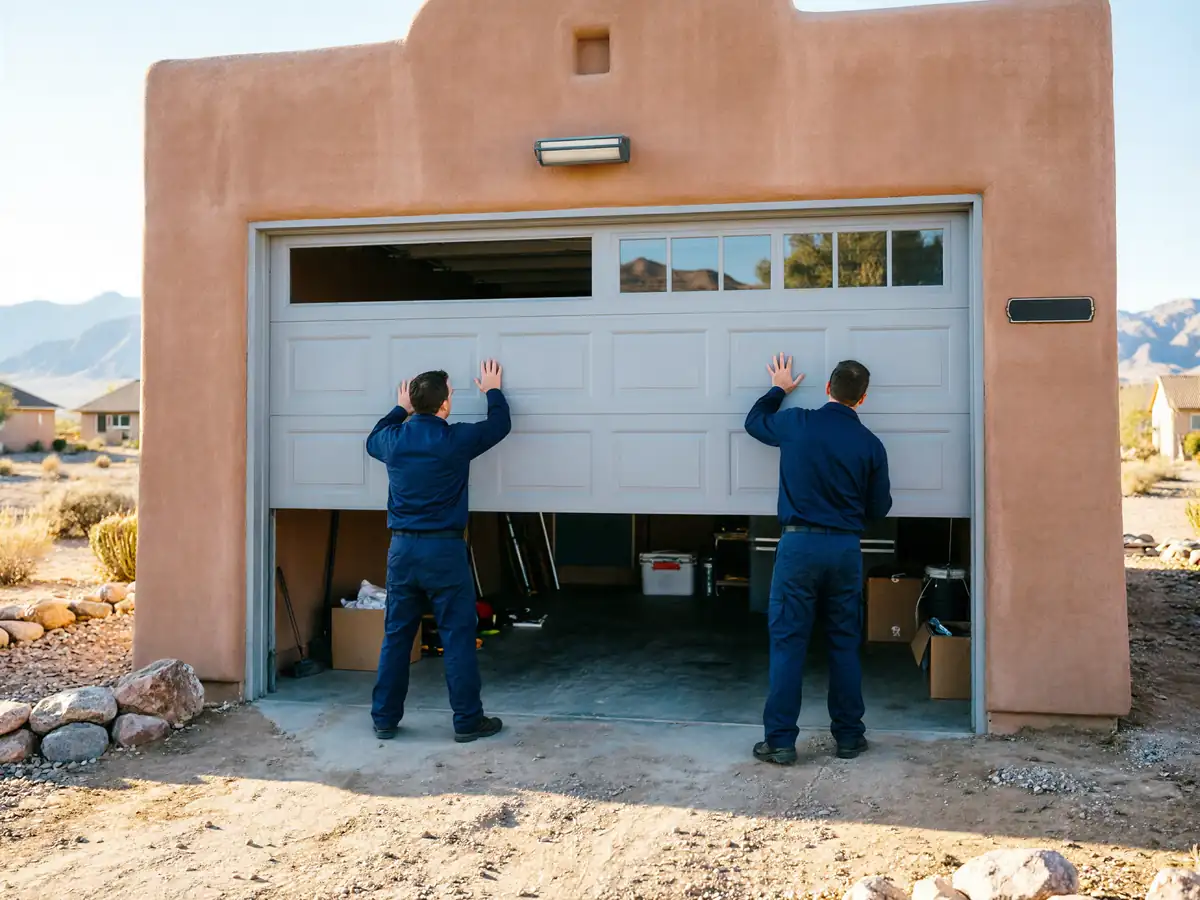
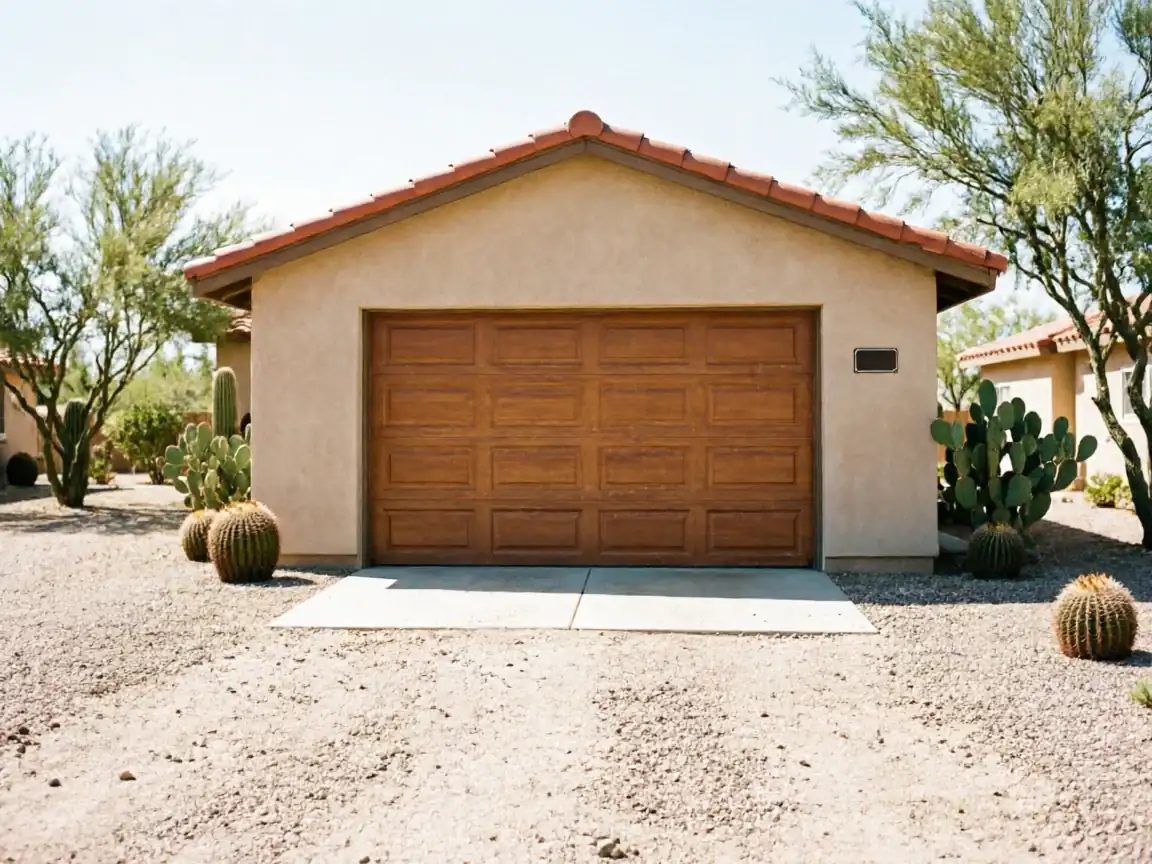
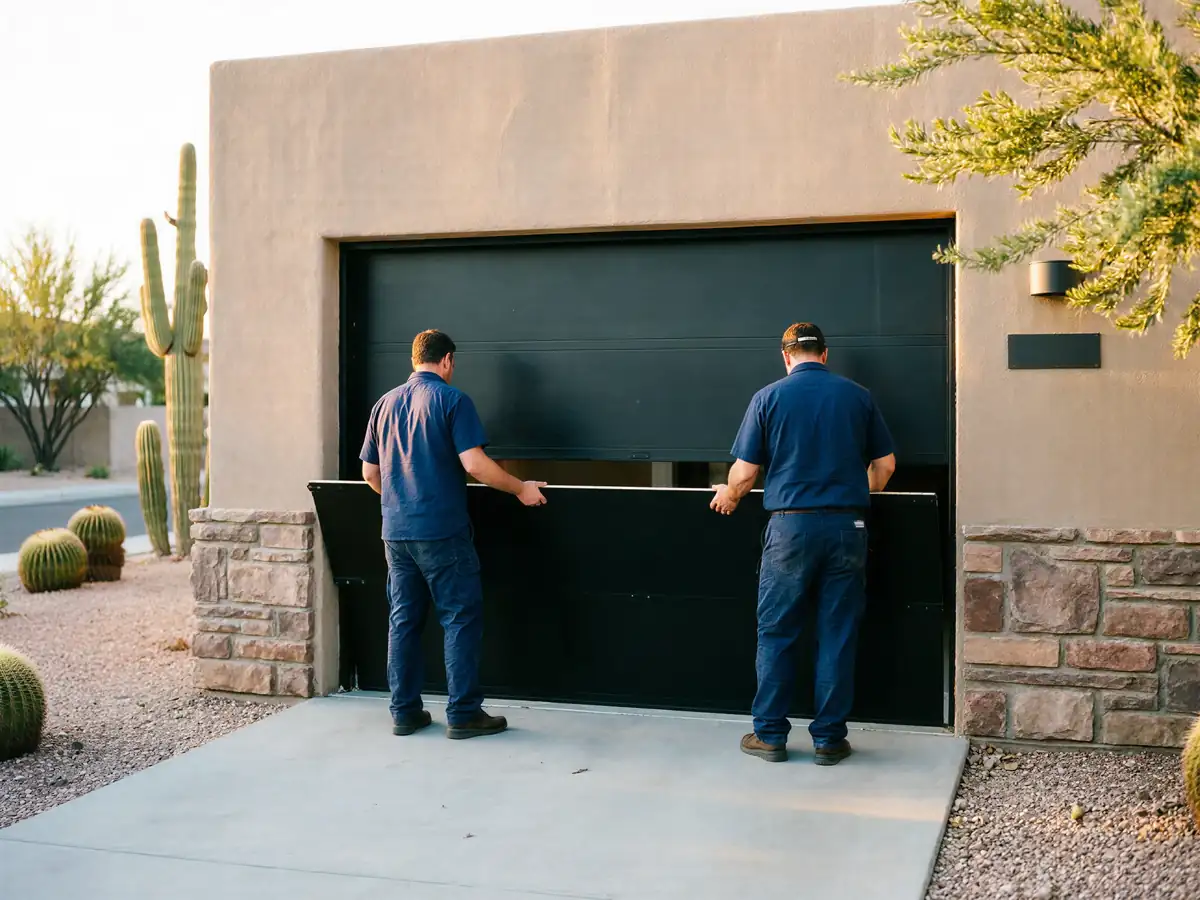
Tucson Estates has about 5,520 households, which keeps the panel calls steady but not heavy - this isn't a neighborhood where we're swapping out panels every week, but when the call comes it's usually the same story. Most doors here went in around 1992, and after three decades in a climate band this severe, the steel and fiberglass panels show it before anything else on the door fails. You'll see a bottom panel bowed outward where the sun hits hardest in the afternoon, or a seam between panels that's started to separate because the foam core shrank and the skin didn't shrink with it. Hairline cracks running along a panel's bottom edge are common too, usually starting at the spot where a bumper or a bike handlebar caught it once and the heat-stressed material never bounced back the way it would have on a cooler, younger door. We also see panels that still look fine from the street but have gone soft to the touch - the core's broken down inside the skin, and the next good dent won't pop back out. None of this is a spring problem or a track problem. It's the panel material reaching the end of what thirty summers will do to it.
Getting It Booked In
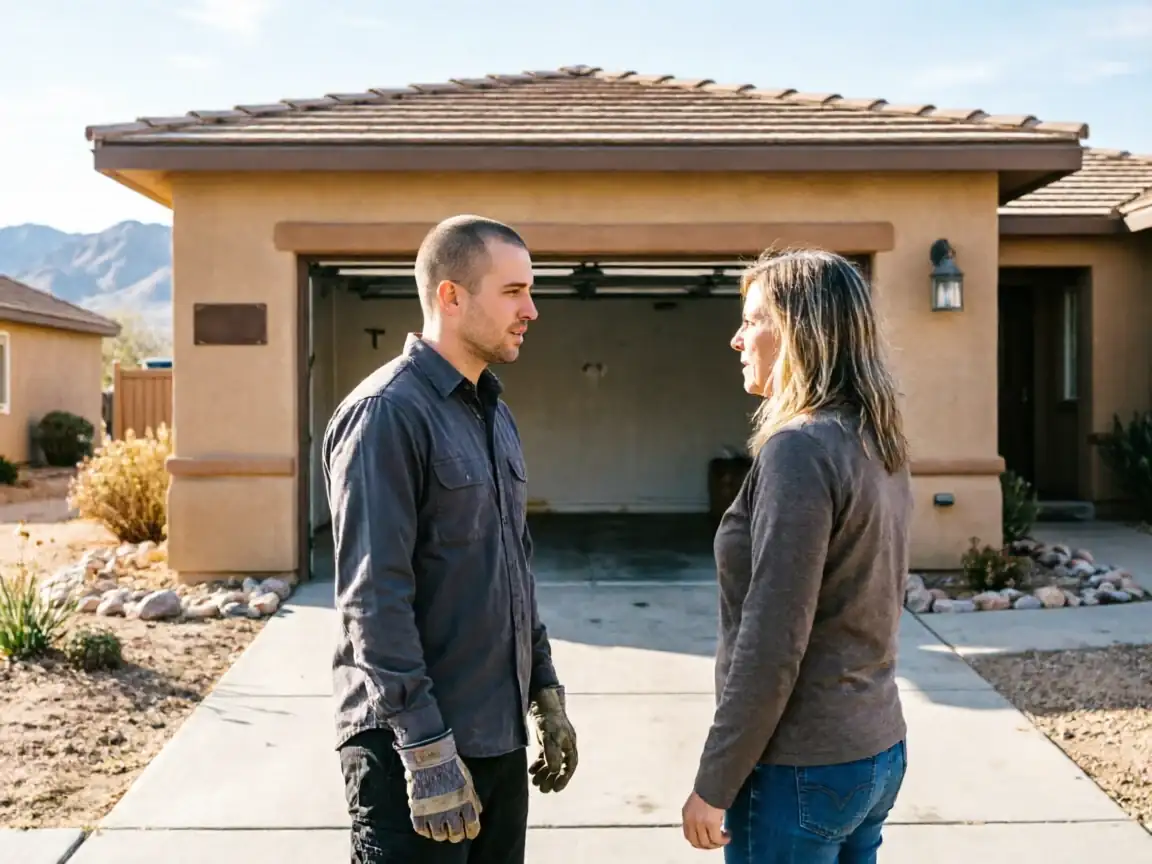
We cover Tucson Estates out of Oro Valley, roughly 19 miles up the road, so panel jobs here get scheduled rather than worked in on a drive-by. When you call, tell us the door's width, whether it's one panel or more that's damaged, and roughly what year the house was built if you know it - for most of Tucson Estates that's going to land you around 1992, and that number tells us a lot about what panel profile and hardware we're likely bringing out before we even see the door. A photo of the damaged panel and the section label stamped on the inside edge, if you can find it, saves a second trip more often than anything else we ask for. We don't keep a branch in Tucson Estates itself - every job here is a truck coming from Oro Valley, so the booking window reflects that drive, not a same-day drop-in.
What Is on the Truck
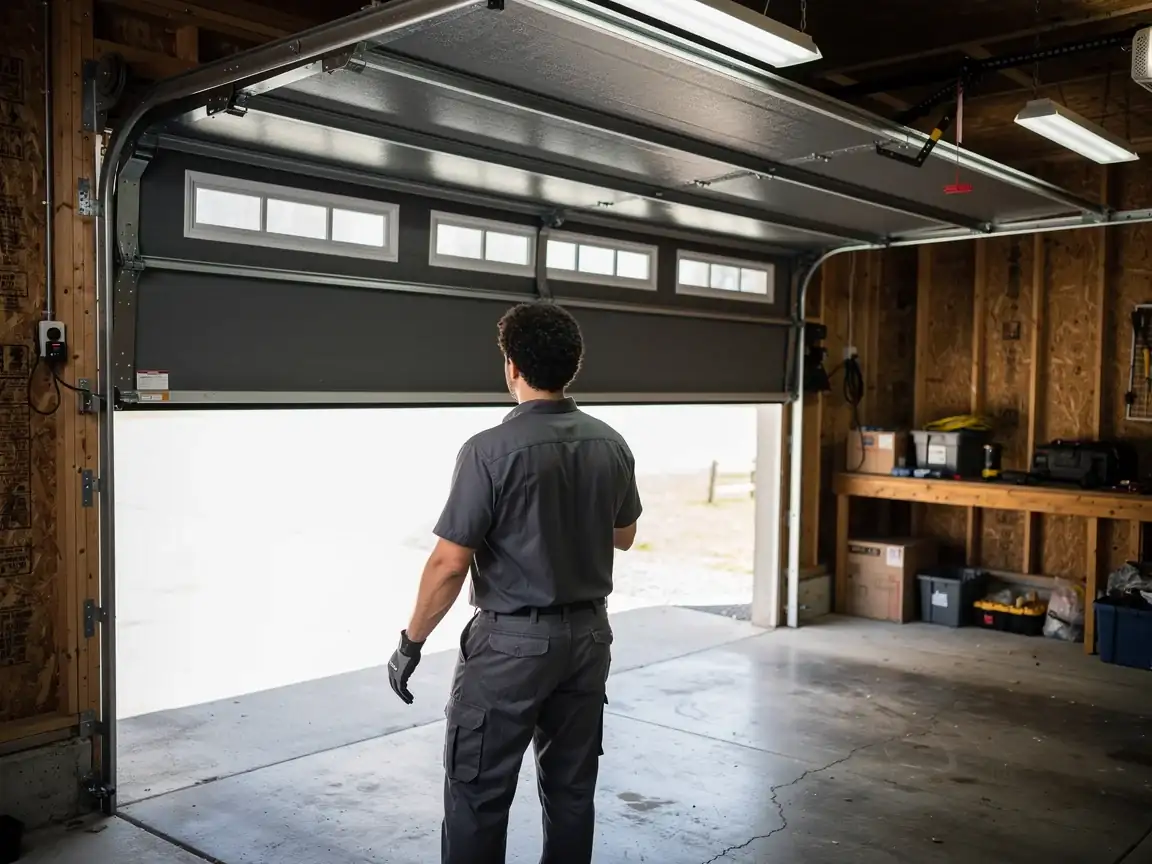
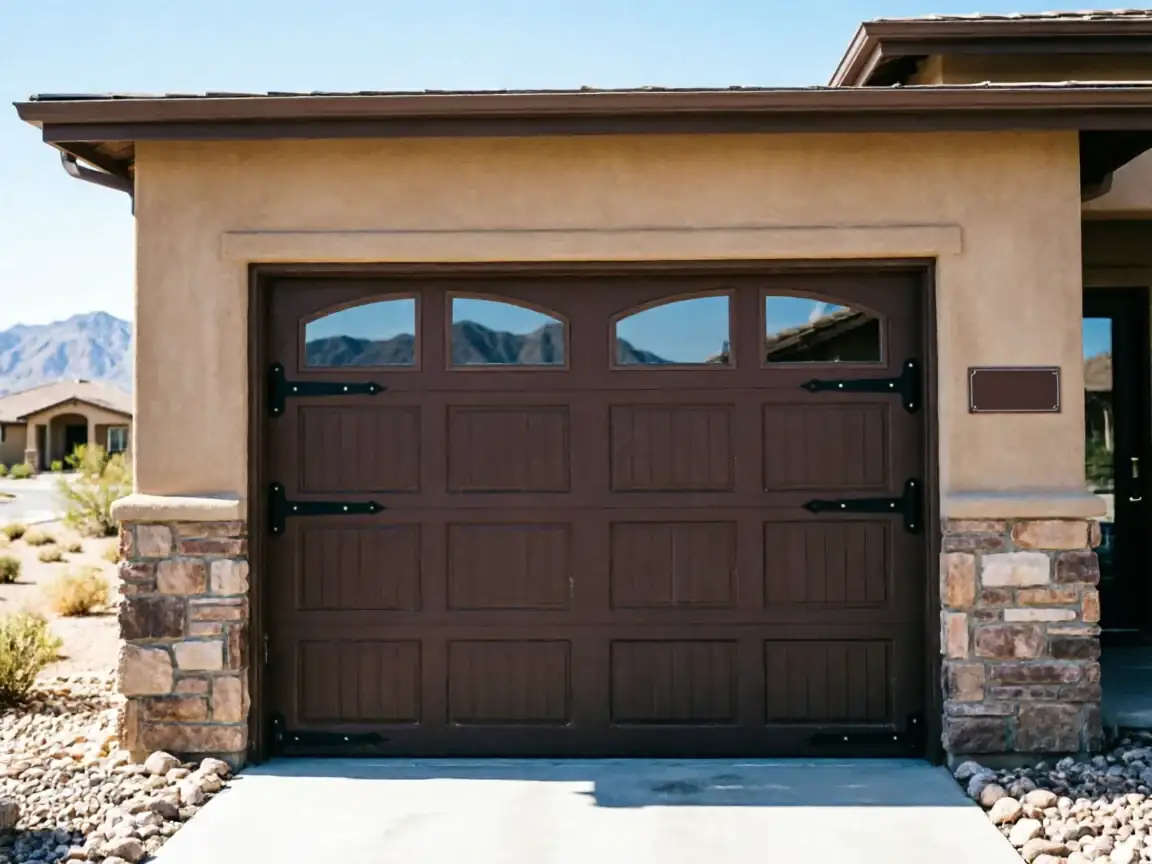
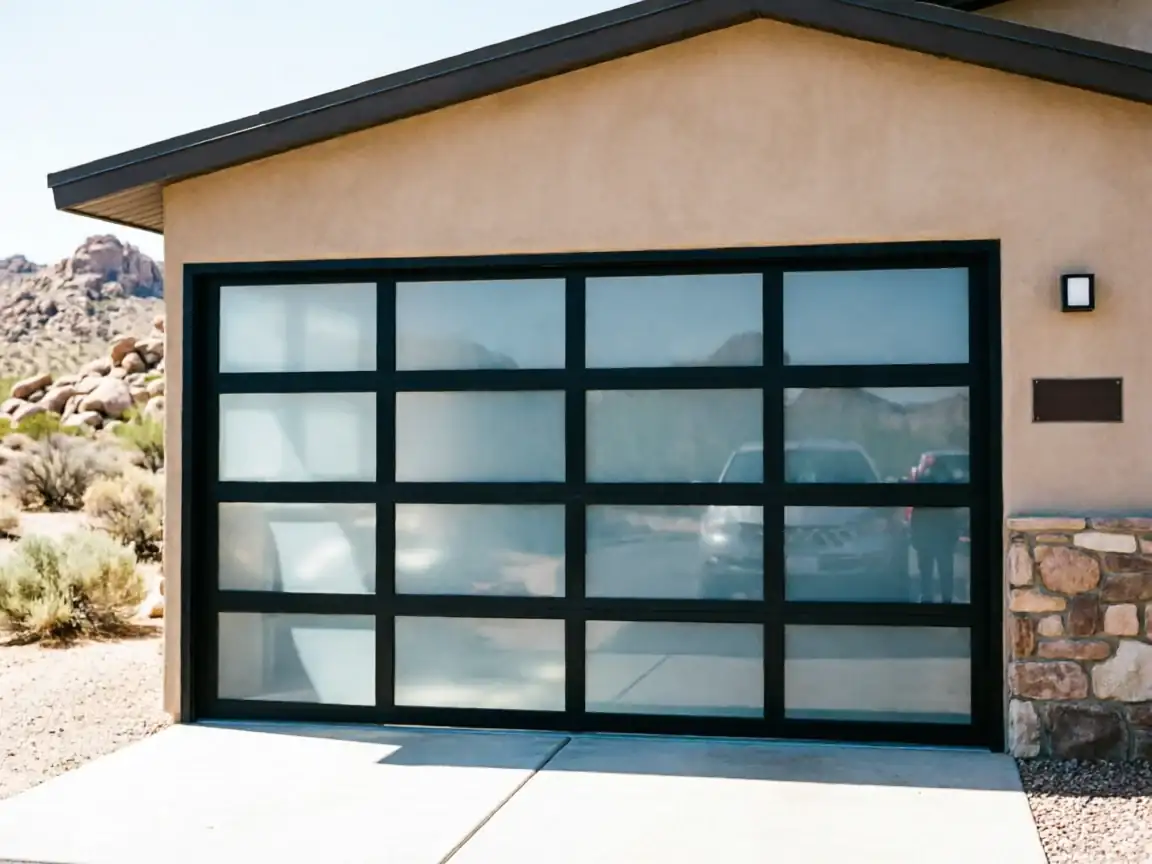
Given how much of Tucson Estates was built around the same stretch of years, we carry panel sections sized for that mid-80s-to-mid-2000s generation of door as standard stock, not a special order. What varies job to job is the finish - raised panel versus flush, and whether the house took a steel door or one of the insulated fiberglass models that showed up later in that building run. We also bring touch-up material because a panel that's fourteen years newer than the rest of the door, even color-matched at the factory, usually needs a hand blend to not read as the new piece on the street. One honest limit: if your door's panel profile was discontinued outright, we may need to order it rather than carry it, and that's a second trip, not a same-visit fix.
Doing It Yourself
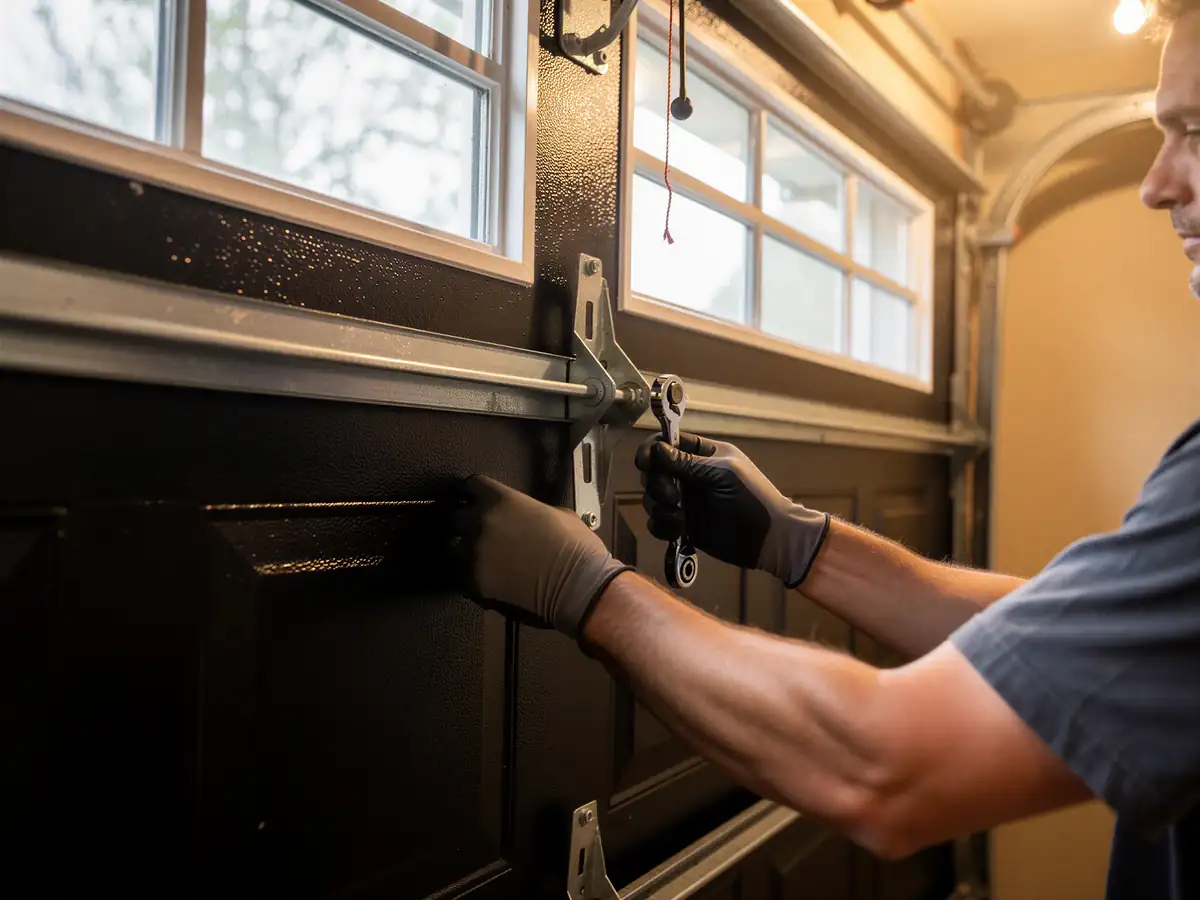
If it's one bolt-on panel and the door's otherwise sound, a homeowner with the right socket set and a way to support the door's weight can do this. Where people get into trouble is misjudging the core condition - a panel that looks intact but has gone soft from heat exposure often hides hinge screws that have chewed out the surrounding material, so the new panel goes in but doesn't sit flush or seal the same way the old one did when it was new. If you're not sure the hinge points are solid, that's worth a second set of eyes before you commit to the part. We'd rather tell you that up front than have you order the wrong panel for a house we haven't seen.